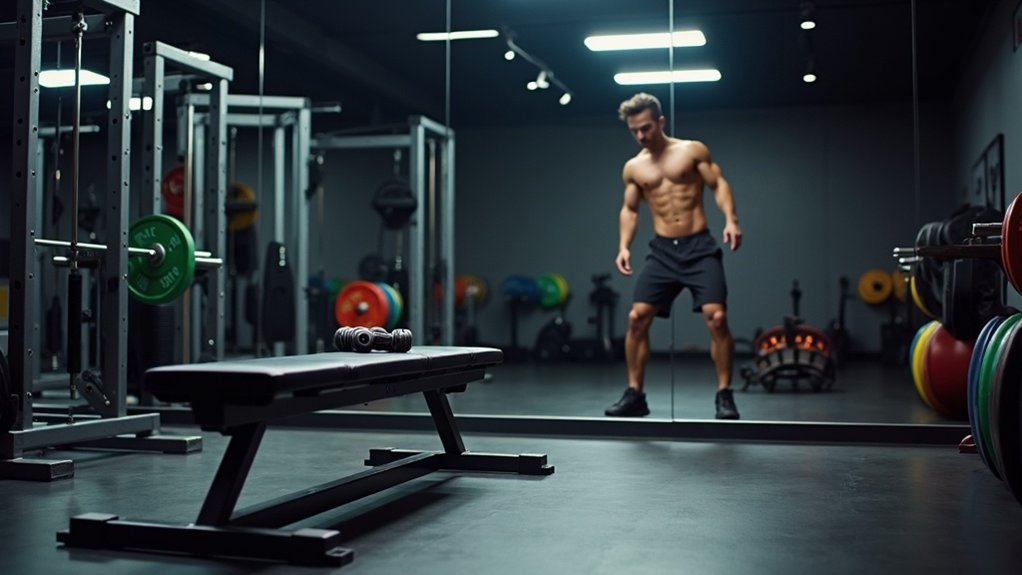
To program full-body workouts around a rack and bench at home, focus on compound exercises like squats, bench presses, and rows. Structure your routine over three days: each day targeting major muscle groups using these essential movements. Begin with warm-ups that include dynamic stretches to prepare your body for exercise and progress gradually by increasing weights to ensure continuous improvement. Don’t forget to include core and accessory exercises to enhance stability and overall strength. For more tips on how to optimize your home workouts and stay healthy, there’s a wealth of information available to help you on your fitness journey.
Key Takeaways
- Make the most of your squat rack for essential compound exercises like back squats and front squats, which effectively engage major muscle groups for a complete workout at home.
- Use your bench for upper body workouts, incorporating exercises like the close-grip bench press and weighted push-ups to build strength and muscle definition.
- Plan your workout routine with alternating days focusing on different exercises to promote balanced muscle development and adequate recovery for both men and women.
- Don’t forget to include accessory exercises such as tricep dips and hip thrusts, utilizing your bench and rack to enhance overall strength and stability.
- Start each session with dynamic stretches and practice compound movements to prepare your body for more intense lifting sessions, ensuring you stay safe and effective while exercising at home.
Understanding Squat Racks and Power Racks
Have you ever wondered what sets squat racks apart from power racks when it comes to creating your ideal home gym?
Squat racks consist of two vertical frames with adjustable hooks for barbell placement, making them a versatile option for various strength training exercises. On the other hand, power racks are enclosed cages designed for safe lifting, ideal for those who prioritize safety in their workouts. The inclusion of safety arms in power racks enhances your security during exercises, catching falling barbells and significantly reducing the risk of injury.
Both squat racks and power racks are essential pieces of equipment for anyone looking to strengthen their muscles and improve their fitness levels at home.
Understanding these differences will help you select the right equipment that suits your training needs and goals.
The Full-Body Workout Routine
When looking to optimize your home workout efficiency, a full-body routine centered around versatile gym equipment like a squat or power rack can be incredibly effective. This routine consists of three training days, each focusing on major muscle groups through barbell exercises that are perfect for both men and women.
| Day | Exercises |
|---|---|
| Day One | Back Squats, Close-Grip Bench Press, Barbell Rows |
| Day Two | Romanian Deadlifts, Push Press, Pull-Ups |
| Day Three | Front Squats, Barbell Lunges, Weighted Push-Ups |
These full-body workouts not only promote progressive overload but can also include modifications for bodyweight movements, making them ideal for home workouts and accessible to all fitness levels. Investing in the right home gym equipment can help you stay healthy and fit in the comfort of your own space.
Who Should Try Full-Body Training and Its Benefits
Full-body training is an excellent choice for a wide range of individuals looking to enhance their fitness journey from the comfort of their home gym.
Here’s who should consider full-body workouts:
- Beginners wanting to learn compound exercises that engage multiple muscle groups effectively.
- Busy individuals who need to maximize efficiency in their home workout routines due to time constraints.
- Amateur powerlifters aiming to develop foundational strength through essential lifts that can be performed with home gym equipment.
- Those returning from breaks, easing back into training without the need for overwhelming isolation exercises.
With full-body workouts, you’ll promote overall strength and muscle development, ensuring balanced progress and improved functional fitness.
Enjoy the benefits as you build a stronger, healthier you right at home!
Progressing and Warming Up for Full-Body Training
As you prepare for full-body training at home, understanding how to progress and properly warm up is crucial for maximizing your results and preventing injury. Focus on linear progression by gradually increasing weights after mastering your form with home gym equipment. Use the Rate of Perceived Exertion (RPE) to manage intensity and adjust your workout based on how you feel. While maintaining upper body strength, challenge your lower body with modified exercises that suit your home setup. Begin each session with a proper warm-up that incorporates low-intensity cardio and dynamic stretches to get your body ready.
| Warm-Up Activity | Duration |
|---|---|
| Low-Intensity Cardio | 5-10 minutes |
| Dynamic Stretches | 2-4 drills |
| Compound Practice Reps | 5-10 reps |
| Rest | 1-2 minutes |
| Start with Empty Barbell | Yes |
Incorporating these elements into your routine will help ensure you’re well-prepared for effective training at home.
Beginner-Friendly Aspects of Full-Body Training
Understanding the benefits of full-body training can greatly enhance your home workout experience, especially if you’re just starting out. Here are some beginner-friendly aspects of full-body workouts that are perfect for men and women looking to stay healthy while exercising at home:
- Simplicity: Full-body workouts focus on compound exercises that engage multiple muscle groups, making it easier to learn and execute movements with minimal equipment at home.
- Gradual Progression: You can develop strength and improve your technique without the need for complicated routines, allowing you to progress at your own pace in the comfort of your home gym.
- Foundational Mastery: Full-body training helps you learn proper form with essential movements like squats and push-ups, ensuring you build a solid foundation for future workouts.
- Time Efficiency: With fewer equipment changes and a focus on multi-muscle exercises, you can easily fit your workouts into a busy schedule, making it easier to maintain consistency.
Structuring Your Workout Around a Rack and Bench
When you’re ready to structure your home workout around a rack and bench, focusing on compound exercises can greatly enhance your efficiency.
Begin with a proper warm-up to prepare your body, then dive into a full-body workout that you can do from the comfort of your home.
Organize your routine into three sections: primary lifts like squats and bench presses, accessory lifts such as rows and lunges, and core exercises to strengthen your midsection.
Always make use of the safety features of your rack to ensure you’re protected during heavy lifts.
Lastly, incorporate progressive overload by gradually increasing weights or reps to promote continuous improvement in strength and muscle development.
This balanced approach ensures effective muscle engagement while helping you maintain a healthy lifestyle at home.
Effective Core and Accessory Exercises
To build a strong foundation at home, you can’t overlook essential core movements and accessory exercises.
Incorporating variations like hanging leg raises and tricep dips using home gym equipment won’t only enhance muscle development but also improve your overall stability.
Plus, integrating bodyweight exercises like planks into your routine can elevate your performance in compound lifts, making your home workouts more effective for both men and women.
Stay healthy and fit by maximizing your home gym potential!
Essential Core Movements
Core movements are essential for building a solid foundation in your home workouts, as they not only enhance stability but also improve overall strength.
Here are four effective core exercises you can incorporate into your routine using home gym equipment:
- Hanging Leg Raises – Engage your core while improving lower body strength; perfect for a pull-up bar or a sturdy overhead support.
- Landmine Twists – Target your obliques and enhance rotational strength; this can be done with a landmine attachment or a barbell secured in a corner.
- Inverted Rows – Build upper body strength and activate your core simultaneously; use a suspension trainer or a sturdy table for this exercise.
- Hip Thrusts – Focus on lower body development while ensuring core stability; a bench or step can help you perform this effectively at home.
Using a Power Rack for these movements maximizes safety and allows for an increased range of motion, which is essential for muscle building, all while working out in the comfort of your home.
Accessory Exercise Variations
While you focus on building strength through essential core movements, integrating accessory exercises can further enhance your overall performance at home.
You can utilize a power rack for hanging leg raises, effectively engaging your core and improving stability. The landmine press is another versatile accessory exercise that targets the shoulders and core, making it perfect for home workouts.
For upper back strength, incorporate inverted rows using your home gym equipment. Don’t forget tricep dips with the proper attachments to boost your tricep strength and pressing power.
Finally, implement hip thrusts on a sturdy bench or platform to specifically target your glutes, enhancing your lower body strength and improving your squat performance—all from the comfort of your home gym.
Integrating Bodyweight Exercises
Integrating bodyweight exercises into your home workout routine not only enhances core strength but also provides a versatile way to incorporate accessory work without the need for extra equipment.
These exercises can easily be done in your living room or backyard, perfect for anyone looking to stay healthy and fit at home.
Here are some effective bodyweight exercises to include:
- Planks – Strengthen your core and improve stability, ideal for foundational fitness.
- Push-ups – Engage your upper body while also working your core, making them a fantastic full-body exercise.
- Hanging leg raises – Focus on your lower abdominal muscles using a pull-up bar or sturdy surface.
- Inverted rows – Target your back and biceps while keeping your core engaged for added stability.
Incorporate these exercises into your routine to maximize your fitness without needing a gym membership or extensive equipment.