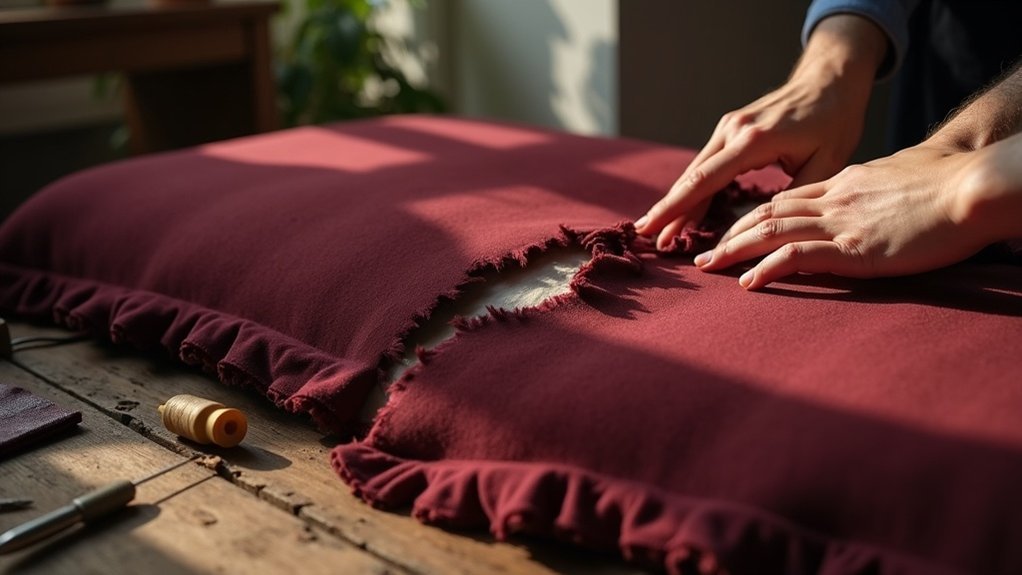
To maintain your home gym equipment and ensure it lasts long, you may encounter issues like torn upholstery on benches. To repair torn bench upholstery, start by cutting a heavy-duty fabric patch larger than the tear. Carefully peel back the torn flap and insert the patch underneath for added support. Use upholstery pins to secure the flap in place. Next, apply strong latex fabric glue over the patch and the edges of the tear, then reposition the flap snugly. Hold it in position until the glue dries completely. Regular maintenance of your gym equipment can prevent future damage, helping you stay on track with your fitness goals and keep your home gym in top shape.
Key Takeaways
- Choose a heavy-duty fabric patch that is larger than the torn area of your bench upholstery, ensuring it can withstand regular use during workouts.
- Carefully peel back the torn flap and position the patch underneath for added support during exercises.
- Use upholstery pins or a sturdy skewer to secure the torn flap and patch, ensuring it stays in place while you continue your fitness routine.
- Apply a thin layer of strong latex fabric glue over the patch and the edges of the tear to ensure durability, as a secure bench is crucial for your home gym.
- Allow the glue to dry completely, keeping the flap snug with pins to ensure a solid and safe repair for your workout sessions.
Materials Needed for Repairing Torn Upholstery
When tackling a torn bench upholstery repair, having the right materials on hand is vital for a successful outcome, especially if your bench is part of your home gym setup.
Start with heavy-duty fabric, like canvas or upholstery-grade materials, to ensure durability in your patch, as this will withstand the wear and tear from your workouts. A strong latex fabric glue is essential for securing the patch, providing a lasting bond that endures stress from daily use.
You’ll also need scissors to cut the fabric accurately for a clean fit over the tear. Use upholstery pins or a poultry skewer to hold the patch in place while the glue dries, and a spoon can help adjust the patch for even coverage under the torn flap.
Steps to Repair Torn Upholstery
To keep your home gym looking its best, it’s essential to maintain your exercise equipment, including repairing any torn upholstery on benches or seating.
Here’s how to achieve a professional-looking repair. First, cut a piece of heavy-duty fabric that’s larger than the torn area to serve as a patch. Next, gently peel back the torn flap and slide the patch underneath.
Secure the flap with a poultry skewer or upholstery pin for stability. Then, apply a thin layer of latex fabric glue over the patch and the edges of the tear.
Carefully reposition the flap, ensuring a snug fit, and secure it with pins until the glue dries. Regularly inspect the repaired area to prevent further wear and extend the life of your home gym equipment, allowing you to stay focused on your fitness goals.
Tips for Maintaining Upholstery
Maintaining upholstery in your home gym is crucial for preserving both functionality and aesthetics. Regularly inspect your upholstery for signs of wear or tears, and address any issues promptly to prevent further damage. To protect the fabric’s integrity, store gym equipment in a dry area, away from direct sunlight. Use a whisk broom to gently dust upholstery, as vacuum cleaners may snag and pull threads. For more stubborn stains or heavy soiling, consider hiring professional cleaning services instead of attempting risky DIY methods. It’s also wise to keep spare materials and repair kits on hand for quick fixes, allowing you to handle minor issues before they become major problems.
| Action | Benefit |
|---|---|
| Regular Inspections | Extend lifespan |
| Proper Storage | Minimize degradation |
| Use Repair Kits | Quick and effective fixes |
Common Challenges in Upholstery Repair
Although setting up a home gym can seem straightforward, several common challenges can complicate the process.
First, accurately evaluating the space available for equipment is critical; understanding the dimensions and layout of your workout area dictates the best equipment choices.
Furthermore, selecting the right types of equipment—such as free weights, resistance bands, or cardio machines—is essential for a balanced workout routine. For limited spaces, multi-functional equipment may provide a practical solution, but its effectiveness varies by usage, so always assess your fitness goals first.
Additionally, maintaining a consistent workout schedule is crucial for progress, ensuring you stay motivated and avoid setbacks.
Regular evaluations of your routine and prompt adjustments are important to prevent plateaus and achieve your fitness goals over time.
Alternatives to Traditional Repair Methods
When traditional methods for setting up a home gym seem daunting or time-consuming, several effective alternatives can offer practical solutions.
Instead of heavy equipment, consider resistance bands, which are versatile and easy to store, making them perfect for strength training at home.
For quick workouts, bodyweight exercises like push-ups and squats can be done anywhere, providing a strong workout without the need for bulky equipment.
Larger fitness goals can be addressed by investing in adjustable dumbbells or kettlebells, which you can customize according to your workout needs.
Use a workout app or online videos to guide your routine, ensuring you stay motivated and on track.
Finally, products like fitness trackers deliver convenient insights into your progress, helping you stay committed to your health goals effortlessly.
Resources for Upholstery Repair Supplies
Finding the right supplies for creating a home gym is essential to achieving an effective workout space in your home. Local fitness equipment stores often require you to source items like weights, resistance bands, and mats.
Fitness Depot is a reliable option, offering a variety of exercise equipment and accessories tailored for home workouts. While Gym Outlet provides a selection of workout benches, be cautious as their equipment quality may fall short of professional standards, impacting your exercise experience.
For flooring, consider using heavy-duty gym mats and interlocking tiles to guarantee safety and durability. Additionally, online resources and community forums can help you connect with trustworthy vendors for quality home gym supplies.