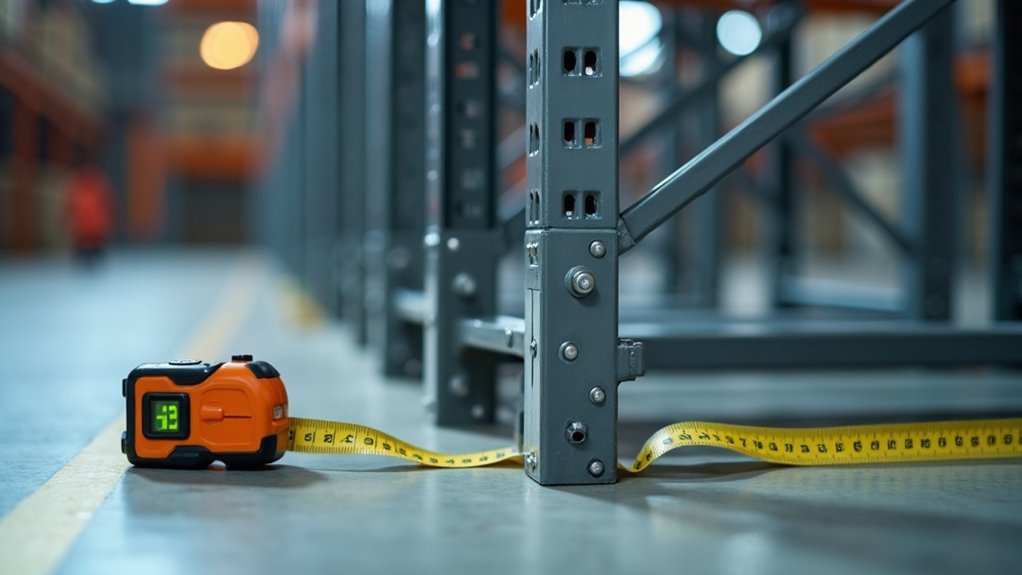
To align rack uprights after moving your home gym equipment, start by clearing the area and ensuring that the floor is level. Use a level to check the verticality of each upright, adjusting with shims if necessary. Secure the footplates to the floor with appropriate anchor bolts, making sure they’re flush and level for optimal stability during workouts. Double-check that all connections between components are tight and that safety clips are engaged. Finally, make any last adjustments to enhance stability, inspecting for any gaps that may affect safety. For more tips on maintaining your home gym’s equipment and ensuring a safe workout environment, explore our resources dedicated to fitness at home.
Key Takeaways
- Begin by clearing the area around your home gym rack, ensuring the floor is level for optimal alignment.
- Utilize a level or plumb line to verify that each upright is perfectly vertical.
- If you find any misaligned uprights, make adjustments using shims or leveling techniques to achieve a stable setup.
- Secure the footplates with the appropriate anchor bolts, making sure they are flush with the floor for safety during workouts.
- After relocating your rack, regularly inspect all connections and components to ensure they are tight and properly seated for your home exercise routine.
Preparing the Area for Alignment
Before you begin aligning your home gym rack uprights, it’s essential to prepare the area effectively for a safe and efficient workout environment. First, clear the space around the rack system to ensure safety and eliminate any trip hazards that could lead to injuries.
Next, use a level to check the floor for evenness, as uneven flooring can compromise the stability of your gym equipment and affect your workouts. Gather the necessary tools, including a tape measure, level, and shims, to assist with achieving accurate alignment.
Mark the desired alignment positions on the floor with chalk lines or markers to ensure precision. Finally, inspect all components for any damage and verify that they’re securely fastened to maintain structural integrity before starting the alignment process, ensuring your home gym is safe and ready for your fitness journey.
Checking Verticality of Uprights
Once your home gym area is set up, it’s crucial to check the verticality of your rack uprights to ensure a safe and effective workout environment.
Use a level or plumb line to confirm that each upright is straight and aligned. Measure the distance from the upright to a fixed point at both the top and bottom; equal measurements indicate proper vertical alignment.
Ensure each upright is straight by using a level or plumb line and measuring from a fixed point at both the top and bottom.
If you find that an upright is misaligned, adjust its base or use shims beneath the footplate to correct it. Regular inspections are essential for maintaining the structural integrity of your equipment, as misaligned uprights can compromise safety standards and load capacity.
Make sure to address any deviations to keep your home gym safe and functional for your fitness journey.
Securing Footplates to the Floor
Securing footplates to the floor is crucial for maintaining the stability of your home gym equipment and ensuring your safety during workouts.
Use appropriate anchor bolts that match the footplate size and the floor’s bearing capacity. Typically, it’s recommended to use a minimum of four bolts, depending on your rack’s height and load capacity.
Before installation, ensure the footplate is level and flush with the floor to prevent any structural failure. Choose concrete anchors that are suitable for your flooring type to ensure a secure attachment.
Regular inspection of your rack is essential; check for any compromised anchors or damaged components that could undermine stability and safety, allowing you to focus on your fitness journey with confidence.
Verifying Connections Between Components
After you’ve secured the footplates to the floor, it’s time to verify that all connections between the rack uprights and beams in your home gym are tight and secure.
Check that the uprights are plumb and beams are level using a level tool. Confirm that safety clips are fully engaged on each beam to avoid any risk of instability while you work out.
Inspect all bolts and anchors for tightness, as loose connections can lead to serious safety hazards under load.
Remember to monitor and maintain these connections regularly, since vibrations and dynamic movements during your workouts may loosen gym equipment components over time.
Taking a proactive approach ensures your home gym remains safe and functional for your fitness journey.
Final Adjustments for Stability
To ensure your home gym’s rack uprights are stable and safe, it’s crucial to make final adjustments after aligning them. Use a plumb bob or level to verify the alignment of each upright frame, which is key for proper load distribution during your workouts.
Adjust the footplates to match the floor’s levelness and secure them with anchor bolts to prevent any risk of tipping while exercising.
Check the connection points between the uprights and beams, confirming they’re properly seated and secured with safety clips for added stability.
Lastly, inspect the overall rack system for any gaps or uneven spacing that could compromise safety during your workouts.
Document all adjustments made for accurate records and future inspections to maintain a safe and effective home gym environment.
Safety Precautions Before Resuming Use
Before you start using the moved rack uprights in your home gym, it’s crucial to ensure the area is clear of trip hazards and obstacles.
Conduct a thorough inspection for any signs of damage or wear that may have occurred during the move, as these can compromise safety.
Make sure the uprights are plumb and level to maintain stability and prevent load imbalances, which is essential for safe lifting.
Ensure uprights are plumb and level for stability, preventing load imbalances crucial for safe lifting.
Check that footplates are securely anchored to the floor for safe operation during your workouts.
Lastly, confirm that the racks comply with local safety codes and regulations, including OSHA and RMI standards, before putting them back into service.
Your safety and fitness goals depend on it!