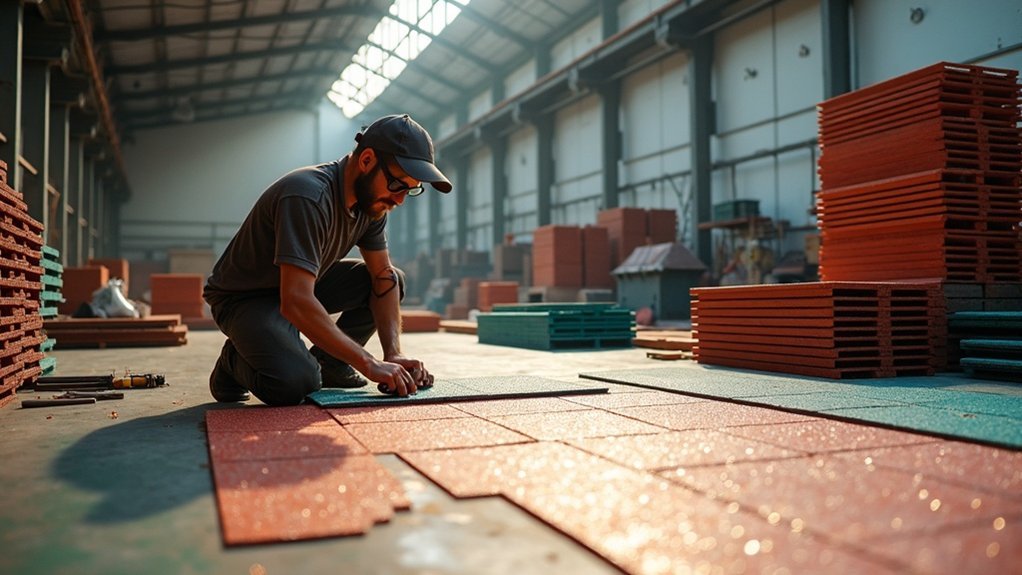
To recycle rubber flooring from your home gym, begin by checking with local recycling centers to see if they accept rubber materials. Clean the flooring thoroughly by removing any non-rubber components and ensuring it’s free of dirt and debris. If you have large pieces, cut them into smaller sections to make transportation easier. Follow the center’s guidelines for dropping off the materials. This process not only helps reduce waste but also promotes sustainability in your fitness journey. If you’re interested in the benefits of recycling rubber flooring and how it contributes to a healthier home environment, stay tuned for more insights!
Key Takeaways
- Before recycling your old rubber flooring, check with local recycling centers that accept materials from home gym renovations to ensure they meet specific requirements for rubber flooring.
- To enhance the chances of acceptance at recycling facilities, thoroughly clean your rubber flooring by removing any non-rubber components, such as adhesives or underlay.
- If you have large rubber pieces from your home gym, consider cutting them into smaller sections, adhering to the guidelines provided by the recycling center for easier processing.
- When transporting your prepared rubber flooring materials, be sure to follow the instructions given by the recycling facility to ensure a smooth drop-off.
- Consider choosing rubber flooring made from recycled materials for your home gym setup to support sustainability efforts and minimize your environmental impact while staying fit.
Can Rubber Flooring Be Recycled?
When considering rubber flooring for your home gym, you might wonder: can it really be recycled? The answer is yes, especially if it’s made from natural or recycled rubber materials.
Each year, over 290 million tires are recycled in the U.S., and recycling rubber flooring plays a crucial role in minimizing landfill waste. Many local recycling centers accept rubber flooring, but it’s important to check their specific cleanliness requirements and the types of rubber they accept.
How Rubber Flooring Is Recycled
Recycling rubber flooring is an important aspect of promoting sustainability in home gym setups. The process begins at recycling facilities, where materials are collected and sorted by type. The recycling journey involves shredding the flooring into smaller pieces to separate the rubber from non-recyclable components, ensuring that our gym environments remain eco-friendly. Following this, the shredded rubber flooring is ground into crumb rubber, which can be repurposed into various products, including durable gym mats and other fitness equipment.
| Step | Description |
|---|---|
| Collection | Gather rubber materials at recycling centers. |
| Sorting | Sort by type: natural or synthetic. |
| Shredding | Shred to separate rubber from non-recyclables. |
| Grinding | Produce crumb rubber for repurposing into gym products. |
Benefits of Recycling Rubber Flooring
The benefits of recycling rubber flooring go beyond just reducing waste; they’re crucial for promoting a healthy and sustainable home workout environment. By repurposing old materials into recycled rubber, you help minimize landfill waste and conserve natural resources, allowing you to create a greener space for your home gym.
This process supports a circular economy, transforming what was once considered waste into valuable products that enhance your fitness experience.
Moreover, using recycled rubber flooring can significantly reduce energy consumption during manufacturing, which can help lower your carbon footprint while you focus on your fitness goals.
With a lifespan exceeding 20 years, these durable flooring solutions not only withstand the rigors of your workouts but also provide a long-lasting, eco-friendly option for your home gym.
Ultimately, choosing recycled rubber flooring promotes healthy living and environmentally responsible practices, making your fitness journey even more rewarding.
Steps to Recycle Rubber Flooring
Recycling rubber flooring is an essential step for maintaining an eco-friendly home gym while ensuring your workout space is safe and efficient.
Follow these guidelines to recycle rubber flooring successfully:
- Check with local recycling centers to find out if they accept rubber flooring, as they may have specific guidelines tailored to your area.
- Clean and prepare the rubber rolls by removing non-rubber components; ensuring the materials are clean can significantly increase the likelihood of acceptance.
- Cut large pieces into smaller sections if required by the facility, making them easier to handle and transport.
Choosing Sustainable Rubber Flooring Options
When you’re looking to enhance your home gym with rubber flooring, it’s essential to explore sustainable options that complement your commitment to eco-friendly practices.
Prioritize products made from recycled tire rubber, as they conserve natural resources and support a circular economy through repurposed materials.
Opt for flooring that’s tested for durability, ensuring it lasts up to 20 years, which helps reduce waste over time.
Look for eco-friendly certifications that validate sustainability claims, and consider options with recyclable packaging to minimize waste from the get-go.