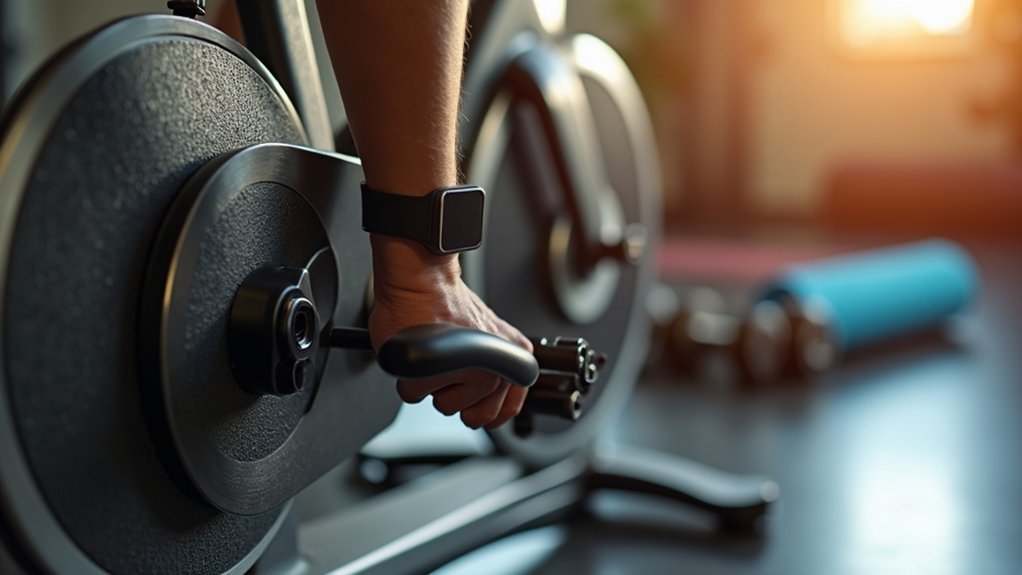
To test a used spin bike drivetrain effectively, begin by thoroughly inspecting the cranks, derailleur, chain, and jockey wheels for any signs of wear or rust. Utilizing a pedal power meter can help you measure your power output, ensuring proper installation for the most accurate results. Additionally, assess efficiency with a hub power meter during controlled ride trials to get a better understanding of the bike’s performance. As you shift through all the gears, pay close attention to any unusual noises that may indicate issues. This comprehensive approach will help you identify any discrepancies in performance, ensuring you invest in a spin bike that enhances your home workout experience. There’s plenty more to explore about optimizing your at-home fitness journey!
Key Takeaways
- Inspect the chain for wear and ensure it does not exceed 1% elongation to maintain optimal shifting efficiency for your home workouts.
- Check the derailleur alignment to ensure smooth shifting, and listen for any unusual noises during gear changes to prevent interruptions during your exercise sessions.
- Examine cranks and jockey wheels for rust, play, or excessive wear that could affect your ride quality, ensuring a safe and effective workout.
- Conduct controlled ride trials on a flat surface, shifting through all gears to evaluate responsiveness and smoothness, which is essential for maintaining your fitness routine at home.
- Utilize a pedal power meter to measure power output and identify any performance discrepancies, ensuring you maximize your efforts during each workout while staying healthy at home.
Inspecting Drivetrain Components for Wear and Tear
When inspecting the drivetrain components of a used spin bike for your home gym, it’s essential to look for signs of wear and tear to ensure optimal performance in your workouts.
Begin by examining the cranks for any rust or play, as these issues can affect your ride quality. Make sure the derailleur is properly aligned; misalignment can hinder smooth shifting and cause unnecessary wear on other components.
Check the chain length; a stretched chain can compromise shifting efficiency and lead to faster deterioration of the cassette and chainrings. Look closely at the derailleur jockey wheels for any cracks or excessive wear.
Lastly, be aware of any discoloration or grit, as these indicators of neglect can increase the risk of future drivetrain problems.
Using a Pedal Power Meter for Input Measurement
Although you might enjoy the feel of pedaling on a used spin bike in your home gym, understanding your performance metrics can significantly enhance your workout. A pedal power meter is an essential tool for measuring the power exerted during pedaling, providing valuable insights into your workout efficiency. These meters track power output in watts, enabling a precise analysis of your performance metrics over time.
To ensure accurate readings, it’s crucial to guarantee proper installation and calibration of the power meter, as errors can lead to misleading data. Many models also measure cadence, which allows you to evaluate both your pedaling efficiency and power output simultaneously.
Regularly testing with a pedal power meter can help you identify any wear in your drivetrain and potential performance issues, making it easier to maintain and adjust your home gym equipment for optimal results. Embracing these tools can lead to more effective workouts and a healthier lifestyle right from the comfort of your home.
Evaluating Output With a Hub Power Meter
To accurately assess the performance of a used spin bike for your home gym, evaluating output with a hub power meter is crucial. This device measures power directly at the wheel hub, providing precise data on power transmission during your workouts.
Before beginning your assessment, ensure the hub power meter is calibrated and compatible with the bike’s drivetrain. By monitoring real-time efficiency losses, you can identify potential issues like chain wear or alignment problems that could affect your fitness routine.
Comparing readings from the hub power meter with expected performance metrics allows you to spot any discrepancies in output. Regular evaluations will help track your progress and inform necessary adjustments, ensuring you get the most out of your spin bike and stay committed to your health and fitness goals at home.
Conducting Controlled Ride Trials
Conducting controlled ride trials is essential for accurately evaluating a used spin bike’s drivetrain performance, especially for those looking to enhance their home gym setup and maintain a healthy lifestyle.
To ensure a thorough assessment, follow these guidelines:
- Choose a flat surface and maintain consistent resistance throughout the ride for accurate results.
- Shift through all gears multiple times, paying attention to the smoothness and responsiveness of the transitions.
- Listen for any unusual noises, such as grinding or clicking, which may indicate underlying issues with the bike.
- Measure the chain length before and after the trial to assess wear and overall condition.
Document any performance changes or findings during the trial.
This meticulous approach not only helps you gauge the drivetrain’s condition effectively but also empowers you in negotiations with the seller regarding the bike’s value, ensuring you invest wisely in your home gym equipment.
Testing Under Varying Resistance Levels
When testing the spin bike drivetrain at home, begin by gradually increasing the resistance while pedaling to assess how smoothly it shifts.
Carefully observe any changes in effort and responsiveness, as well as any unusual noises that could indicate potential issues.
This evaluation will help you determine the effectiveness of the resistance mechanism and the overall condition of the drivetrain, ensuring that your home workouts remain efficient and enjoyable for both men and women looking to stay healthy through exercising at home.
Resistance Level Adjustments
Testing the resistance level adjustments on a used spin bike is crucial for achieving a smooth and effective home workout experience.
- Ensure that resistance changes are smooth and responsive, without any sticking or grinding noises that could disrupt your session.
- Make sure the resistance knob or lever operates correctly across its entire range, allowing for easy modifications to suit your fitness level.
- Observe the flywheel to confirm it spins consistently without excessive wobbling, which can impact your workout stability.
- Listen for any unusual sounds such as clicking or rattling during resistance adjustments, as these may indicate underlying issues.
By following these steps, you can identify potential drivetrain problems, ensuring your spin bike provides reliable performance.
A well-functioning resistance mechanism is vital for enhancing your home workout, allowing you to gradually increase or decrease difficulty as needed, helping you stay fit and healthy from the comfort of your home.
Smoothness During Transition
After ensuring that the resistance adjustments on your spin bike are functioning properly, it’s essential to evaluate how smoothly the bike performs across different resistance levels.
Gradually increase the resistance while pedaling to assess the drivetrain’s responsiveness. Keep an eye out for any jerky movements or skipping, and listen for any unusual sounds like grinding, which could indicate derailleur misalignment or chain wear.
Pay attention to how smoothly the pedals turn; a well-maintained drivetrain should provide consistent and seamless resistance. Shift through all gears multiple times to confirm smooth transitions.
Document any irregularities you notice, as persistent issues may require maintenance or repair to keep your home gym equipment in top condition for your fitness journey.
Documenting Findings for Accuracy
Accurate documentation during your assessment of a used spin bike drivetrain is essential for understanding the condition of its components.
By meticulously documenting your findings, you can ensure a comprehensive view of potential issues that may affect your home workout experience.
Consider noting the following:
- Chain length within manufacturer specifications to prevent shifting problems, ensuring a smooth ride
- Any rust or wear on cranks and the alignment of the derailleur for optimal performance
- Drivetrain cleanliness and smoothness during gear shifts to maintain an effective workout
- Modifications such as upgraded chains or different gearing setups that can enhance your training
This log not only aids in immediate evaluations but also serves as valuable evidence for future repairs or resale, ultimately enhancing your overall experience with home gym equipment and supporting your fitness journey.
Identifying Discrepancies in Efficiency
Identifying discrepancies in efficiency is crucial for ensuring optimal performance in a used spin bike drivetrain, which is essential for a successful home workout. Start by inspecting the chain for wear; a chain that has elongated beyond 1% may indicate inefficiency, affecting your exercise routine. Next, evaluate the derailleur alignment to guarantee smooth gear shifts, allowing for a better cycling experience. Check the crankset for rust or play, as these issues can lead to power loss during your workouts. Measure the chain length to assess wear, and inspect the derailleur jockey wheels for cracks. Neglecting these elements can significantly impact the efficiency of your drivetrain, ultimately affecting your fitness goals.
| Component | Check for Issues |
|---|---|
| Chain | Wear beyond 1% |
| Derailleur Alignment | Misalignment |
| Crankset | Rust or play |
| Chain Length | Elongation |
| Jockey Wheels | Cracks or wear |
Final Assessment of Drivetrain Performance and Reliability
To assess the performance of your home gym equipment, start by inspecting the resistance bands or cables for any signs of wear or damage, as a compromised band can hinder your workout efficiency.
Next, evaluate the functionality of your weights or machines during a session; smooth transitions and adjustments are essential for maintaining an effective workout.
These checks will help determine the overall reliability of your home gym setup and ensure you stay on track with your fitness goals.
Inspect Chain Condition
Inspecting the chain condition of a used spin bike is crucial for ensuring optimal performance and reliability of your home gym equipment. A well-maintained chain allows for a smooth and enjoyable workout, while a worn chain can lead to frustrating issues that hinder your fitness journey.
- Look for signs of wear, such as elongation or rust, to ensure you’re getting the best experience from your bike.
- Use a chain checker tool to measure the chain length; if it exceeds 0.5% to 0.75% stretch, it’s time for a replacement to maintain your bike’s efficiency.
- Check for kinks or stiff links that could affect your ability to shift gears seamlessly during your workouts.
- Evaluate the lubrication and cleanliness of the chain; if it’s dirty, dry, or overly greasy, you may need to clean or replace it to keep your spin bike performing at its best.
Regular maintenance of your spin bike’s chain will help you stay on track with your home fitness goals and ensure a reliable workout experience.
Evaluate Gear Shifting
How smoothly does the gear shifting operate on a used spin bike? To assess this, shift through all gears while pedaling, ensuring the changes are smooth without any skipping or sticking.
Listen for unusual noises during gear changes, as these may indicate misalignment or wear within the drivetrain that can affect your workout experience.
Inspect the derailleur for proper alignment and functionality; it should move freely without obstructing the chain, allowing you to enjoy a seamless ride.
Check the chain length for wear, looking for signs of elongation or stiffness that could hinder performance.
A well-maintained second-hand drivetrain is essential for achieving precise gear shifts with minimal resistance, ensuring your home gym setup is reliable and ready for your fitness journey.