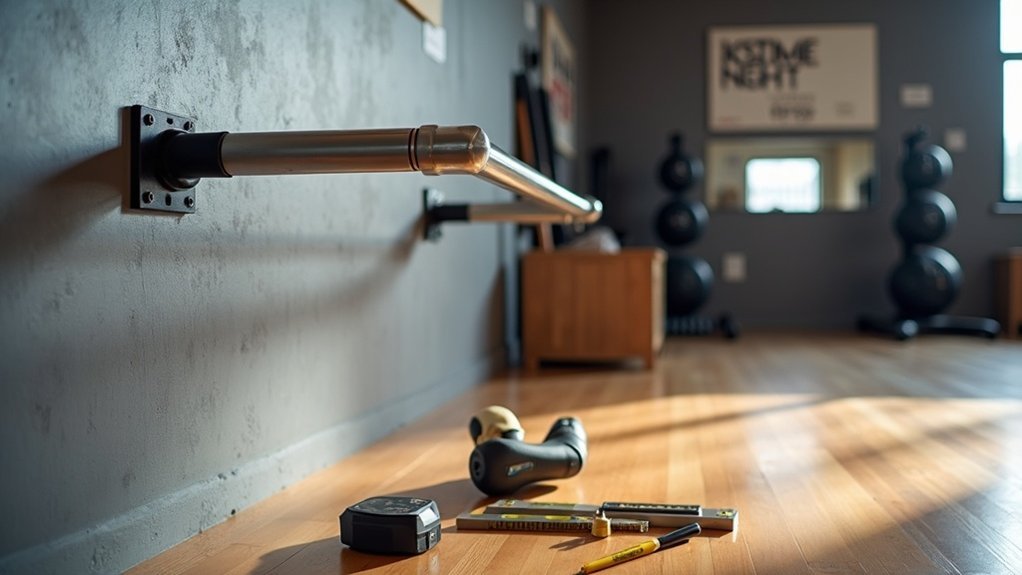
To install a wall-mounted dip bar, start by gathering the necessary tools, including a drilling template and a percussion drill with 5 mm and 10 mm bits. Select a sturdy wall that can support your workout needs, locate the studs, and predrill seven holes for secure installation. Use the 10 mm bit for deeper anchoring, and insert dowels to ensure a strong hold. Tighten the screws securely to guarantee stability during your workouts. Always check the alignment of your installation to ensure safety while exercising. For more detailed tips on ensuring stability and troubleshooting any issues, feel free to explore additional instructions tailored to help you create an effective home gym for your fitness journey.
Key Takeaways
- Before you start installing your wall-mounted dip bar, gather all necessary tools such as a drilling template, drill bits, and safety gear to ensure a smooth and safe process.
- Begin by predrilling seven holes using a 5 mm drill bit, then switch to a 10 mm drill for secure anchoring, ensuring each hole is at least 110 mm deep for optimal stability.
- Take care to align the drilling template correctly; proper alignment is crucial to avoid misalignment and ensure the dip bar is stable and safe to use.
- Once you’ve prepped the holes, install the dowels carefully using a hammer, and then secure the indoor adapter with screws. Make sure to tighten them well for maximum stability during your workouts.
- After installation, conduct regular inspections to check for any wear and tear, ensuring all components remain tightly secured. This will help maintain the safety and functionality of your dip bar, allowing you to focus on your fitness goals at home.
Required Tools and Materials
To install a wall-mounted dip bar in your home gym, you’ll need several essential tools and materials to ensure a secure setup that supports your fitness journey.
Begin with a drilling template to determine the precise placement of the adapter on the wall. A percussion drilling machine is crucial for effectively creating holes in the surface.
You’ll also require a 5 mm drill bit for predrilling all seven holes. After that, switch to a 10 mm drill bit for deeper anchoring, ensuring the drill depth reaches at least 110 mm.
Lastly, keep a vacuum handy to clean up any drilling dust from the holes, promoting a clean and safe installation for your home workout space.
Preparing for Installation
Before you begin your home gym installation, gather all necessary tools and materials, ensuring you have everything from the drilling template to your percussion drilling machine.
Choose an appropriate installation location, keeping in mind the minimum clearance needed for safe movement during workouts and checking for any wall obstructions that could hinder your exercise routine.
Finally, don’t forget to prioritize safety precautions to protect yourself and your surroundings while setting up your home gym.
Required Tools and Materials
Installing a dip bar at home is an excellent way to enhance your fitness routine and build strength. To ensure a secure and effective setup, you’ll need specific tools and materials.
Start with a drilling template to accurately mark your holes. A percussion drilling machine will help you anchor the dip bar securely, and don’t forget the indoor adapter for convenient installation.
Essential tools include a hammer, along with 5 mm and 10 mm drill bits to pre-drill and secure screws. A spanner is necessary to tighten them into the wall for stability.
To ensure that your installation is perfectly aligned, a Connex spirit level is a must-have. Additionally, keep a vacuum cleaner nearby to remove any drilling dust, helping you maintain a clean and organized workout space for your home gym.
This setup not only supports your fitness journey but also promotes a healthier lifestyle right from the comfort of your home.
Choosing Installation Location
When selecting the installation location for your dip bar at home, it’s essential to ensure both adequate clearance and structural integrity for a safe workout experience. Aim for a minimum of 45 cm between the top edge of the dip bar adapter and the ceiling to allow for free movement.
Choose a wall that’s structurally sound, such as concrete or reinforced concrete, to maintain stability during use. Use a spirit level to accurately mark the installation height, ensuring the dip bar is level for optimal performance.
Additionally, make sure the area is clear of obstructions like furniture or equipment that could impede your workout.
Lastly, consider the accessibility of power outlets for any additional equipment or lighting you may want to incorporate into your home gym setup.
Safety Precautions to Consider
Safety is essential when installing your dip bar to ensure a smooth process and avoid accidents. Start by locating wall studs with a stud finder to confirm that your wall can support the weight of the dip bar. Always prioritize your safety by wearing goggles and gloves to protect yourself from any debris. Clear the area of any obstacles to prevent tripping hazards, and make sure your tools are in good working condition before you begin. Lastly, take a moment to review the installation instructions carefully to ensure you understand each step involved.
| Safety Precautions | Importance | Action Required |
|---|---|---|
| Use safety gear | Prevent injuries | Wear goggles and gloves |
| Locate wall studs | Ensure stability | Use a stud finder |
| Clear installation area | Avoid tripping hazards | Remove clutter |
| Check tools | Prevent malfunctions | Inspect tools thoroughly |
| Review instructions | Minimize errors | Read before starting |
Step-by-Step Installation Guide
To successfully install a dip bar in your home gym, start by preparing your workspace and gathering the necessary tools and materials.
Begin by predrilling all seven holes in the wall using a 5 mm drill bit, then switch to a 10 mm drill for proper anchoring. Ensure that the drill depth reaches at least 110 mm to securely accommodate the anchors.
Position the indoor adapter over the drilled holes and use a hammer to firmly install the dowels into the wall. Finally, use a wrench to turn the screws into the wall, ensuring a tight fit for stability.
If you’re working with concrete walls, additional drilling techniques may be required to ensure a secure installation.
Enjoy your new dip bar and enhance your home workouts!
Tips for Ensuring Stability
After securing your dip bar installation, focusing on stability is crucial for safe and effective workouts at home.
Ensure that all seven pre-drilled holes are 5 mm in diameter and at least 110 mm deep for proper anchoring. Use a hammer to install dowels flush with the wall, ensuring a solid foundation.
When securing the indoor adapter over the holes, apply even pressure for a snug fit. Utilize a wrench to tighten the screws without over-torquing, as this can prevent damage to your wall.
For added stability, check that the dip bar is perfectly horizontal with a spirit level before finalizing the installation. This step confirms that your pull-up bar will remain secure during use, allowing you to focus on achieving your fitness goals from the comfort of your home.
Troubleshooting Common Issues
When troubleshooting common issues with your dip bar installation, begin by checking for misalignment of the drill holes, as this can impact stability during your workouts.
If you discover that the wall support is insufficient, consider using longer screws or additional anchors suited to your specific wall type to ensure a secure fit.
Lastly, ensure all installation components are securely tightened to eliminate any wobbling during use, allowing you to focus on achieving your fitness goals safely and effectively at home.
Misalignment of Drill Holes
If you notice misalignment of drill holes during your dip bar installation, addressing the issue promptly is essential for ensuring a safe and effective home workout. Here’s how to fix it:
- Confirm that your drilling template is perfectly level before marking the drill holes.
- Predrill all seven holes with a 5 mm drill to create a guide, then switch to a 10 mm drill for deeper anchoring.
- If misalignment occurs, gently use a hammer to reposition the indoor adapter over the holes, ensuring it aligns properly.
- Verify that the drill depth is at least 110 mm to ensure stability and safety for your dip bar during workouts.
Insufficient Wall Support
To ensure a safe and effective installation of your dip bar in your home gym, it’s essential to verify that the wall you’re mounting it on has sufficient support.
Ideally, a solid concrete wall is best for preventing issues related to insufficient wall support. If you need to mount it on drywall or a hollow wall, make sure to use wall anchors rated for heavy loads to ensure stability.
Before you start drilling, take a moment to inspect the wall for any damage that could compromise its strength.
Pre-drill all seven holes with a 5 mm bit to a depth of at least 110 mm for secure anchoring.
Keep in mind that an uneven bar can cause improper weight distribution, so always use a spirit level during installation to ensure everything is aligned perfectly for your workouts.
Loose Installation Components
While securing your dip bar, it’s essential to address any potential issues with loose installation components, as these can compromise both your safety and the effectiveness of your home workouts.
- Ensure that all screws are tightened securely; loose screws can lead to instability, which is the last thing you want during your exercise routine.
- Check the wall anchors to make sure they’re properly seated and not stripped, preventing any future looseness that could disrupt your workout.
- Confirm that the drill depth for holes is at least 110 mm for adequate anchoring, ensuring your equipment can handle your weight during intense sessions.
- Inspect the predrilled holes for cleanliness; debris can hinder a secure installation, which is crucial for both safety and performance.
Maintenance and Safety Considerations
Maintaining your dip bar is crucial for ensuring both your safety and the durability of your home gym equipment.
Regular inspections for wear and tear are a must—check that all screws and anchors are tightly secured to maintain stability during your workouts.
Regularly inspect your dip bar for wear and tear, ensuring all screws and anchors are securely fastened for optimal stability.
Keep the dip bar and its surrounding area clean to avoid dirt and moisture buildup, which can lead to corrosion and create slippery surfaces.
Ensure the installation area is free from any obstructions to allow for safe movement while exercising.
Always adhere to the dip bar’s weight capacity to prevent any risk of structural failure.
After intense workouts, periodically check the mounting hardware for any looseness, and re-tighten or replace components as needed to maintain safety during your training sessions.
Your commitment to maintenance will help you enjoy a safe and effective workout experience.