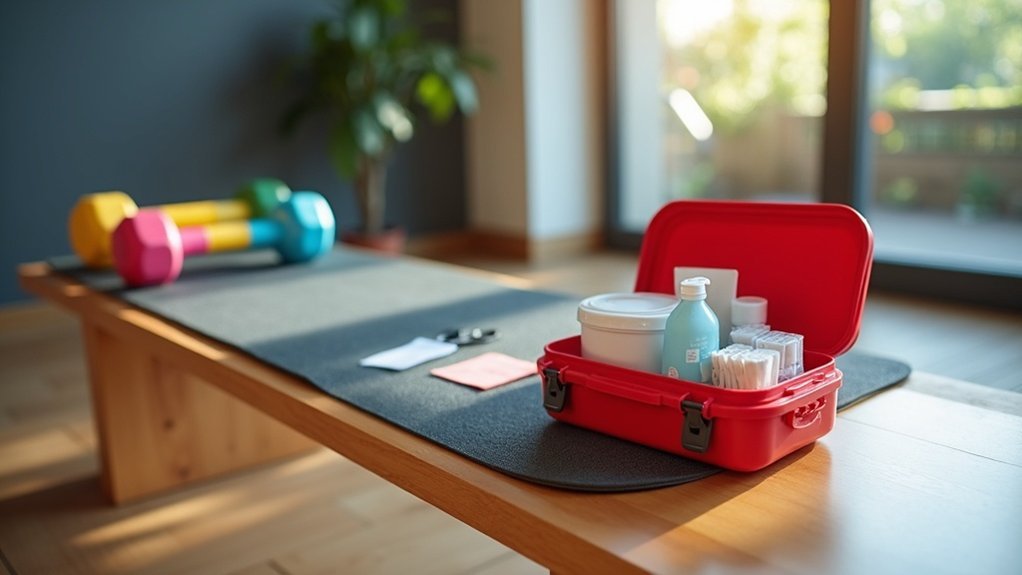
To set up a first aid kit for your home gym, begin with a portable, water-resistant container that features a secure latch for easy access. Equip it with adhesive bandages in various sizes to handle minor cuts and scrapes, antiseptic wipes to clean wounds, self-adhesive elastic bandages for sprains, and a cold pack for reducing swelling. Don’t forget to include essential tools like scissors, tweezers for removing splinters, and a digital thermometer to monitor your health. Organize your supplies with clear labels for quick identification, and make it a habit to check your kit every three months to restock any necessary items. With the right preparation, you’ll be ready to tackle any minor injuries that may occur during your workouts at home.
Key Takeaways
- Select a portable, water-resistant container with a secure latch that allows for clear visibility, ensuring quick access to your first aid supplies during workouts.
- Include essential items such as adhesive bandages, antiseptic wipes, and self-adhesive elastic bandages to effectively treat common exercise-related injuries.
- Organize and label your supplies by type, using bright colors for easy identification, making it simple to find what you need in case of an emergency.
- Regularly check and restock your first aid kit every three months, and be vigilant about monitoring expiration dates on all items to ensure their effectiveness.
- Consider adding extra items such as disposable gloves, a digital thermometer, and an epinephrine autoinjector to provide comprehensive care for a range of injuries you might encounter while staying active at home.
Selecting the Right Container for Your First Aid Kit
When setting up your first aid kit for your home gym, choosing the right container is crucial for ensuring safety during your workouts.
Look for a portable, water-resistant option with a secure latch to safeguard your supplies from moisture and potential damage. A clear container is ideal as it allows you to quickly view and access the contents without sifting through items.
Select a compact size that fits seamlessly in your gym space while still allowing for a well-stocked first aid kit. Ensure the container includes enough compartments to keep supplies organized by type, and label it prominently with “First Aid Kit” in bright red for easy identification in case of emergencies.
Taking these steps will help you maintain a safe and effective workout environment for all fitness enthusiasts.
Essential Supplies for Your Home Gym First Aid Kit
To ensure you’re well-prepared for any minor injuries while exercising at home, it’s essential to equip your home gym first aid kit with the right supplies.
Start by including an assortment of adhesive bandages in various sizes to address cuts and abrasions that may occur during workouts. Antiseptic wipes are also crucial for cleaning wounds and preventing infections.
Include a variety of adhesive bandages and antiseptic wipes in your home gym first aid kit to manage cuts and prevent infections.
Consider adding self-adhesive elastic bandages to provide compression for sprains or strains that may happen as you push your limits. A cold pack is important for treating swelling or bruising, helping you recover quickly after your sessions.
Lastly, make sure your kit includes scissors, tweezers, and a digital thermometer for effective injury management.
With these essentials in place, you’ll be ready to tackle any mishap that may arise on your fitness journey at home.
Organizing and Labeling Your First Aid Supplies
Organizing and labeling your home gym equipment is essential for ensuring a smooth and efficient workout experience. Use portable, durable containers with secure lids to protect your gear.
Follow these steps for ideal organization:
- Group equipment by type: Weights, resistance bands, and yoga mats should be stored in separate areas for quick access.
- Label clearly: Use bright colors on each container or storage area to make identifying gym equipment easy.
- Check for wear and tear: Regularly review your inventory to maintain an effective home gym by replacing damaged or worn items.
Clear storage solutions enhance visibility, allowing you to locate specific equipment swiftly when you’re ready to work out.
Regular Maintenance and Restocking of Your Kit
Maintaining a well-stocked first aid kit is essential for addressing injuries promptly during your home workouts. Regularly checking your kit every three months ensures that you have all necessary supplies, such as adhesive bandages and sterile gauze, in good condition.
It’s important to monitor expiration dates on ointments and antiseptics, replacing any outdated items to ensure they’re effective when you need them. After each workout or injury, be sure to restock any used supplies to keep your kit ready for emergencies.
Keeping a detailed inventory list and updating it whenever you add or replace items will help you stay organized. Consider setting reminders for maintenance checks to establish a routine, ensuring your first aid kit is fully equipped and ready to support your fitness journey at home.
Additional Items for Comprehensive Care in Your Home Gym
While you may have the basics covered in your first aid kit, adding a few more specialized items can enhance your ability to respond to a wider range of injuries and emergencies in your home gym.
Consider including:
- Digital thermometer – for monitoring body temperature during your workouts, ensuring you stay within a healthy range.
- Epinephrine autoinjector – essential for individuals with severe allergies, providing peace of mind while exercising.
- New-Skin antiseptic treatment – perfect for protecting hard-to-cover wounds that may occur during intense sessions.
Additionally, don’t forget to include disposable gloves for hygiene, as recommended by the Red Cross.
With these items, you’ll be better equipped to handle various situations and ensure thorough care in your home gym, keeping your health and safety a top priority.