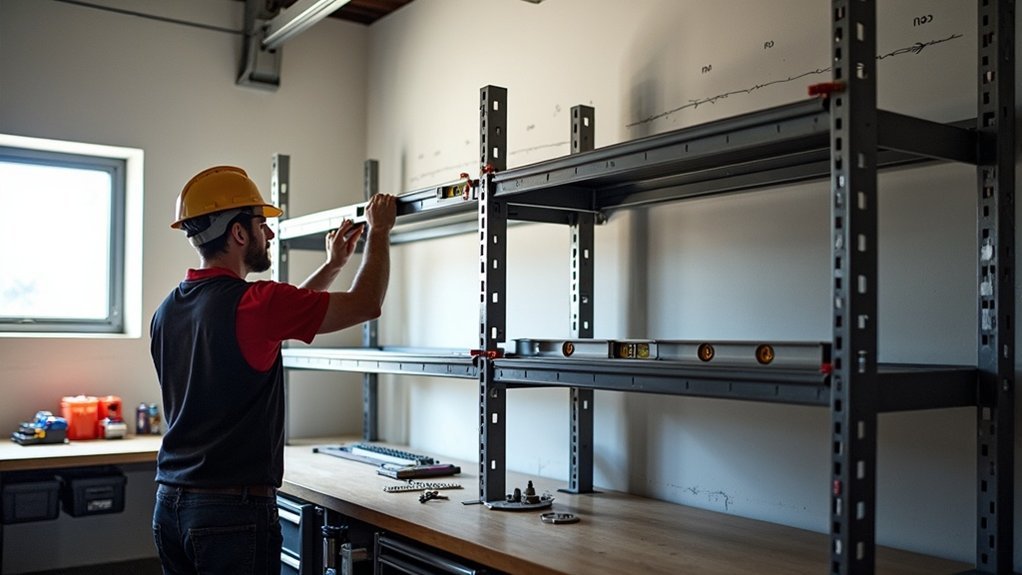
To mount heavy storage racks safely in your home gym, start by inspecting all materials and confirming rack locations with your space layout. Ensure the flooring is level and sturdy to support your equipment. Assemble the upright frames securely, then anchor the racks to the floor for added stability. Regularly check all bolts and connectors, tightening them as needed to maintain safety during your workouts. Implement safety signs to encourage proper use of the equipment. By following these steps, you can create a safe and effective home gym setup that keeps you compliant with safety standards—discover more about maintenance and inspections for ongoing safety in your exercise space.
Key Takeaways
- Before setting up your home gym storage racks, inspect all materials for damage and ensure you have all necessary pieces to avoid any safety issues later on.
- Confirm the designated locations for your racks with a family member or housemate to prevent obstructions and to ensure easy access to your gym equipment.
- Securely anchor your racks to a level and sturdy floor using the appropriate anchors to enhance stability and prevent any tipping, which is especially important in a home gym setting.
- Follow OSHA and ANSI standards for weight capacity and secure storage to ensure safe mounting practices for your exercise gear.
- Conduct regular maintenance checks every six months to identify any wear and ensure all bolts and connectors are tightened, keeping your home gym safe and functional.
Pre-Installation Preparation
Before diving into the installation of your home gym storage racks, it’s essential to prepare thoroughly for a seamless setup.
Start with pre-installation preparation by inspecting all rack materials for completeness and any signs of damage.
Begin by thoroughly inspecting all rack materials for completeness and any signs of damage before installation.
Confirm the designated locations for your racks with your site contact to ensure they won’t obstruct any utilities or walkways.
Check that your flooring is suitable—ideally, it should be level and sturdy enough to safely support the load of your gym equipment.
Conduct a safety meeting to review installation procedures and ensure compliance with health and safety standards.
Lastly, create a layout blueprint of your home gym space and designate an area for organizing your equipment, which will help streamline the installation process and keep your workout area clutter-free.
Installation Process
As you begin the installation process for your home gym equipment, it’s essential to have a clear plan in place. First, create a blueprint of your gym layout and clear the installation area. Assemble the upright frames of your equipment, ensuring that they are stable and secure. Set up each piece of equipment, ensuring all components are properly fastened and leveled to prevent any accidents. Secure the equipment to the floor using appropriate anchors, following the manufacturer’s guidelines to prevent over-tightening. Lastly, don’t forget to install safety signs to promote proper use and loading practices.
| Step | Action | Safety Tip |
|---|---|---|
| 1 | Create a gym layout blueprint | Ensure area is clear |
| 2 | Assemble upright frames | Use proper stabilization |
| 3 | Set up equipment | Level if uneven |
| 4 | Secure equipment to the floor | Follow installation guidelines |
Compliance With Safety Standards
Ensuring compliance with safety standards is essential for the safety and functionality of your home gym equipment. Adhering to OSHA requirements, like securely storing weights and equipment to prevent tipping or collapsing, is vital.
Following ANSI standards guarantees your gear can handle heavy loads and meets design requirements. Additionally, RMI guidelines provide best practices for equipment installation and inspections, maintaining structural integrity.
If you’re in an earthquake-prone area, consider seismic considerations to prevent failures during seismic events. Regular audits of your home gym setup identify hazards, ensuring ongoing stability and compliance with safety standards, ultimately creating a safer workout environment for everyone.
Regular Maintenance and Inspections
Regular maintenance and inspections are essential for ensuring the safety and functionality of your home gym equipment. Schedule regular checks at least every six months to look for signs of wear and any damaged components.
Regular maintenance and inspections are crucial for the safety and performance of your home gym equipment. Check every six months for wear and damage.
Here’s what you should focus on:
- Ensure all bolts, connectors, and anchor points are properly tightened.
- Document your findings and actions taken for safety compliance.
- Educate yourself and others using the equipment to recognize signs of wear and to report any safety concerns.
Address any issues immediately to maintain the integrity of your equipment and prevent accidents.
Need Help?
Need help setting up your home gym? QMH Solutions is ready to assist!
We offer expert consultation to identify the best home gym equipment for your fitness needs. Whether you need guidance on selecting the right gear or tips for creating an efficient workout space, don’t hesitate to reach out at (800) 404-GYM or via email at Info@qmhinc.com.
Regular maintenance and inspections of your equipment ensure safe and effective workouts, helping you stay in peak condition.
Connect with our Home Gym Specialists for personalized advice, guaranteeing your setup is both functional and motivating.
Take the first step toward achieving your fitness goals today!