For enhancing thoracic mobility, it’s important to choose foam rollers that are medium to firm in density and feature either smooth or textured surfaces. A 36-inch long roller offers stability for larger areas, making it ideal for home workouts, while 3-4 inch diameter rollers effectively target specific muscle knots. Recommended options include the OPTP Black Axis Firm Foam Roller and the TriggerPoint Grid 2.0. Utilizing the right roller will significantly improve upper body function, helping you achieve your fitness goals from the comfort of your home. Stay tuned for more valuable information on techniques and safety to enhance your home gym experience.
Key Takeaways
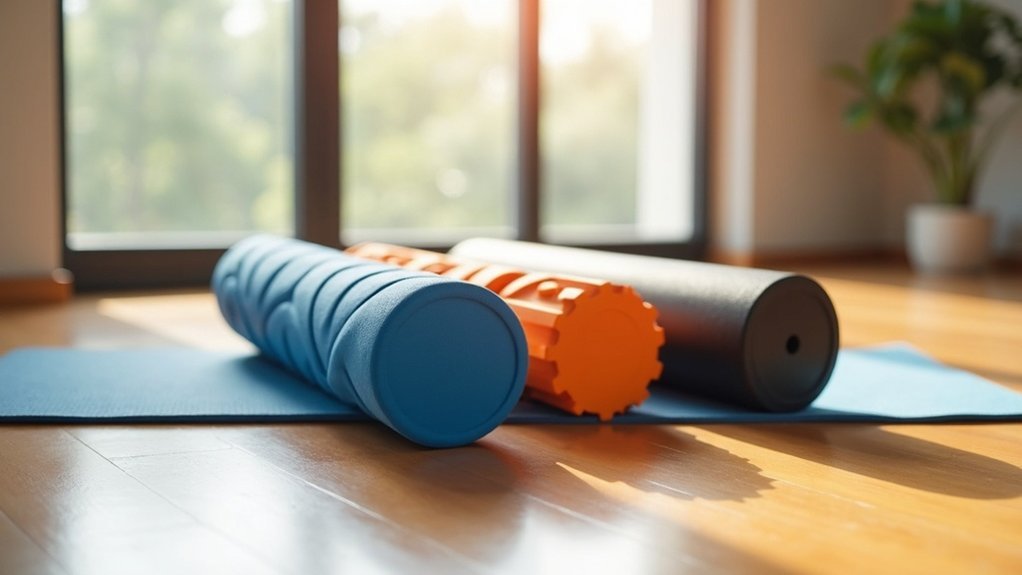
- Medium-density foam rollers, such as the blue or red options, are perfect for both men and women looking to improve thoracic mobility at home without applying too much pressure.
- Textured rollers, like the TriggerPoint Grid 2.0, offer targeted pressure to relieve muscle knots, making them a great addition to your home gym for enhancing mobility with a massage-like experience.
- Long rollers (36 inches) provide stability for larger areas, making them ideal for thoracic spine exercises that you can do in your living room or home workout space.
- Recommended choices include the OPTP Black Axis Firm Foam Roller and Gaiam Restore Total Body Foam Roller, which cater to varying densities and offer specific benefits.
- Regular foam rolling sessions focused on the upper back can greatly enhance thoracic mobility and overall upper body function, supporting your fitness goals from the comfort of your home.
Understanding Foam Roller Density for Thoracic Mobility
Foam roller density is crucial for improving thoracic mobility, especially for those who work out at home.
When choosing a foam roller, it’s important to keep in mind that softer rollers may not provide sufficient pressure for effective thoracic mobilization. For beginners, medium-density rollers, like blue or red, are the best choice, as they help you build tolerance while minimizing the risk of injury.
Denser rollers are great for delivering deeper tissue relief, which is essential for spinal mobilization exercises. The color coding system makes it easy to identify density, with white being the softest option and black being the firmest.
Exploring Foam Roller Surface Texture
When selecting a foam roller for your home gym, you’ll find both smooth and textured options, each providing unique advantages.
Smooth rollers deliver even pressure, making them perfect for those just starting out on their fitness journey.
On the other hand, textured rollers can replicate the experience of a massage therapist’s touch, offering targeted relief for muscle tension.
Smooth vs. Textured Rollers
When it comes to enhancing your thoracic mobility at home, choosing the right type of foam roller is essential. So, which is better for you: smooth or textured rollers?
Smooth foam rollers are perfect for beginners, offering even pressure that delivers a gentler massage. This makes them an excellent choice for those new to foam rolling, as they promote thoracic mobility without causing overwhelming discomfort.
Conversely, textured rollers come equipped with ridges and knobs that provide targeted pressure application, effectively addressing muscle knots. For individuals with tightness, these rollers can significantly enhance thoracic mobility.
While both types of rollers are beneficial for improving mobility, textured rollers allow for customizable pressure options, making them ideal for deeper tissue work.
Ultimately, your decision may hinge on your experience level and personal preferences regarding foam rolling techniques. Whether you’re just starting your home gym journey or looking to refine your routine, understanding the benefits of each roller type can help you make the best choice for your thoracic mobility needs.
Pressure Application Techniques
Choosing the right foam roller texture is crucial for effectively applying pressure during your thoracic mobility exercises at home.
Smooth foam rollers provide even pressure, making them ideal for beginners and for those looking to engage in gentle self-myofascial release.
On the other hand, textured rollers, featuring ridges and knobs, allow for varied pressure application, effectively targeting muscle knots. This targeted pressure is key for relieving tightness in the upper back and enhancing spinal mobility, which is essential for anyone looking to stay healthy while exercising at home.
By incorporating textured foam rollers into your routine, you can achieve deeper penetration into muscle tissues, promoting better recovery and flexibility. This ultimately results in improved thoracic mobility during your workouts.
Choose wisely to maximize your home gym experience and achieve the best results.
The Importance of Foam Roller Shape and Size
The shape and size of foam rollers are crucial for improving thoracic mobility, making them an essential addition to your home gym.
For versatile and stable mobilization of larger areas like the thoracic spine, long foam rollers measuring around 36 inches are ideal. Their standard diameter of 5 to 6 inches ensures effective pressure application while prioritizing comfort during your workouts.
If you’re looking to target specific thoracic regions, especially in tighter spaces, shorter rollers around 24 inches are an excellent choice. For those seeking deeper pressure to relieve tightness, smaller diameter rollers (3-4 inches) can be particularly beneficial.
Remember, the foam roller’s shape—whether cylindrical or half-round—also impacts how pressure is applied, which can significantly influence your muscle stretching and mobility outcomes.
Incorporating the right foam roller into your routine can help you stay healthy and enhance your home workout experience.
Recommended Foam Rollers for Thoracic Mobility
When it comes to enhancing thoracic mobility at home, selecting the right foam roller can significantly improve your results. The OPTP Black Axis Firm Foam Roller is a great choice, offering durability and firm density, making it ideal for effectively mobilizing your thoracic spine.
For those looking to incorporate broader movements into their routine, the 36-inch Amazon Basics High-Density Round Foam Roller is an excellent option. Textured varieties like the TriggerPoint Grid 2.0 or Roll Recovery R4 provide targeted pressure, closely mimicking the benefits of a physical therapist’s touch.
Incorporate broader movements with the 36-inch Amazon Basics Foam Roller for effective thoracic mobility and targeted pressure relief.
If you’re new to foam rolling, the Gaiam Restore Total Body Foam Roller, with its medium density, allows for a gentler introduction to thoracic mobility exercises, ensuring you can ease into your routine without excessive discomfort.
Whether you’re a fitness enthusiast or just starting your journey, these foam rollers can help you stay healthy and active from the comfort of your home gym.
Specialized Foam Rollers for Targeted Relief
To effectively enhance thoracic mobility at home, specialized foam rollers provide targeted relief that can significantly improve your workout routine. These essential massage tools are designed to address specific areas of tension, promoting better mobility and overall well-being. Here’s a quick comparison of some effective options for your home gym:
| Foam Roller | Features | Ideal For |
|---|---|---|
| TriggerPoint Rush Roller | Diamond-shaped ridges for precise muscle relief | Thoracic spine |
| Half Round Roller | Facilitates leg stretches and effective upper back support | Thoracic mobility |
| RAD Stiff Peanut Ball | Precision targeting for effective tension release | Thoracic region |
| Roll Recovery R4 | Unique center space for focused neck and thoracic relief | Thoracic spine extension |
| Flexible Roller | Adapts to your body’s contours for effective relief | Stiffness in thoracic area |
Incorporating these foam rollers into your home workouts can help you achieve better mobility and reduce discomfort, making your fitness journey more enjoyable and effective.
Effective Foam Rolling Techniques for the Thoracic Area
Effective foam rolling techniques for the thoracic area can greatly enhance your home workout routine and overall mobility. To efficiently target individual vertebral segments, follow these essential steps:
- Position the foam roller horizontally beneath your neck on the upper back.
- Incorporate diaphragmatic breathing to promote relaxation and optimize your rolling session.
- Focus on any stiff areas for 4-6 breath cycles, ensuring to avoid bouncing for maximum effectiveness.
As you roll, engage in dynamic movements such as reaching overhead with the opposite arm. This not only aids in muscle engagement but also boosts thoracic mobility, which is crucial for maintaining good posture during home workouts.
Always remember to limit your foam rolling to the upper back region, steering clear of the neck and lower back to ensure safety and comfort throughout your routine. This practice will help you stay healthy and enhance your performance in your at-home fitness journey.
Safety Precautions When Using Foam Rollers
When using foam rollers in your home gym routine, focus primarily on the upper back and thoracic region while avoiding the neck and lower back to prevent strain.
If you experience any discomfort or tingling during your exercises, promptly adjust your elbow positions and movements.
Additionally, maintaining proper hip alignment throughout your mobilization won’t only help protect your lower back but also enhance your thoracic mobility, making your at-home workouts more effective and enjoyable for both men and women.
Limit to Upper Back
Limiting your foam rolling exercises to the upper back is essential for ensuring safety and maximizing thoracic mobility, especially when working out at home.
Focus on these key precautions:
- Always identify your lower back by placing your hands on it to avoid rolling over this sensitive area, which is crucial for home fitness enthusiasts.
- Maintain a stable hip position to protect your lower back from undue stress and injury, allowing you to safely engage in your home workout routine.
- Adjust your elbow position if you feel any tingling or discomfort, indicating improper technique or excessive pressure during your foam rolling sessions.
Consult a healthcare professional before starting any new routine, particularly if you have existing back pain or injuries that could be aggravated during foam rolling, ensuring a safe and effective home gym experience.
Adjust for Discomfort
To ensure a safe and effective foam rolling experience at home, it’s important to adjust your technique whenever you feel any discomfort.
Focus on foam rolling the upper back area to avoid straining your neck and lower back. If you notice any tingling or discomfort, be sure to adjust your elbow positioning right away.
Keep your hips properly aligned to protect your lower back while improving thoracic mobility. Move gently and in a controlled manner, avoiding any bouncing to reduce the risk of injury and maximize the benefits of your release.
Always consult with a healthcare professional before starting foam rolling, especially if you have any pre-existing spinal injuries or conditions that could impact your practice.
Stay safe and enhance your home workout routine!
Tips for Incorporating Foam Rolling Into Your Routine
Incorporating foam rolling into your home workout routine can significantly enhance thoracic mobility and overall upper body function. Here are some tips to help you get started:
Incorporating foam rolling into your routine can greatly improve thoracic mobility and upper body function.
- Aim for at least one foam rolling session daily, adjusting the frequency based on your comfort level and muscle stiffness.
- Focus on techniques like Active Thoracic Spine Extension to target specific areas for relief.
- Choose a foam roller with a PVC pipe core for optimal support during your sessions.
Adopt a gentle approach, steering clear of bouncing or forced movements. Spend about 4-6 breath cycles on stiff areas to promote relaxation.
Consistency is key; regular foam rolling can lead to noticeable improvements in thoracic mobility and overall upper body function, supporting your fitness goals at home.