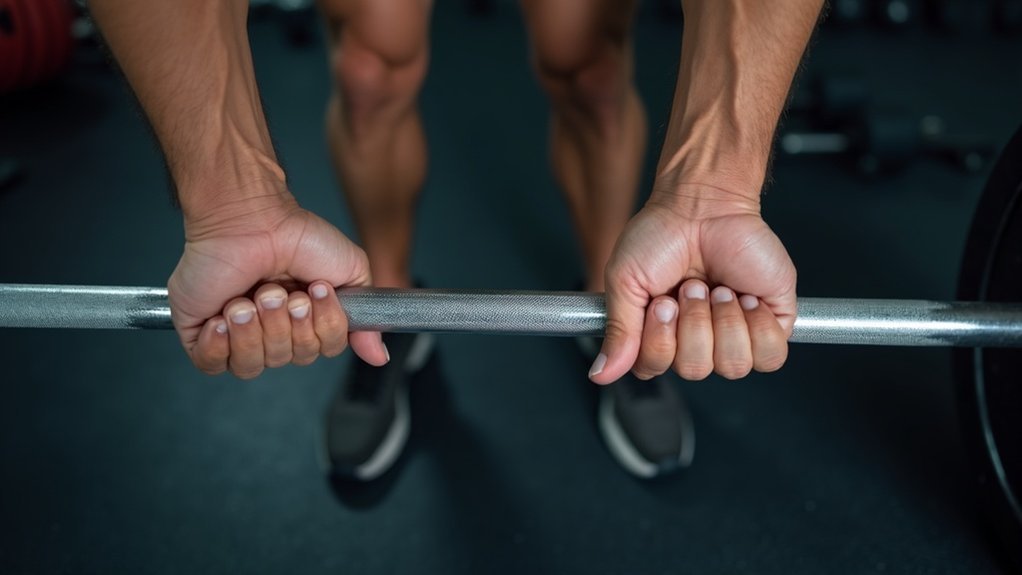
Using a neutral grip during pressing exercises is key for reducing elbow strain, especially when working out at home. This grip helps maintain proper wrist alignment, minimizes discomfort in the elbow joints, and improves forearm positioning. Additionally, opting for a wider grip can shift the load from your triceps to your pectorals, alleviating strain on the elbow tendons. Incorporating variations like the floor press can limit the range of motion, providing extra protection for your elbows. To optimize your home workout routine and learn more about effective techniques for staying healthy, explore additional insights on this topic.
Key Takeaways
- A neutral grip helps maintain proper wrist alignment, which can significantly reduce strain on the elbows during pressing movements, making it an ideal choice for home workouts.
- Opting for a wider grip can shift the emphasis from the triceps to the pectorals, helping to alleviate stress on the elbows, which is especially beneficial for those exercising at home with limited equipment.
- Using dumbbells in your home gym promotes a natural wrist position, enhancing biomechanics and reducing joint strain, making your workouts more effective and safer.
- Keeping your forearms perpendicular to the ground not only improves stability during pressing exercises but also minimizes the risk of injury, ensuring you stay healthy while working out at home.
- Incorporating variations like the floor press into your routine can limit the range of motion, providing additional protection against elbow strain, allowing you to maintain a safe and effective home exercise regimen.
Understanding Elbow Strain in Pressing Movements
Elbow strain can frequently occur during pressing movements, particularly when improper techniques are employed. To reduce this risk while exercising at home, focus on grip options that promote wrist alignment and maintain an ideal elbow angle of 75 to 90 degrees.
Opting for dumbbells rather than a barbell allows for a more natural movement pattern, enhancing biomechanics and decreasing stress on the elbow joint. Additionally, adopting a wider grip can shift the load from the triceps to the pectorals, relieving strain on the elbow tendons.
Incorporating variations like the floor press can limit the range of motion, providing further protection against elbow strain in your home workouts. Prioritizing proper form and equipment can help you stay healthy and safe while exercising at home.
Benefits of a Neutral Grip
When you adopt a neutral grip during pressing exercises at home, you not only maintain proper wrist alignment but also significantly reduce strain on your elbows.
This grip promotes a natural forearm position, enhancing grip strength and facilitating better force transfer throughout your workout. Research shows that individuals using a neutral grip experience less discomfort in the elbow joint, helping to minimize the risk of issues like golfer’s elbow.
A neutral grip enhances forearm positioning, boosts grip strength, and reduces elbow discomfort, minimizing the risk of golfer’s elbow.
Moreover, a neutral grip effectively engages your shoulder muscles, improving shoulder stability and reducing compensatory movements that could put additional stress on your elbows.
Ultimately, this grip supports overall elbow health, making it an excellent choice for anyone looking to stay fit and healthy while exercising at home.
Grip Width and Its Impact on Elbow Health
Choosing the right grip width during pressing exercises is crucial for maintaining optimal elbow health, especially when working out at home. A wider grip can shift the emphasis from the triceps to the pectorals, which helps reduce strain on the elbows and forearms.
Using a neutral grip with your thumbs up aligns your wrist and forearm, further minimizing the risk of strain. Selecting a grip width that keeps your forearms perpendicular to the ground enhances joint stability and decreases the likelihood of overuse injuries.
It’s important to tailor your grip position to your shoulder mobility and biomechanics, which can significantly lower the risks of conditions like golfer’s elbow and triceps tendinopathy, ultimately promoting longevity in your home training routine.
Alternatives to Traditional Pressing Techniques
Exploring alternatives to traditional pressing techniques can significantly enhance your home workout routine while minimizing elbow strain.
Utilizing a neutral grip during pressing exercises helps maintain proper wrist alignment and reduces excessive flexion, making it suitable for both men and women. Dumbbells are ideal for home gyms as they allow for natural wrist positioning, improving your range of motion and evenly distributing the load across your elbows.
Variations like the floor press are perfect for home workouts; they limit your range of motion and alleviate pressure on elbow joints while effectively targeting the chest. Adjusting your grip width can further shift stress from your triceps to your pectorals, offering additional protection for your elbow tendons.
Additionally, incorporating isometric exercises can strengthen your elbow joint without adding excessive strain during pressing movements, making it easy to stay healthy while exercising at home.
Warm-up and Activation Strategies for Injury Prevention
A well-structured warm-up routine is essential for injury prevention, especially when exercising at home with pressing equipment. Incorporate foam rolling and dynamic stretching to enhance muscle flexibility and neuromuscular efficiency right in your living space.
Specific activation exercises, such as isolated strengthening with resistance bands or dumbbells and resisted triceps extensions, can be performed using home gym equipment to target underactive muscles, promoting joint stability and minimizing compensation patterns.
Don’t forget to stretch your thoracic spine and forearm muscles to optimize your range of motion and alleviate elbow strain. Additionally, using a neutral grip during pressing movements with your home gym gear helps maintain proper wrist alignment.
Gradually increasing the load with controlled tempos prepares your muscles, reducing the risk of overuse injuries while you stay healthy and fit at home.