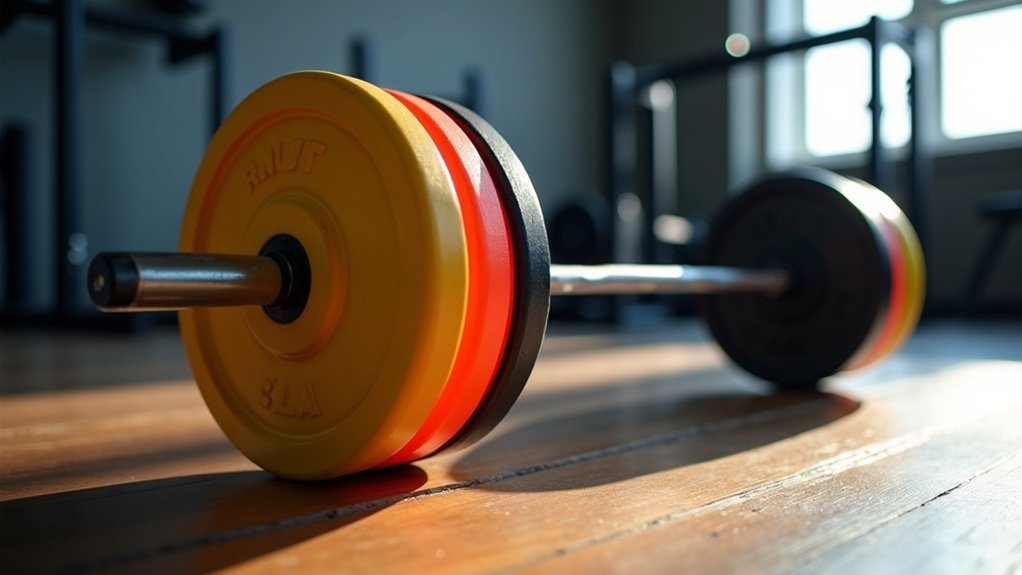
Yes, you can mix bumper plates with iron plates in your home gym, but it’s essential to do so with care. Bumper plates are excellent for high-impact lifts, while iron plates provide the benefit of smaller weight increments, making them versatile for various exercises. To ensure stability and safety during your workouts, maintain a maximum 1:1 weight ratio and avoid uneven distributions. Always secure the plates with collars to prevent any accidents. If you’re considering mixing these types of plates, understanding best practices and guidelines will not only enhance your workout experience but also help you achieve your fitness goals safely.
Key Takeaways
- Bumper plates can be mixed with iron plates for versatile training and a wider range of exercises, making them suitable for both men and women looking to enhance their home workout routines.
- When using bumper plates alongside iron plates, ensure that the bumper plates have a larger diameter to maintain stability during lifts.
- To prioritize safety, it’s advisable to keep a maximum 1:1 ratio of iron to bumper weights, allowing for a balanced and effective workout.
- Regularly check the security of collars and monitor weight distribution to maintain balance and prevent accidents during your training sessions.
- Be mindful of potential drawbacks such as uneven heights and increased noise levels when mixing different types of plates, especially if you’re working out in a shared space at home.
Benefits of Mixing Bumper Plates and Iron Plates
Mixing bumper plates with iron plates in your home gym provides significant advantages that can greatly enhance your workout experience.
This combination allows for versatile training, enabling you to perform a wider range of exercises without the need for multiple sets of weight plates. Bumper plates are ideal for high-impact lifts like deadlifts, while iron plates offer smaller increments that facilitate gradual progression.
This blend isn’t only cost-effective for home gym owners, maximizing the use of existing equipment, but it also ensures safety and protection for your floors and barbell, thanks to the impact-absorbing nature of bumper plates.
Ultimately, this mix allows you to tailor your training to meet specific strength levels and workout goals efficiently, making it a smart choice for both men and women looking to stay healthy and fit at home.
Drawbacks of Mixing Bumper Plates and Iron Plates
While the combination of bumper plates and iron plates can provide some benefits, it’s essential to consider the potential drawbacks that may arise from mixing these two types of weights in your home gym.
When you load the bar with both bumper and iron plates, the uneven widths and heights can lead to discomfort and instability during your lifts, which could hinder your workout performance.
Additionally, the larger diameter of bumper plates can make loading and unloading more cumbersome, especially when you’re working out at home and looking for efficiency.
Moreover, dropping mixed weights may result in significant damage to your flooring and create increased noise levels, making it less than ideal for home gym environments, particularly if you share your space with others.
Lastly, the aesthetic inconsistencies from mixing different types of plates can detract from your lifting experience, potentially impacting your motivation and overall performance.
It’s crucial to weigh these factors carefully when setting up your home gym.
Guidelines for Mixing Iron and Bumper Plates
To effectively mix iron and bumper plates in your home workouts, it’s essential to follow specific guidelines that ensure safety and performance.
By adhering to these practices, you can enhance your training experience:
- Use bumper plates with a larger diameter than iron plates to protect your barbell and enhance stability during your lifts.
- Maintain a maximum 1:1 ratio of iron to bumper weights to ensure balanced weight distribution and prevent any instability during your exercises.
- Choose smaller diameter iron plates (35 lbs and below) to allow for safe lifting when using bumper plates alongside them.
Regularly check the security of your collars and monitor the total weight to stay within safe lifting limits, ensuring peak performance in your home gym workouts.
Weight Distribution Considerations
Effective weight distribution is crucial for maintaining stability and safety when using bumper and iron plates in your home gym.
To ensure optimal stability, iron plates should make up no more than 20-30% of the total weight on the bar. An uneven weight distribution can lead to wobbliness, increasing the risk of injury during dynamic lifts.
Iron plates should comprise only 20-30% of the total bar weight to ensure stability and reduce injury risk.
Thick rubber bumper plates offer a superior support base due to their larger contact patch with the ground, enhancing lifting safety for both men and women.
Make it a habit to regularly check and adjust your weight distribution to maintain balance on the barbell. A well-balanced mix of weights is essential for effective and safe lifting practices, helping you achieve your fitness goals while exercising at home.
Techniques for Safe Lifting With Mixed Plates
Maintaining a balanced weight distribution is crucial for ensuring safety when lifting with mixed plates in your home gym. To lift safely and effectively, follow these techniques:
- Secure all plates with collars: This prevents any slips during your lift, providing a safer workout experience.
- Balance your weights: Aim for a maximum 1:1 ratio of bumper plates to iron plates to ensure even weight distribution, enhancing stability during your lifts.
- Avoid dropping the barbell: Not only can this damage your equipment and floor, but it can also lead to injury.
Before each lift, regularly check the fit of collars and the stability of your weights.
While utilizing Deadlift Pads can help minimize impact, remember that they aren’t a foolproof solution.
Prioritizing safety is essential for achieving your fitness goals while training with mixed plates at home. Stay healthy and lift wisely!
Personal Experiences With Mixing Plates
While many home gym enthusiasts appreciate the versatility of mixing bumper plates with iron plates, personal experiences indicate that this combination can present stability challenges if not approached thoughtfully.
Many users have found success by keeping the amount of metal plates to 20-30% of the bumper weight, which enhances safety during lifts. Some lifters have encountered issues when stacking smaller bumpers with heavier metal plates, highlighting the importance of careful weight distribution for a secure workout.
Additionally, investing in high-quality bumper plates can provide better support and durability for your home gym setup.
It’s worth noting that while squatting typically poses no challenges, lifting techniques that involve dropping weights can potentially damage your floor and equipment if not executed with caution.
Prioritize safety and stability to make the most of your at-home workouts.
Recommendations for Home Gym Owners
When setting up your home gym, it’s essential to incorporate a balanced mix of bumper and iron plates to enhance your workout efficiency while being mindful of your budget.
Here are some valuable recommendations to ensure safety and effectiveness for both men and women:
- Maintain a maximum 1:1 ratio of iron to bumper plates on the bar to ensure stability during your lifts.
- Regularly verify that your bumper plates are larger than iron plates; this helps safeguard your equipment and flooring from damage.
- Always use collars to secure plates, preventing slippage and reducing the risk of injuries during your workouts.