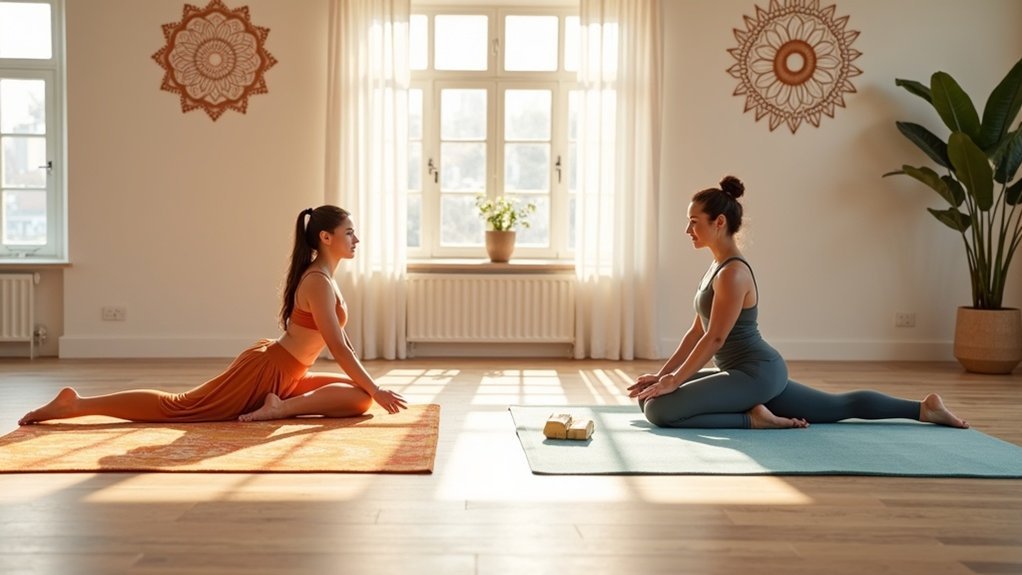
Yes, yoga and strength training can absolutely share the same mat! A high-quality yoga mat offers the cushioning and stability you need for both types of workouts, making it a versatile addition to your home gym. Look for mats with features like durability, excellent grip, and a thickness between 4mm to 6mm for optimal support during your exercises. The material also impacts performance—PVC and TPE mats are great choices for durability and comfort. With proper care and maintenance, you can maximize your workout experience on your multi-use mat. Keep reading to learn how to make the most of your home gym setup!
Key Takeaways
- A quality yoga mat provides the right amount of cushioning and stability, making it ideal for both yoga sessions and strength training workouts at home.
- Look for a mat with a thickness between 4mm to 6mm to ensure you have a good balance of comfort and support for a variety of exercises.
- Opt for durable materials like PVC or TPE, which offer the grip needed for dynamic movements in both yoga and strength training.
- Regular maintenance, such as cleaning and proper storage, will enhance the longevity and hygiene of your mat, making it suitable for shared use in your home gym.
- Incorporating yoga props or towels during strength workouts can improve comfort and help manage sweat on the shared mat, ensuring a more enjoyable experience for all.
Understanding the Role of a Yoga Mat in Both Practices
When you roll out your yoga mat at home, you’re not just creating a space for relaxation and flexibility; you’re also setting the stage for effective strength training.
A well-chosen yoga mat is essential for cushioning and stability, which are vital for exercises like lunges and squats. With thickness options ranging from 1/8-inch to 1/4-inch, these mats enhance your comfort during floor work, providing support for your hands and knees during push-ups and planks.
A quality yoga mat offers essential cushioning and stability for effective strength training and comfort during floor exercises.
Choosing the right material can improve grip and durability, making it suitable for both dynamic yoga moves and strength-building routines.
Just remember to clean your mat regularly to maintain hygiene and effectiveness, ensuring you get the most out of your home workout sessions!
Key Features to Look for in a Multi-Use Mat
When selecting a multi-use mat for your home gym, prioritize material durability and grip to ensure it can handle both your yoga routines and strength training sessions.
Opt for a standard thickness that offers the comfort you need while maintaining stability during workouts.
Additionally, consider portability, as this allows you to easily transport your mat wherever you choose to exercise.
Keeping these features in mind will enhance your workout experience and support your commitment to staying healthy at home.
Material Durability and Grip
Selecting the ideal mat for your home workouts, whether for yoga or strength training, can be daunting. However, prioritizing material durability and grip will enhance your exercise experience.
Look for mats crafted from PVC or TPE, as these materials offer exceptional durability and grip, making them perfect for a variety of workouts. A textured surface is crucial for maintaining traction, especially during intense exercises or dynamic poses, helping to prevent slips and falls.
For those seeking eco-friendly options, natural rubber or jute mats not only provide superior grip but also minimize toxic substances, making them a healthier choice for your home gym.
To ensure your mat remains in optimal condition and continues to support your fitness routines effectively, remember to perform regular maintenance using a mild soap solution.
With the right mat, you can maximize your at-home workouts and stay committed to your health and fitness goals.
Thickness for Comfort
While you might think all yoga mats are created equal, the thickness of your mat plays a crucial role in enhancing both comfort and performance during your home workouts.
Ideally, a multi-use mat should have a thickness between 4mm to 6mm, striking the perfect balance between stability for strength exercises and extra cushioning for yoga poses.
Thinner mats may suit balance-focused practices, while thicker options provide better joint protection during high-impact movements.
Look for textured surfaces to prevent slipping during dynamic workouts.
Portability and Storage Options
After you’ve settled on the right thickness for comfort, it’s time to consider portability and storage options for your multi-use yoga mat, especially when setting up your home gym. Look for mats weighing between 2 to 5 lbs for easy transport and storage. Durable materials like PVC or TPE ensure long-lasting use through both yoga sessions and strength training workouts. A textured surface enhances grip, while easy maintenance keeps hygiene a top priority in your home fitness environment. Here’s a quick comparison of key features:
| Feature | Importance |
|---|---|
| Weight | Enhances portability |
| Material | Durability and grip |
| Thickness | Balance of support |
| Surface Texture | Prevents slipping |
| Cleanability | Maintains hygiene |
Making informed choices will ensure your mat effectively supports all your fitness goals at home!
The Importance of Grip and Stability
When selecting the right grip material for your home gym mat, you’re laying the foundation for success in both yoga and strength training.
A stable surface enables you to concentrate on your workouts without the distraction of slipping, which can significantly enhance your overall performance.
Grip Material Selection
Selecting the right grip material for your home gym equipment is crucial for maximizing your workout efficiency and maintaining safety during exercises. The choice of grip material significantly impacts stability, helping you avoid slips and falls as you focus on building strength.
PVC mats are excellent for their non-slip properties, making them ideal for high-intensity workouts. Natural rubber mats provide a strong grip but may require some time to break in. If you prioritize sustainability, TPE mats are a good option, though they may not be as durable as other materials.
Additionally, consider the thickness of your mat; thinner options can enhance stability for balance exercises, while thicker mats may compromise grip during more dynamic movements. Make your choice carefully to optimize your at-home fitness experience!
Stability in Poses
The right grip on your exercise mat significantly affects your ability to maintain stability during workouts, making it a crucial element of your home gym setup. A secure surface prevents slipping, enhances balance, and allows you to concentrate on your movements, whether you’re doing yoga, strength training, or other exercises.
| Aspect | Importance |
|---|---|
| Grip Material | Provides traction and stability for workouts |
| Mat Thickness | Standard (1/8 inch) supports balance during exercises |
| Surface Placement | Reduces wobbling and misalignment during routines |
Regularly cleaning your mat ensures the grip remains effective, which is essential for your stability in various workouts. Don’t overlook the importance of a well-maintained mat in your home fitness journey!
Choosing the Right Thickness for Comfort and Support
To ensure optimal comfort and support during your home workouts, whether it’s yoga or strength training, selecting the right mat thickness is crucial.
A thickness of 5mm to 6mm offers the ideal balance, providing adequate cushioning for your joints while maintaining stability for both dynamic movements and restorative poses.
While thinner mats can improve balance, they may not provide sufficient support for strength exercises.
For those seeking versatility, consider layering a denser, thinner mat on top of a thicker one for enhanced stability.
Regularly inspect your mat for wear and tear, as deterioration can impact grip and comfort, ultimately affecting your safety and performance during workouts.
Choose wisely to achieve the best results in your home fitness journey!
Exploring Material Options for Durability and Performance
Finding the right mat thickness is just one part of optimizing your home workout experience; the material you choose significantly impacts durability and performance.
Consider these options tailored for home gym enthusiasts:
- PVC: Known for its high durability, PVC mats are perfect for those looking for a long-lasting option, although they’re non-biodegradable.
- TPE: An eco-friendly alternative that offers moderate durability, making it an excellent choice for environmentally conscious users who still want reliable performance.
- Natural materials (jute, cotton): While these sustainable options are great for the planet, they may compromise grip during high-intensity strength training sessions.
Each material has its pros and cons, so assess them based on your workout style and preferences.
With the right mat material, you’ll boost both durability and performance, ensuring your equipment can handle everything from yoga sessions to intense strength training at home.
How to Transition Between Yoga and Strength Training on the Same Mat
Transitioning between yoga and strength training on the same mat can be a smooth experience with the right approach.
First, ensure your mat is adequately cushioned to provide support during various exercises while maintaining stability. Incorporate yoga towels during strength training sessions to manage sweat and protect your mat.
As you switch between activities, take a moment to clear away any yoga props, creating an uncluttered space that allows for proper alignment during weightlifting or bodyweight exercises.
To enhance your recovery, consider using yoga as a cool-down after strength training. Additionally, alternating your workout days can help prevent overtraining, ensuring you get the most out of both yoga and strength training in your home gym routine.
Tips for Maintaining Your Mat for Diverse Workouts
Maintaining your mat is crucial for enhancing your home workout experience, whether you’re practicing yoga or engaging in strength training.
Here are some essential tips to keep your mat in prime condition:
- Clean it regularly with a mild, non-abrasive cleaner to remove sweat and bacteria, ensuring a hygienic workout space.
- Store your mat rolled loosely in a cool, dry area to avoid creases that could affect performance.
- Regularly inspect for signs of wear and tear, and replace it if you notice a decline in grip or any tears, so you can maintain your safety and effectiveness during workouts.
Personalizing Your Mat Experience for Optimal Results
To truly enhance your home workout experience, personalizing your mat can make all the difference in comfort and stability.
Consider your individual preferences: a thicker mat (5mm and above) provides cushioning for restorative exercises, while a thinner mat (1-3mm) is ideal for balance-focused workouts. You might also find it beneficial to use two mats—one thick for support and one thin to prevent slipping on carpets.
Regularly cleaning your mat is essential for maintaining hygiene and longevity, ensuring it remains a reliable part of your home gym setup.
Position your mat correctly by aligning it with the lines of your room to boost balance. Additionally, adapting exercises and using props can further optimize your practice, maximizing effectiveness and comfort during both strength training and flexibility sessions at home.