Yes, treadmill lubrication is definitely something beginners can handle with ease. With just a few essential tools, like an allen wrench and silicone-based lubricant, you can effectively maintain your treadmill for optimal performance. The process is straightforward: loosen the rear roller bolts, apply the lubricant in a zig-zag motion along the belt, and then run the machine for a few minutes to ensure even distribution. Regular lubrication not only boosts your treadmill’s performance but also extends its lifespan, making it a crucial part of your home gym maintenance routine. Explore more tips and techniques to keep your home workout equipment in excellent shape!
Key Takeaways
- Absolutely, treadmill lubrication is achievable for beginners using basic tools such as an allen wrench or screwdriver.
- A silicone-based lubricant, which is user-friendly, effectively reduces friction and ensures your treadmill operates smoothly.
- By following a straightforward step-by-step lubrication process, you can maintain safety and ensure proper application.
- It’s advisable for beginners to consult the owner’s manual for specific instructions tailored to their treadmill model, ensuring optimal care.
- Regular lubrication every 3-6 months is not only manageable but also crucial in preventing costly repairs, allowing you to focus on achieving your fitness goals at home.
Understanding the Importance of Treadmill Lubrication
Understanding the importance of treadmill lubrication is crucial for anyone looking to effectively maintain their home gym equipment.
Regular treadmill lubrication helps reduce friction, ensuring peak performance and prolonging the lifespan of your machine, which is essential for achieving your fitness goals.
Regular lubrication minimizes friction, maximizes performance, and extends your treadmill’s lifespan, crucial for reaching your fitness aspirations.
Neglecting this vital maintenance can lead to significant wear on the treadmill belt and deck, resulting in costly repairs that could disrupt your workout routine.
To keep your equipment in top shape, follow the recommended lubrication frequency outlined in your owner’s manual—typically every three to six months, or more often if you use the machine frequently.
Always use the correct silicone-based lubricant to avoid damaging components, enhancing both your treadmill’s operation and your overall exercise experience at home.
Tools You’ll Need for Lubrication
To effectively lubricate your treadmill and keep your home gym running smoothly, you’ll need a few essential tools. Depending on your treadmill model, gather an allen wrench, t-wrench, or screwdriver to loosen the belt.
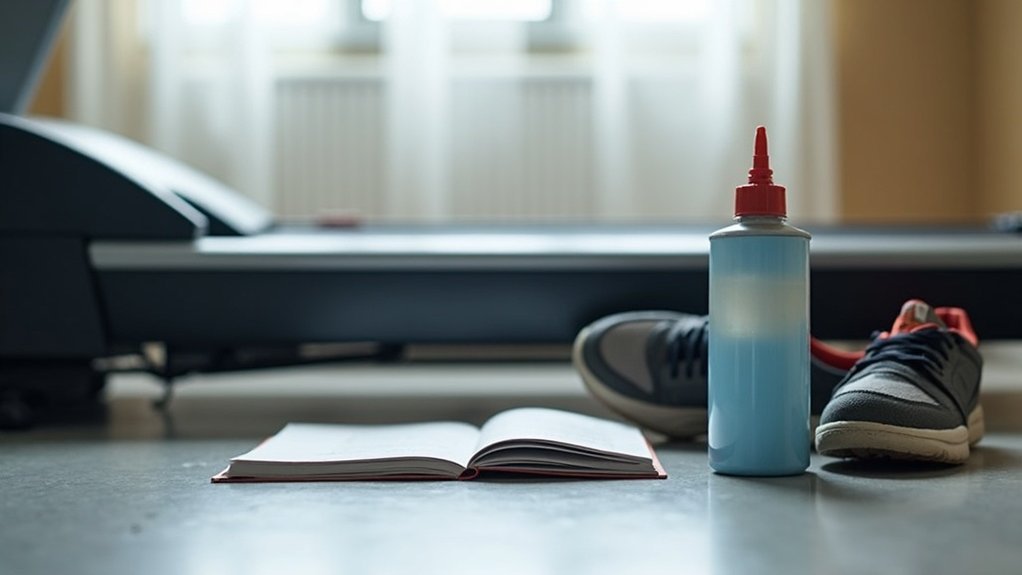
It’s crucial to use a silicone-based lubricant specifically designed for treadmills; steer clear of oil-based products as they can damage the belt.
Before you begin, ensure that all your tools are clean to avoid contaminating the deck and components.
Always consult your treadmill’s owner’s manual for specific servicing instructions to ensure you’re using the right tools and lubricant for your model.
This careful preparation is key to effective lubrication and will help maintain your treadmill’s performance, supporting your fitness journey at home.
Step-by-Step Lubrication Process
Before you start the lubrication process for your treadmill, ensure that it’s unplugged to eliminate any risk of electrical hazards.
Begin by using the appropriate tool to loosen the rear roller bolts, which will create slack in the treadmill belt. Lift the belt slightly and apply about 5 ml of silicone-based lubricant in a zig-zag motion, paying particular attention to the impact zone for even distribution.
Once the lubricant is applied, run the treadmill at a slow speed (1-3 mph) for approximately 3 minutes. This will help the lubricant settle and reduce friction for a smoother workout.
Finally, use a soft cloth to wipe off any excess lubricant and check to ensure that the belt is properly aligned.
Regular maintenance like this is essential for keeping your home gym equipment in top shape, allowing you to stay healthy and fit from the comfort of your home.
Signs Your Treadmill Needs Lubrication
As you incorporate your treadmill into your home gym routine, it’s important to stay vigilant for signs that it may need lubrication.
If you notice increased noise, such as squeaking or grinding, this often points to a lubrication issue that could hinder your workouts. A slipping or sticking treadmill belt typically indicates insufficient lubrication between the belt and deck, which can disrupt your exercise flow.
Keep an eye out for uneven wear patterns on the treadmill belt, as this can suggest improper maintenance and affect your performance. Additionally, if you experience reduced speed during your workouts, it may be a sign that lubrication is needed to ensure your treadmill operates at its best.
Frequent error messages or unexpected shutdowns can indicate mechanical strain, underscoring the importance of timely lubrication to minimize friction and maintain efficiency in your home gym setup.
Tips for Maintaining Your Treadmill After Lubrication
Maintaining your treadmill after lubrication is crucial for ensuring its longevity and optimal performance, especially for those who prioritize home workouts for their health.
After applying silicone lubricant, make sure to run the treadmill at a slow speed (1-3 mph) for 3-5 minutes. This will help evenly distribute the lubricant across the treadmill deck and running belt, allowing for a smoother workout experience.
To keep your equipment in top shape, regularly wipe down the surface and side rails to prevent dust buildup, which can hinder performance.
It’s also important to inspect the treadmill belt for signs of wear and listen for any unusual noises that may indicate the need for additional lubrication.
Furthermore, monitor the treadmill belt tension and tighten it if it lifts more than 1-2 inches during use. This will help reduce friction and enhance safety, ensuring you can focus on achieving your fitness goals.