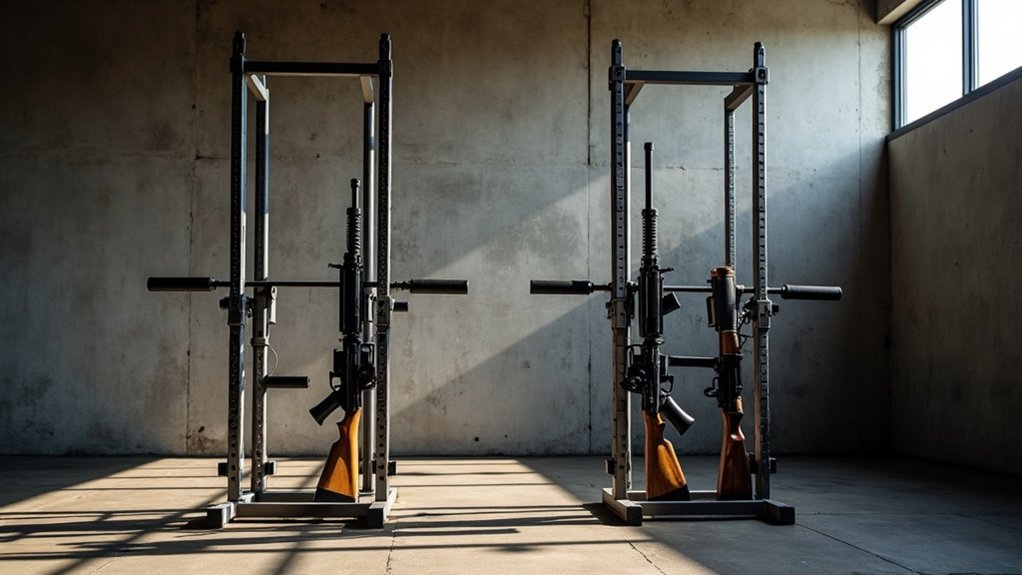
Vertical barbell racks are generally safer than horizontal gun racks, especially for home gym setups. They occupy less floor space, which helps reduce tripping hazards, and often come with secure locking mechanisms to prevent accidental falls. The improved visibility provided by vertical storage makes accessing individual bars easier, enhancing safety during workouts. In contrast, horizontal racks can pose risks with accidental drops and limited visibility, increasing the chances of injuries. If you’re looking to maximize safety in your home gym storage solutions, there are many best practices to explore. Stay safe and focused on your fitness journey!
Key Takeaways
- Vertical barbell racks are an excellent choice for home gyms, as they occupy less floor space and reduce tripping hazards, making your workout area safer and more efficient.
- In contrast, horizontal gun racks can present risks of accidental drops if the equipment is not properly secured, which could be a concern in a busy home gym environment.
- Many vertical racks come equipped with secure locking mechanisms that enhance safety during workouts, ensuring that your equipment stays in place while you train.
- With proper organization, horizontal racks can help reduce visibility issues and improve safety, but they may require more attention to keep everything secure.
- Both vertical and horizontal storage options can help maintain the longevity of your gym equipment, but the safety features tend to differ, making vertical racks a safer option for home fitness enthusiasts.
Overview of Storage Methods
When choosing the best storage method for your home gym equipment, it’s crucial to consider both vertical and horizontal options.
Vertical bar storage is especially space-efficient, making it a favored choice for home gyms, while horizontal storage allows for easier access and movement.
Both methods effectively maintain the performance of your bars without significant downsides. Long-term vertical storage won’t negatively affect your bars, thanks to their durable construction and minimal lubrication migration.
Many users appreciate both systems, though some prefer horizontal storage for its convenience in compact areas.
Additionally, custom DIY solutions can enhance your organization, tailored specifically to fit your unique home gym layout for optimal functionality.
Safety Considerations for Vertical Racks
When it comes to storing home gym equipment, both vertical and horizontal racks serve as effective solutions, but safety considerations can make a significant difference.
Vertical barbell racks are particularly advantageous as they occupy less floor space, which helps minimize tripping hazards that can occur with horizontal racks. Their design often includes secure locking mechanisms, significantly reducing the risk of bars falling.
Furthermore, vertical storage improves visibility and makes it easier to access individual bars, which can help prevent accidents while retrieving equipment. Many vertical racks are built to securely hold bars in place, minimizing the risk of injury from accidental contact.
Users frequently discover that a well-organized setup enhances safety during workouts, making equipment more orderly and readily accessible for both men and women dedicated to their fitness journeys at home.
Safety Considerations for Horizontal Racks
Although horizontal racks can provide a convenient storage solution for gym equipment, they come with specific safety risks that users need to address. Improper handling or installation can lead to accidents. Here’s a breakdown of these risks:
| Risk Factor | Description | Mitigation Strategy |
|---|---|---|
| Accidental Drops | Equipment may fall if bumped. | Secure equipment properly. |
| Awkward Movements | Lifting horizontally can cause injuries. | Store at a comfortable height. |
| Limited Visibility | Hard to identify equipment quickly. | Organize for easy access. |
| Shifting Equipment | Loose equipment can fall. | Use proper organization and securement. |
Impact of Storage Orientation on Equipment Longevity
The orientation in which you store your home gym equipment, particularly barbells, can influence its longevity, but the impact is minimal.
Long-term vertical storage doesn’t harm the performance or durability of barbells, as their simple construction makes them resilient to various storage methods.
Long-term vertical storage of barbells is safe, ensuring durability and performance thanks to their resilient construction.
Whether you choose to store them vertically or horizontally, the minimal lubrication in barbells remains consistent.
However, regular maintenance and lubrication are essential for all barbells to ensure they operate at peak performance.
Both storage options have been effectively utilized in home gyms without reports of longevity issues, indicating that the choice between vertical and horizontal storage largely depends on your available space and personal preferences.
Keep your workout area organized and your equipment well-maintained to support your fitness journey at home!
User Experiences and Preferences
When selecting between vertical and horizontal barbell racks for your home gym, your preferences can significantly enhance your workout experience.
Many fitness enthusiasts value the space-saving benefits of vertical racks, making them ideal for smaller home gym setups.
On the other hand, some users prefer horizontal designs for their ease of access, allowing for quick transitions between exercises.
Storage Method Preferences
While both vertical and horizontal storage methods for barbells have their advocates, user experiences reveal a strong preference for horizontal racks in home gym settings where space might be limited.
Many individuals find that horizontal storage enhances movement around their workout area, making their home exercise routines more efficient. Despite this, both methods are effective, with users expressing satisfaction regardless of their choice.
Vertical storage remains popular in various home environments for its practicality. Ultimately, personal preference plays a significant role in the decision-making process, as there are no notable performance differences between the two.
Community discussions often showcase innovative storage solutions for home gyms, demonstrating how individuals creatively adapt their equipment to fit their specific layouts while maintaining their commitment to health and fitness.
Ease of Access
How do you prioritize ease of access in your home gym? Many users discover that horizontal bar storage provides significant advantages, especially in compact areas.
Here are some key points to consider:
- Quick Retrieval: Horizontal racks enable faster access during your workouts, allowing you to maximize your training time.
- Movement-Friendly: These racks create a more open workout space, making transitions between exercises smoother and more efficient.
- Simplicity: The straightforward design of horizontal storage is user-friendly, making it easy to incorporate your equipment into your daily routine.
- Personal Preference: Ultimately, your choice in storage reflects your unique workout style and needs.
While vertical racks can help save space, many gym enthusiasts find that the practicality and accessibility of horizontal storage make it a preferred option.
This setup supports both men and women in achieving their fitness goals comfortably at home.
Practical User Solutions
As users actively share their experiences with home gym equipment, it’s evident that preferences for barbell storage methods often depend on individual needs and available space.
Many users opt for horizontal storage in compact areas for easy access, while others find that vertical racks effectively optimize their home gym layouts.
Feedback indicates that both storage methods perform similarly, with no notable impact on the longevity or functionality of the barbells.
Users also highlight innovative solutions, such as repurposing household tools to enhance organization.
Ongoing discussions emphasize the durability of barbells, demonstrating that whether you choose vertical or horizontal storage, user experiences remain predominantly positive and practical for various home gym environments, catering to both men and women committed to staying healthy through exercising at home.
DIY Storage Solutions and Safety
Creating DIY storage solutions for barbells is essential for organizing your home gym and enhancing safety during workouts. Here are some key factors to consider for your design:
- Customization: Design your storage racks to fit the unique layout of your home gym, which helps minimize clutter and reduce the risk of accidents.
- Repurposing Materials: Make use of materials you already have at home to construct secure storage options, ensuring that your barbells are safely stored and less likely to fall.
- Stability: Follow comprehensive instructions to ensure that your racks are stable and securely mounted, providing peace of mind while you exercise.
- Safety Features: Incorporate features such as locking mechanisms and non-slip materials to enhance safety and protect your equipment.
Community Insights on Storage Practices
What do home gym enthusiasts think about the best ways to store barbells? Community discussions reveal a split preference between vertical and horizontal racks, both considered safe and effective for home gym settings.
Many users favor horizontal racks for their accessibility, especially in smaller spaces, while vertical racks excel in maximizing efficiency in garage gyms. Feedback indicates that neither orientation affects bar performance or lifespan, highlighting the durability of barbells.
Additionally, members often share innovative DIY solutions, showcasing their resourcefulness in home gym storage practices.
Ultimately, personal preference plays a significant role in the choice of storage method, with satisfaction evident across both vertical and horizontal systems.
Best Practices for Maintaining Safety in Storage
To ensure safety in your home gym storage systems, it’s crucial to secure both vertical and horizontal racks properly.
Implement these best practices to enhance safety while keeping your fitness equipment organized:
- Inspect regularly for wear and damage to your equipment and storage solutions to prevent accidents.
- Keep pathways clear around your gym area to avoid tripping hazards during workouts.
- Use proper padding on racks to protect your equipment and minimize the risk of injury while accessing weights and machines.
- Encourage weight distribution and organization on racks to enhance stability and ensure easy access to your gear.