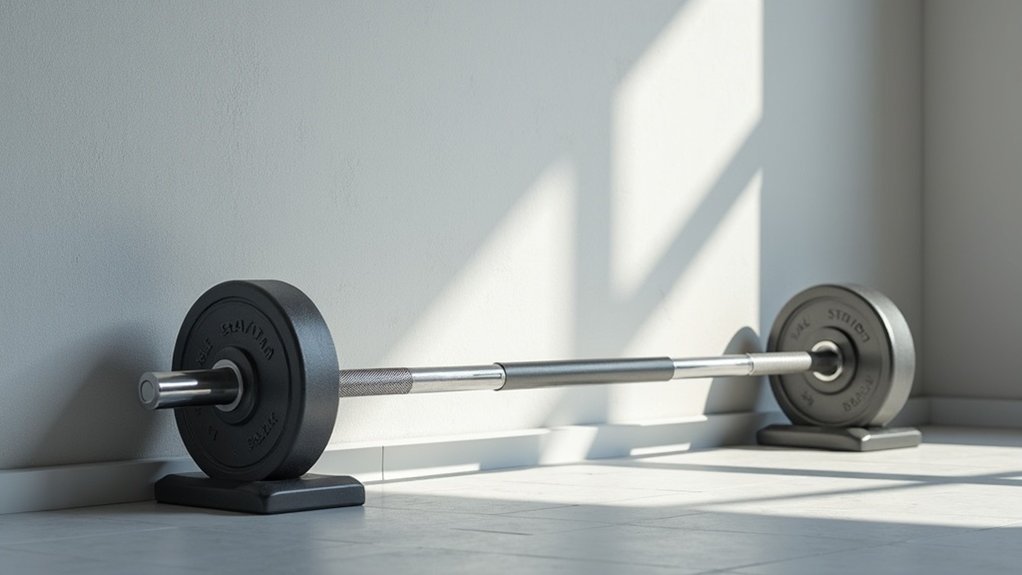
Yes, you can store a barbell vertically without damage, which is a great option for home gym enthusiasts looking to save space. This is especially true for bushing bars or non-sleeved models, as they handle vertical storage well when properly maintained. However, if you own a needle bearing bar, it’s advisable to avoid vertical storage since they are sensitive to shocks and can sustain damage. To keep your equipment in top shape, make sure to conduct regular inspections, redistribute oil as needed, and consider using padded mounts for added protection. Explore more best practices and alternative storage solutions to safeguard your home gym equipment and maintain your commitment to staying healthy through exercise at home.
Key Takeaways
- Storing your barbell vertically can be a great option, especially for bushing bars, as they are designed to handle sideline loads effectively and are less likely to sustain damage.
- However, if you have needle bearing bars, it’s best to avoid vertical storage. These bars are more sensitive to shocks, which can compromise their spin quality over time.
- Regular maintenance and inspections are crucial for all types of barbells, particularly when stored vertically, to catch any signs of wear or damage early on.
- To protect your equipment, consider using padded mounts when storing barbells vertically. This can help cushion contact points and minimize stress that could lead to damage.
- If you notice any oil accumulation while storing your barbell vertically, it might be wise to switch to horizontal storage. This will help maintain the integrity of your equipment and simplify your maintenance routine.
Understanding Barbell Storage Options
When considering how to store your barbells in your home gym, it’s essential to evaluate the pros and cons of various storage options.
Vertical storage can be a safe choice for high-quality barbells, as they handle sideline loads better than vertical pressure, especially when properly maintained. While some may worry about bearing pressure in vertical storage, this concern is often exaggerated for quality barbells.
Vertical storage is a reliable option for high-quality barbells, effectively managing sideline loads when well-maintained.
Bushing bars generally perform better in this setup compared to needle bearing bars, which are best stored horizontally.
To minimize impact damage, consider using padded mounts or rubber flooring in your workout space.
Regular maintenance is crucial to ensure your barbells remain in top condition, no matter which storage method you choose, helping you stay healthy and fit while exercising at home.
The Impact of Vertical Storage on Needle Bearing Bars
While vertical storage might seem like a space-saving solution for your home gym, it can pose specific risks to your needle bearing bars that may affect their performance.
Needle bearings are sensitive to shock, making them susceptible to damage if the bar is dropped or impacted while stored vertically. This increased risk can lead to reduced spin quality and overall functionality, particularly in high-quality Olympic weightlifting bars that depend on these components.
Although some users have had success with vertical storage, it’s generally best to avoid this method to ensure the longevity of your equipment.
If you do opt for vertical storage, regular maintenance and thorough inspections are crucial to promptly address any wear or damage to your needle bearings, keeping your home workouts safe and effective.
Vertical Storage Considerations for Bushing Bars
When considering vertical storage for bushing bars in your home gym, you’ll discover several benefits, including a lower risk of damage compared to needle bearing bars. This is particularly important for maintaining the longevity of your equipment.
However, it’s worth noting that minor wear on the snap rings can occur, although it’s minimal in this setup. To ensure optimal performance and safety while exercising at home, regular maintenance and inspection of your bushing bars are essential.
This will help you stay on track with your fitness goals and make the most of your home workout experience.
Benefits of Vertical Storage
Storing bushing bars vertically in your home gym presents several key advantages, particularly in terms of space efficiency and organization.
Here are some benefits to consider:
- Maximized Space: Vertical storage makes the most of your floor space, allowing you to fit more equipment in a compact area, which is essential for home gyms where space is often limited.
- Easy Access: Quickly grab the bar you need without searching through a cluttered area, making your workout routine more efficient.
- Reduced Damage: Bushing bars stored vertically experience less shock and impact, helping to maintain their integrity and performance.
- Enhanced Longevity: Combining regular maintenance with padded mounts minimizes stress on your equipment, ensuring your bushing bars remain effective and durable over time.
Adopting vertical storage can significantly improve the functionality and appearance of your home gym, making it easier to stay dedicated to your fitness goals.
Risks of Vertical Storage
While vertical storage of bushing bars can be a great option for home gym enthusiasts, it does come with certain risks that need to be considered.
Storing barbells vertically can put pressure on the snap rings, which may lead to issues over time if not addressed. To minimize this risk, be gentle when placing the barbell in its holder—avoid slamming it down—and consider using a rubber pad to absorb impacts.
Regular maintenance and inspections are crucial for ensuring that your equipment remains in good condition, no matter how you store it.
Many home gyms successfully store bushing bars vertically without significant issues, but being aware of these factors can help you maximize the longevity and performance of your fitness equipment.
Maintenance for Bushing Bars
Maintaining bushing bars during vertical storage is essential for ensuring their longevity and optimal performance in your home gym.
To effectively care for your bushing bars, consider these maintenance practices:
- Regularly inspect for wear and tear to catch issues early and ensure safety during your workouts.
- Use rubber pads in your storage solutions to cushion impacts and reduce stress on the bars, promoting durability.
- Avoid slamming or excessive impact when placing or removing bars to prevent damage and maintain their integrity.
- Store your bushing bars in a stable, secure environment to minimize movement and protect them from potential hazards.
Storing Non-Sleeved Bars: Best Practices
When it comes to non-sleeved bars, such as hex deadlift bars, vertical storage isn’t only feasible but also advantageous for your home gym.
Since these bars lack rotating sleeves, you won’t have to worry about damaging components during storage, making them ideal for home setups where space may be limited.
Storing non-sleeved bars vertically simplifies maintenance and helps avoid issues like oil leakage or pooling, ensuring your equipment remains in top condition. This practicality makes vertical storage a preferred choice for many fitness enthusiasts.
However, it’s still important to perform regular checks for wear and tear to guarantee their longevity.
With no sleeves to stress, you can confidently mount non-sleeved bars vertically, maximizing your space without compromising functionality, and keeping your home gym organized and efficient for all your workout needs.
Managing Oil Accumulation in Vertical Storage
When storing your barbell vertically, it’s important to be aware that oil can accumulate at one end, which may affect its performance during your workouts.
While newer models come equipped with enhanced oil sealing to reduce leakage, regular maintenance is crucial for effectively managing any oil buildup.
Many users find that horizontal storage not only redistributes oil more evenly but also minimizes the risk of performance issues, ensuring your home gym equipment remains in top shape for your fitness journey.
Oil Sealing Improvements
While vertical storage of barbells can sometimes lead to oil accumulation, modern models are designed with enhanced oil sealing mechanisms to significantly reduce this issue.
To keep your barbell in top shape and ensure effective oil management, consider the following tips:
- Regularly inspect your barbell to ensure it’s properly lubricated for optimal performance.
- Rotate or spin the bar during storage to help evenly distribute the oil.
- Watch for any oil pooling, as this may indicate potential sealing issues that need attention.
- If you notice oil dripping down the shaft, it may be time to reevaluate your storage method to prevent damage.
Impact of Horizontal Storage
Storing your barbell horizontally is a smart choice for home gym enthusiasts looking to maintain their equipment and ensure optimal performance. This method can significantly reduce the risks associated with oil accumulation that often arise from vertical storage.
While horizontal storage may still lead to some oil pooling, the ability to spin the barbell allows for better redistribution of oil, minimizing accumulation issues.
In contrast, vertical storage can lead to oil gathering at one end, which can cause drips down the shaft and necessitate regular maintenance checks. If you notice significant oil drips, it’s advisable to switch to horizontal storage.
By opting for this method, you not only enhance your barbell’s integrity and performance but also simplify the maintenance process, allowing you to focus more on your workouts and achieving your fitness goals.
Embrace horizontal storage for a more efficient and hassle-free home gym experience!
Maintenance for Oil Management
To effectively manage oil accumulation when storing your barbell vertically at home, regular maintenance is essential for optimal performance.
Follow these steps for ideal oil management:
- Inspect Regularly: Check your barbell for oil leaks or pooling at least once a month to ensure it stays in top condition.
- Redistribute Oil: Spin the barbell occasionally to help redistribute oil evenly, preventing any buildup that could affect your workouts.
- Clean Components: Wipe down the shaft and ends to remove excess oil that may drip during vertical storage; this keeps your home gym tidy and safe.
- Reevaluate Storage: If you notice oil dripping down the shaft, consider adjusting your storage method to maintain the effectiveness of your equipment.
With consistent care, your barbell can perform at its best, making your home workouts more efficient and enjoyable.
Preventing Scratches and Wear on Barbells
When storing your barbell vertically at home, it’s crucial to implement strategies to prevent scratches and wear.
Utilize padded mounts or sleeves to cushion contact points, minimizing friction and protecting the barbell’s finish. Make it a habit to regularly inspect and clean your barbell to remove chalk and dirt, which can wear down its surface over time.
Placing rubber flooring or mats beneath your storage area can help absorb impacts and protect your equipment. Additionally, ensure that your barbells are kept away from sharp edges or rough surfaces that might cause scratches during insertion or removal.
Finally, maintain adequate spacing between stored barbells to reduce contact and further decrease the risk of wear and scratches, ensuring your home gym equipment stays in top condition for your workouts.
Leaving the Bar Loaded: Risks and Recommendations
Leaving a barbell loaded for extended periods can pose significant risks to its structural integrity and performance, especially in a home gym setting. Here are some important reasons to consider unloading your barbell after each workout:
- Avoid Permanent Bends: Heavy weights left on the bar for too long can lead to permanent bends, affecting your barbell’s performance.
- Prevent Uneven Wear: Keeping weights on the sleeves and collars can result in uneven wear, which could compromise the bar’s functionality during your next workout.
- Practice Good Gym Etiquette: Unloading your bar shows respect for fellow home gym enthusiasts, maintaining a positive workout environment.
- Prolong Your Equipment’s Lifespan: Regularly checking for wear and tear after unloading helps ensure your barbell lasts longer and remains effective for future sessions.
Experts recommend against storing your barbell loaded. By taking the time to unload it after workouts, you’re not only protecting your equipment but also ensuring it performs at its best when you need it.
Prioritize the care of your home gym gear to guarantee optimal performance and a safe workout experience.
Horizontal Storage: An Alternative Solution
Horizontal storage provides a smart solution for organizing barbells, particularly in the limited space of home gyms. By evenly distributing weight, it helps minimize uneven wear, ultimately extending the lifespan of your bars. If you’re aiming for efficient storage of your equipment, consider investing in horizontal racks specifically designed to safely accommodate various bar dimensions. Be sure to choose racks with padded edges to prevent any damage to your bars. Regular upkeep is essential for optimal performance, so remember to check for any signs of wear and keep your equipment clean. Here’s a breakdown of the benefits and considerations of horizontal storage:
| Feature | Benefits | Considerations |
|---|---|---|
| Stability | Prevents tipping | Requires adequate wall space |
| Protection | Minimizes wear and tear | Opt for padded designs |
| Accessibility | Simplifies grabbing and storing | May limit options for longer bars |
| Maintenance | Promotes longevity | Regular inspections needed |