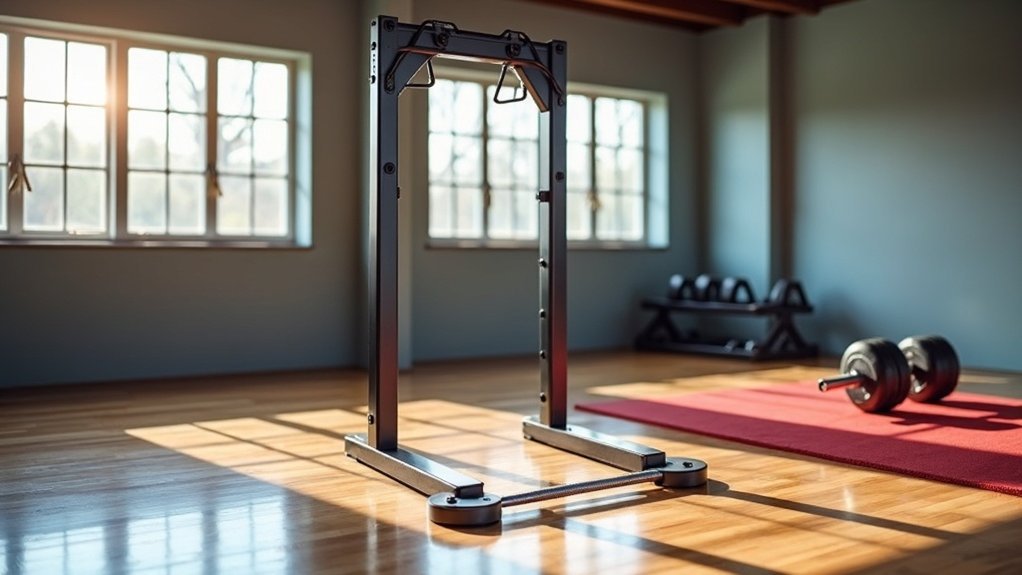
You can use a power rack without floor anchoring in your home gym, but it’s important to be aware that this may compromise stability and safety, particularly during heavy lifts. An unsecured rack could tip or shift, which poses significant injury risks. If your workout space has uneven or slippery flooring, or if you frequently rearrange your setup, anchoring becomes even more crucial for your safety. Consider alternative options like flat-footed designs or weight-based stabilization to enhance your workout experience. Make sure to weigh the pros and cons of each choice to create the safest and most effective home gym environment for your fitness journey.
Key Takeaways
- Yes, a power rack can be effectively used without floor anchoring, particularly if it features a stable flat-footed design suitable for home gyms.
- To improve stability without anchoring, you can utilize weight-based stabilization methods by adding weight plates or sandbags.
- If your home gym has slippery or uneven flooring, you may need to implement additional stability measures to ensure the power rack remains secure during workouts.
- A non-anchored setup offers greater flexibility for arranging your home gym and makes it easier to rearrange your equipment as needed.
- It’s crucial to perform regular maintenance and invest in quality equipment to ensure safety and optimal performance in non-anchored configurations, helping you stay healthy and fit at home.
Understanding the Importance of Stability in Power Racks
Stability is essential when using a power rack, as it directly affects your safety during heavy lifts. An unstable rack can tip over, posing a risk of injury.
For those serious about their home workouts, bolting down the rack is the most reliable way to ensure unwavering support, especially as weights increase. The construction of the rack, including its materials and weight distribution, significantly influences its stability.
A properly secured rack not only enhances your workout experience by allowing you to focus on lifting without worrying about accidents, but it also contributes to a neat and organized home gym aesthetic. This creates an appealing workout environment for both men and women, making your fitness journey more enjoyable and effective.
Situations Where Floor Anchoring Is Essential
When setting up your home gym, particularly for heavy lifting such as powerlifting, the importance of floor anchoring becomes clear. Ensuring your squat rack is securely anchored is crucial in various scenarios:
| Situation | Risk Factors | Benefits of Anchoring |
|---|---|---|
| Small home gyms | Movement during workouts | Enhanced safety |
| Uneven or slippery flooring | Equipment instability | Reduces accident potential |
| Frequent rearrangement of space | Misplacement or tipping | Maintains rack stability |
Securing your squat rack at home not only provides peace of mind but also allows you to focus entirely on your lifts, ensuring stability and safety throughout your workouts. With a solid setup, you can maximize your training effectiveness while minimizing risks.
Alternatives to Bolting Down Power Racks
If you’re seeking stability for your home gym without the need to bolt down your power rack, consider investing in flat-footed designs that offer a robust base.
Furthermore, utilizing weight-based stabilization methods, such as weight plates or sandbags, can effectively secure your rack during workouts.
These alternatives ensure safety while preserving the flexibility and integrity of your home gym setup, making it suitable for both men and women dedicated to maintaining their health through exercise at home.
Flat-Footed Rack Stability
Many home gym enthusiasts recognize the advantages of flat-footed racks, providing a dependable alternative to bolting down power racks. These racks are designed with a wider base and increased weight capacity, ensuring enhanced stability for your workouts.
| Feature | Description |
|---|---|
| Base Width | Wider design for improved stability |
| Weight Capacity | Higher limits to support heavy lifting |
| Stability Enhancements | Option to add weight plates or sandbags for extra stability |
| Flooring Solutions | Protective mats that enhance grip and stability |
| Space-Saving Alternatives | Wall-mounted racks that require wall anchoring for additional space efficiency |
These features make flat-footed racks an excellent choice for both men and women looking to maximize their home gym experience while prioritizing safety and performance.
Weight-Based Stabilization Methods
Weight-based stabilization methods provide an effective way to secure power racks in your home gym without the need for floor anchoring.
By using these techniques, you can enhance stability while creating a versatile workout space:
- Stack weight plates on crossbars for added support
- Place sandbags strategically around the base to prevent shifting
- Use heavy-duty resistance bands attached to the frame and anchored to the ground for extra stability
- Incorporate protective flooring solutions, like stall mats, to improve grip and safety
These methods not only allow for flexibility in your home gym layout but also prioritize your safety during workouts.
Remember to regularly check the stability of your unanchored equipment, especially when lifting heavy, to ensure that these weight-based stabilization techniques are providing the support you need for effective and safe exercise at home.
Potential Drawbacks of Bolting Power Racks
When you bolt a power rack to the floor, you run the risk of causing permanent damage, which is especially a concern for renters or individuals with sensitive flooring.
Furthermore, securing your rack can limit the flexibility of your gym layout, making it more challenging to rearrange your workout space in the future.
The installation process can also be intricate, often requiring specialized tools and expertise, which can increase both the time and costs involved.
This is something to consider for anyone looking to create an effective and adaptable home gym environment.
Floor Damage Risks
While bolting a power rack to the floor can offer improved stability for your home gym setup, it also poses some important risks of floor damage that you should think about carefully.
Here are some key points to consider:
- Permanent marks may be left on your flooring, which can affect the aesthetic of your space.
- Difficult removal could lead to potential repair costs if you ever decide to relocate or change your gym layout.
- Special tools may be needed for installation, adding complexity to your setup process.
- Limited layout flexibility could restrict your future gym arrangements, making it harder to optimize your workout space.
These risks can be especially concerning for renters or individuals with particular types of flooring.
Weighing these factors before deciding to bolt down your equipment can help you avoid costly repairs and unwanted headaches in the future.
Reduced Layout Flexibility
Bolting a power rack to the floor can significantly limit your home gym’s layout flexibility, making it harder to adapt your workout space as your fitness needs evolve.
Once secured, moving the rack becomes a daunting task that may involve repair costs and extra effort for reinstallation. This permanent setup can create challenges for renters or those in temporary living situations, as it might breach lease agreements or require substantial repairs when it’s time to move out.
The reduced layout flexibility can inhibit multi-functional workout options, as a fixed position restricts access to surrounding areas and complicates the addition of new equipment or future gym expansion.
Embracing a versatile setup can help you maintain an effective and adaptable home gym.
Installation Complexity Concerns
While securing a power rack to the floor can enhance stability, the installation process may pose significant challenges, particularly for those setting up a home gym.
Here are some installation complexity concerns that might require professional assistance, especially if you’re lacking the necessary tools:
- Risk of permanent damage, such as marks or holes, which can be an issue in rental spaces
- Decreased flexibility when it comes to rearranging your gym layout
- Potential complications arising from uneven or slippery floor surfaces
- Difficulty in adjusting or relocating a bolted rack
For many home fitness enthusiasts, the extra security provided by a bolted rack may not justify these challenges—especially if you’re not engaging in heavy lifting.
Fortunately, there are alternative solutions that can offer stability without the installation hassles, allowing you to create a functional and adaptable workout space in your home.
Cost Considerations for Securing Power Racks
When considering the costs associated with securing a power rack for your home gym, options can vary significantly based on your specific setup and space requirements.
Securing a rack typically involves purchasing carriage bolts, washers, and potentially a plywood base, which can increase your overall gym expenses. If special tools or professional installation are needed, this can further add to the costs.
On the other hand, a non-anchored setup can save on hardware expenses but may require stability solutions, such as weight plates or sandbags, to ensure safety during workouts.
For renters, opting for bolted equipment might lead to additional costs for floor repairs, making high-quality flat-footed racks a more financially savvy choice.
Always evaluate your cost considerations carefully to find the best solution that suits both your budget and your fitness needs. Investing in the right equipment now can lead to a healthier lifestyle and a more efficient workout experience at home.
Making an Informed Decision on Power Rack Stability
How can you ensure your power rack remains stable during intense workouts at home? Stability is crucial, especially when performing heavy lifts.
Here are some important factors to consider for both men and women looking to enhance their home gym experience:
- Opt for flat-footed racks that distribute weight evenly for improved stability.
- Keep an eye on your load; always stay within your personal safety limits.
- Consider using separate racks for squats and bench presses to enhance safety and functionality.
- Look into weight-based stabilization methods, such as sandbags or plates, to secure your power rack during workouts.