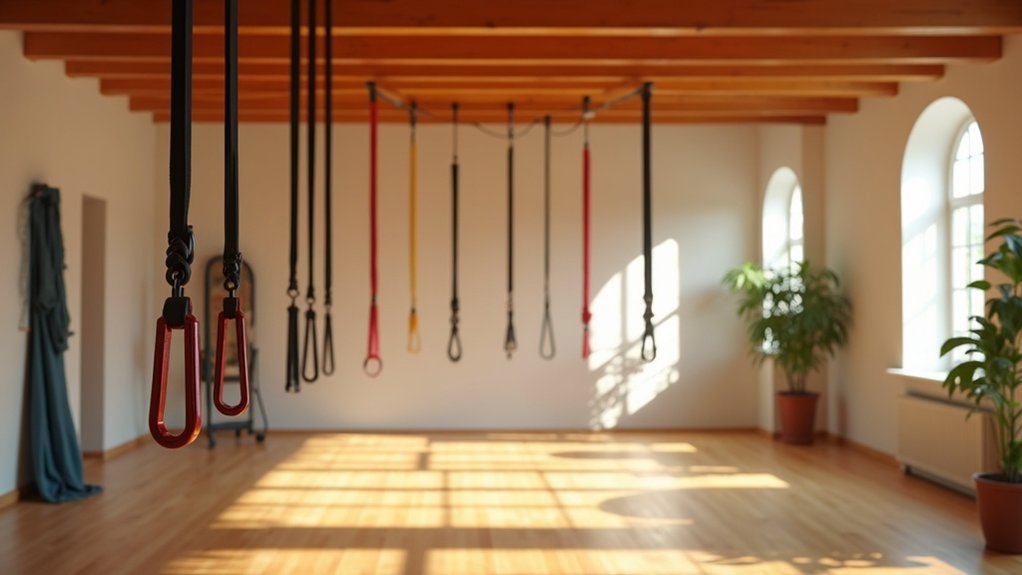
Yes, suspension trainers can be effectively mounted to ceiling joists, making them an excellent option for home workouts. To ensure safety and stability, it’s crucial to confirm that the joists are structurally sound and can support at least 350 pounds. Before installation, evaluate the integrity of the joists and secure the mount firmly to the center of the joist to prevent any twisting during use. Utilizing specialized heavy-duty hardware will further enhance safety. Regularly inspect your setup to guarantee it remains stable and secure throughout your workouts. For more tips on mounting options and safety considerations for your home gym, explore further!
Key Takeaways
- Yes, suspension trainers can be securely mounted to ceiling joists, making them an excellent addition to your home gym setup for effective workouts.
- Before installation, ensure that the ceiling joists are assessed for structural integrity and can support at least 350 pounds, accommodating various fitness levels.
- Utilize specialized mounting hardware such as heavy-duty lag screws and consider using a mounting plate for added stability during your exercises.
- Always fasten the mount directly to the center of the joist to prevent any twisting or movement while in use, ensuring a safe workout experience.
- Regularly inspect the mounting hardware and joists for signs of wear or damage to maintain a safe and effective home exercise environment.
Assessing Ceiling Joists for Suspension Trainers
When setting up your home gym with suspension trainers, it’s essential to properly assess your ceiling joists to ensure they can safely support the necessary weight during your workouts.
Start by checking that the joists are in good condition—look for any notches, holes, or damage that could weaken their structure. For optimal safety, ceiling joists should ideally support a force of around 350 pounds.
Ensure your ceiling joists are in good condition, free of damage, and can support at least 350 pounds for safe workouts.
To enhance stability and prevent twisting during use, attach your suspension trainer to the center of the joist. Regular inspections of both the mounting and the joists for wear and tear are key to maintaining a safe workout environment.
For additional security, consider reinforcing the joist with noggins or connecting to multiple joists, ensuring a secure and effective setup for your home fitness routine. Your safety and performance are paramount as you work towards your health goals at home!
Importance of Secure Mounting Techniques
When installing a suspension trainer in your home gym, it’s essential to evaluate the strength of your ceiling joists to ensure they can support the weight during workouts.
Using secure attachment methods is vital; make sure to fasten the mount directly to the center of the joist to avoid any twisting while you exercise.
Regularly inspecting both the mount and joists will help you maintain safety and performance over time, allowing you to focus on your fitness journey with confidence.
Joist Strength Assessment
Evaluating the strength of your ceiling joists is essential for ensuring a safe and effective home gym setup, especially when installing suspension trainers. Compromised joists can lead to serious accidents, so keep these factors in mind:
- Inspect for notches or holes that could weaken the joist’s integrity.
- Secure the suspension anchor at the center of the joist for optimal stability during your workouts.
- Confirm the joist’s maximum load capacity, which is typically around 350 pounds, to ensure it can handle your training needs.
- Consider using multiple joists for attachment to distribute the load evenly, enhancing safety.
Regular inspections of both the mounting hardware and the condition of the joists are crucial for maintaining a secure workout environment.
A thorough assessment is key to enjoying a safe and productive home gym experience.
Secure Attachment Methods
To ensure your suspension trainer is securely mounted for your home gym, it’s essential to focus on proper installation techniques that prioritize safety and stability.
Begin by checking the condition of the joist to confirm it can support at least 350 pounds. Attach the suspension anchor to the center of the joist to maximize stability and prevent twisting during your workouts.
Avoid mounting options that penetrate sheetrock without direct joist support, as this can lead to equipment failure. Regularly inspect your mounting hardware and joist connection for signs of wear, making sure all screws and bolts are tightened.
Always adhere to the manufacturer’s guidelines and consider using specialized hardware designed for heavy loads to enhance the safety of your suspension trainer, allowing you to exercise confidently at home.
Load Capacity and Structural Integrity Considerations
When setting up your suspension trainer at home, it’s crucial to evaluate the load capacity of your ceiling joists to ensure a safe workout environment.
Check that the joists are in good condition, as any notches or damage can weaken their strength.
Always position your anchor centrally to maximize stability and support, keeping in mind that both static and dynamic loads significantly influence overall safety.
Prioritizing these factors will help you create an effective and secure home gym for your fitness journey.
Assessing Load Capacity
Ensuring that your ceiling joists can handle the load is essential for safe suspension trainer usage in your home gym.
Here are key points to consider when evaluating load capacity:
- Confirm that the joist can support at least 350 pounds, as this is the typical maximum force experienced during intense workouts.
- Inspect the joists for notches, holes, or any damage that may compromise their strength.
- Secure the suspension anchor to the center of the joist to ensure even load distribution and maximum stability during your exercises.
- Regularly check both the suspension trainer and the joists for signs of wear or structural weakening to maintain safety and effectiveness in your home fitness routine.
Joist Condition Importance
While assessing the condition of your ceiling joists may seem like a minor detail, it’s crucial for the safety and effectiveness of your home gym setup, particularly when using a suspension trainer.
The load capacity of your joists must adequately support not only the suspension trainer but also the dynamic forces you exert during your workouts. Aim for a minimum strength rating of 350 pounds to ensure reliable performance.
Be sure to inspect for notches or holes that may compromise structural integrity. It’s advisable to avoid mounting directly in the center of the joist, as this area is often the weakest point.
Regular inspections of your ceiling mount and attachment points are vital for identifying wear or damage, helping to create a secure and safe training environment for your home workouts.
Recommended Hardware for Installation
To securely install a suspension trainer in your home gym, it’s essential to attach it to ceiling joists using heavy-duty lag screws or bolts that are rated for at least 350 lbs.
Make sure to include washers with these fasteners to help distribute the load effectively. For enhanced stability, consider using a mounting plate such as the TRX X-Mount.
Always check the condition of the joists before you begin your installation.
Here’s a quick list of recommended hardware for a safe setup:
- Heavy-duty lag screws or bolts
- Washers for load distribution
- Mounting plate (e.g., TRX X-Mount)
- Professional consultation if you’re uncertain about the integrity of the joists
This setup ensures that your suspension anchor is both safe and reliable, allowing you to focus on your workouts at home without worry.
Reinforcement Strategies for Joist Stability
When setting up your suspension trainer at home, ensuring the stability of your ceiling joists is crucial for a safe and effective workout. Start by checking that your joists are in good condition and free from any notches or holes that could compromise their strength.
To boost stability, consider adding noggins or blocking between the joists; this will help prevent twisting and provide extra support for your suspension anchor.
For optimal weight distribution, attach your suspension trainer at the center of the joist. If you plan to use heavier loads, reinforcing your setup by bridging multiple joists with a sturdy beam will significantly enhance load-bearing capacity.
Regular Inspection and Maintenance for Safety
Regular inspections and maintenance are crucial to ensure your home gym’s suspension trainer setup is safe and effective for your workouts.
Regular inspections and maintenance are vital for a safe and effective suspension trainer setup in your home gym.
To verify stability, follow these essential practices:
- Inspect all mounting hardware for secure bolts and any signs of wear and tear.
- Check ceiling joists and surrounding structures for cracks or sagging, ensuring they can support your workouts.
- Conduct thorough inspections before each use, especially after heavy loads or intense sessions.
- Keep a log of all inspections and maintenance activities to monitor any changes over time.
If you notice any movement, creaking, or instability during your exercises, stop immediately and reassess your setup.
Exploring Alternative Mounting Options for Suspension Trainers
While ceiling joists offer a dependable mounting option for suspension trainers, exploring alternative methods can significantly enhance your home workout experience.
Consider using wall mounts, which provide greater stability by securing directly into solid surfaces. The TRX X-Mount serves as a versatile anchor, allowing you to attach your suspension trainer to walls, ceilings, or beams, making the most out of your workout space at home.
If portability is essential for your fitness routine, TRX door anchors are lightweight and easily attach over any hinged door, making them perfect for those who travel or want flexibility in their exercise setup.
Additionally, don’t overlook outdoor structures, like sturdy park equipment, which can offer a refreshing change of scenery for your training sessions while keeping your workouts engaging and effective.