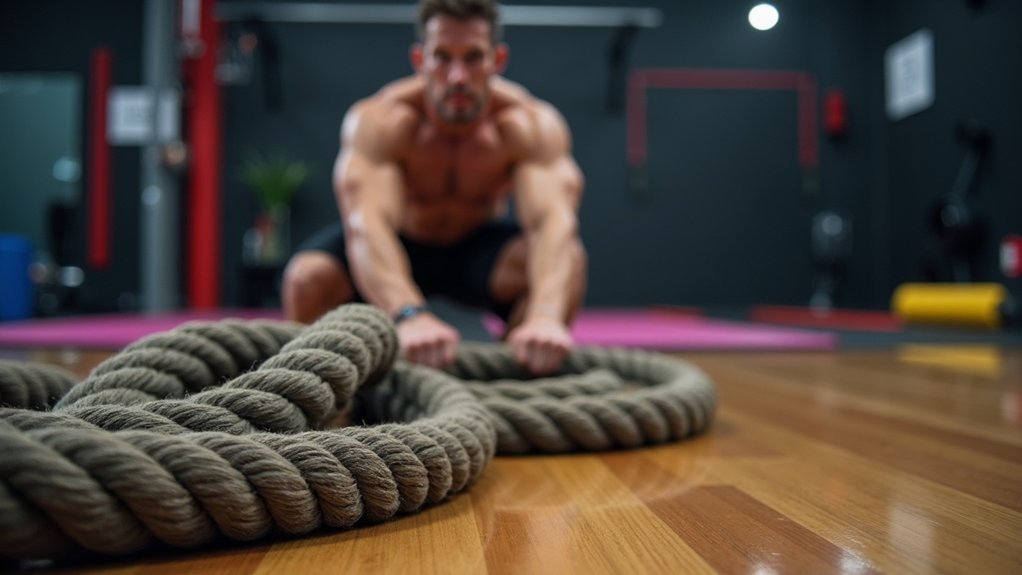
To choose the right anchor points for your battle ropes at home, look for sturdy options such as heavy-duty wall brackets or strong trees in your yard. Ensure that your anchors can withstand the pressure of intense workouts and are positioned at least 20-30 feet away from your workout area for optimal movement. Securely attach your ropes using strong knots or anchor straps, and make it a habit to regularly check their integrity for safety. With the right anchor setup, you’ll not only enhance your workouts but also maintain a safe exercise environment. Keep exploring to discover more effective battle rope techniques and elevate your home fitness routine!
Key Takeaways
- Choose sturdy anchors, such as heavy-duty wall brackets or robust trees, to ensure safety during your battle rope workouts at home.
- Position the anchor point 20-30 feet from your workout area to allow for a full range of motion and maximize your exercise effectiveness.
- Regularly inspect the anchor point’s stability and weight capacity to prevent accidents during your intense training sessions.
- Use strong knots or anchor straps to secure the battle ropes, minimizing the risk of slippage and enhancing your workout experience.
- Keep your workout area clear of obstacles and hazards to promote safety and efficiency during your home workouts.
Importance of Choosing the Right Anchor Points
When gearing up for your battle rope workouts at home, selecting the right anchor points isn’t just important—it’s absolutely essential. A sturdy anchor can withstand the intense forces generated during your exercises, ensuring both safety and effectiveness.
Position your anchor point close to your workout area, allowing for at least 20-30 feet of clear space to facilitate optimal movement. Stability is crucial; consider using heavy-duty wall brackets, power racks, or strong trees to prevent injuries.
A weak anchor can lead to accidents and hinder your strength training progress. Always double-check your anchor’s strength before you start your workout to maximize results and minimize risks.
A sturdy anchor is vital; ensure its strength to avoid accidents and enhance your strength training progress.
Whether you’re a man or woman, investing the time to set up your home gym correctly will pay off in your fitness journey.
Types of Suitable Anchor Points
When selecting anchor points for your battle ropes at home, consider heavy-duty wall brackets that can withstand intense workouts.
Sturdy outdoor structures like trees or fence posts can also provide reliable options, giving you versatility in your training environment.
Always ensure that your chosen anchor point is stable to keep your workouts safe and effective, allowing you to maintain your fitness journey from the comfort of your home.
Heavy-Duty Wall Brackets
Selecting the right anchor points is crucial for optimizing your battle rope workouts, and heavy-duty wall brackets emerge as one of the top choices for home gym enthusiasts. These brackets offer a reliable anchor point, ensuring safety and preventing slippage during your most intense training sessions. Constructed from robust materials like steel, they are designed to withstand significant force without bending or warping. For maximum safety, it’s important to install them correctly into wall studs or masonry. Many models come with adjustable features, allowing you to tailor the height and angle to suit your workout preferences. Additionally, look for options that include safety padding to enhance durability and reduce wear on your battle rope.
| Feature | Benefit |
|---|---|
| Durable Materials | Long-lasting performance |
| Adjustable Features | Customizable workout intensity |
| Safety Padding | Protects rope from wear |
Sturdy Outdoor Structures
Finding sturdy outdoor structures for your battle ropes can significantly enhance your home workout experience.
Look for a robust tree trunk that provides a reliable, natural anchor point for secure attachment. Heavy fence posts are another excellent option, ensuring stability during your intense sessions.
If you’re feeling adventurous, a solid, stable boulder or large rock can also serve as an effective anchor, provided it’s heavy enough.
Additionally, heavy-duty playground equipment, such as swings or jungle gyms, can offer secure anchoring options for your exercises.
Always prioritize stability and strength to withstand the force generated during your battle rope workouts, keeping your training safe and effective as you strive for a healthier lifestyle at home.
Evaluating Anchor Stability
When evaluating anchor stability for your home gym equipment, it’s essential to assess the structural integrity of your chosen anchor point to ensure it can withstand the demands of battle ropes.
Check the weight capacity to confirm it won’t budge during your most intense workouts.
Additionally, inspect the surrounding environment for any potential hazards that could compromise your safety while exercising at home.
Prioritizing these factors will help you maintain a secure and effective workout space.
Assess Structural Integrity
Before you dive into your battle rope workout at home, it’s crucial to assess the structural integrity of your anchor points.
Look for any signs of wear and damage, such as rust or cracks, since compromised anchors can lead to accidents during your intense sessions.
Ensure your anchor points can handle at least twice the force you’ll exert during your workouts.
Test their stability by applying pressure to confirm they remain secure.
For reliable anchoring, consider using heavy-duty wall brackets, floor mounts, or robust gym structures.
If you’re working out outdoors, opt for strong trees or posts that are at least 8 inches in diameter, ensuring they’re deeply rooted for a secure and dependable anchor.
Stay safe and enjoy your home fitness journey!
Check Weight Capacity
It’s crucial to verify the weight capacity of your selected anchor point to ensure it can withstand the significant forces generated during battle rope workouts. For optimal safety and performance, choose heavy-duty wall brackets or floor mounts rated for at least 200-300 pounds. Always test the anchor point’s stability by applying pressure to make sure it remains secure and does not wobble. Here’s a quick reference:
| Anchor Type | Weight Capacity | Stability Check |
|---|---|---|
| Wall Bracket | 200-300 lbs | Test for wobbling |
| Floor Mount | 300+ lbs | Securely anchored |
| Squat Rack | Varies | Manufacturer-rated |
Make informed choices for a safe and effective home workout experience!
Inspect Surrounding Environment
A thorough inspection of your surrounding environment is essential for guaranteeing a safe and effective battle rope workout at home.
First, check your chosen anchor point—whether it’s a wall bracket, sturdy piece of furniture, or heavy equipment—to confirm it’s secure and can withstand the intensity of your movements. Look for any signs of wear or damage, as these can lead to accidents.
Clear at least 20-30 feet of space around you to avoid obstacles that may cause tripping.
Finally, consider environmental factors like wind if you’re exercising in a garage or outdoor space, and test the anchor by applying force before starting your workout to ensure stability.
Tips for Securing Your Anchor
Securing your anchor point is essential for an effective battle rope workout at home. Choose a robust anchor point, such as heavy-duty wall brackets or sturdy gym equipment, to ensure stability during intense movements.
Center the rope evenly and utilize anchor straps with carabiners for a secure attachment that minimizes slippage. If you prefer a DIY approach, tie strong knots to prevent unwinding.
Maintain at least 20-30 feet of clear floor space around your anchor to allow for dynamic exercises and enhance safety. Regularly check your anchor‘s strength before each session to ensure it’s reliable and safe for your home workout routine.
Common Mistakes to Avoid
When setting up for a battle rope workout in your home gym, it’s essential to avoid common mistakes that can lead to accidents.
Start by double-checking the strength and stability of your chosen anchor point to ensure safety. Make sure it’s positioned at an appropriate height and distance for effective wave motion.
Avoid using makeshift anchors like flimsy furniture, as they won’t withstand the force.
Pay close attention to your workout area to prevent tripping over the rope or any equipment.
Lastly, always use proper knots or anchor straps when setting up DIY anchors; this will significantly reduce the risk of slippage or damage.
Stay safe and focused as you work towards your fitness goals at home!
Final Considerations for Safe Workouts
After addressing common mistakes, it’s time to focus on the final considerations for safe workouts with battle ropes at home.
Always double-check the strength and stability of your anchor point, ensuring it’s a heavy-duty anchor like a wall bracket or power rack. Position it 20-30 feet from your workout area to create a clear space for movement.
Ensure your anchor point is secure and positioned 20-30 feet away for optimal movement during battle rope workouts.
Incorporate safety measures, such as anchor straps and strong knots, to secure the rope and minimize slippage. Stay aware of your surroundings; eliminate any obstacles or hazards that could lead to injury during your intense sessions.
Prioritize safety, and you’ll enhance your battle rope experience while getting the most out of your home workouts!