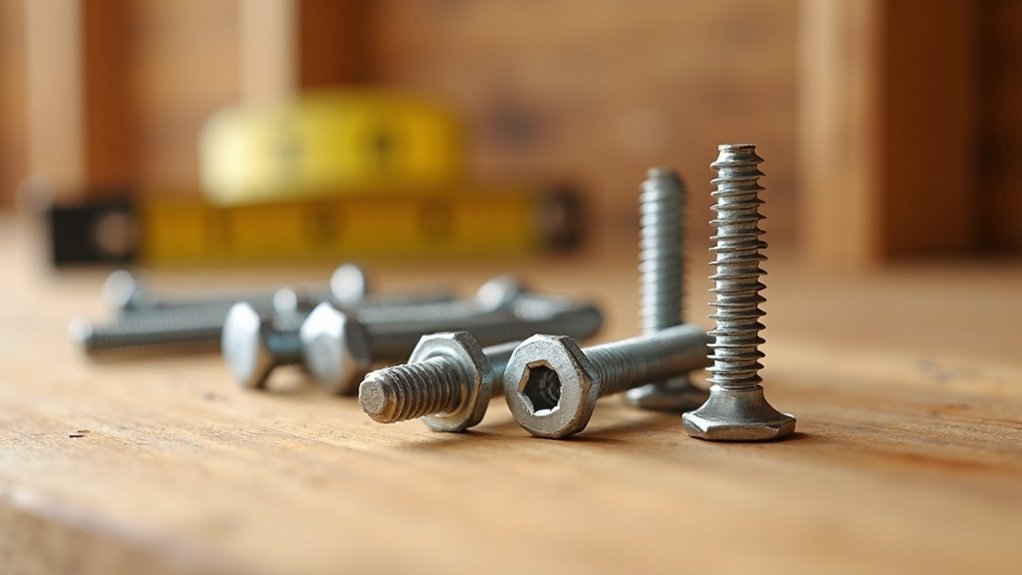
To choose lag bolts for mounting your home gym equipment to wall studs, start by considering the weight of the equipment you’re installing. Opt for lag screws with coarse threads to ensure a secure grip, and select appropriate sizes; commonly, 1/4-inch to 1/2-inch are ideal choices for this purpose. Always drill pilot holes to prevent wood splitting, and pay close attention to the embedment depth for optimal holding power. Additionally, remember to locate the studs accurately and avoid any electrical lines during installation to ensure a safe setup. Keep exploring for more tips on creating a safe and effective home workout space!
Key Takeaways
- Select lag bolts based on the weight and type of home gym equipment to ensure adequate support and safety during your workouts.
- Choose lag bolts with a diameter that matches the load requirements of your gym setup; larger bolts will provide greater holding power for heavier machines.
- Always use pilot holes to prevent wood splitting and ensure a secure fit when installing your equipment.
- Verify that the lag bolts are rated for the intended load and compatible with the specific wood type of the wall studs to guarantee stability.
- Regularly inspect installed lag bolts for signs of wear or damage to maintain safety and support for your home fitness routine.
Common Uses for Lag Bolts
When setting up your home gym, lag bolts are often the go-to choice for securing heavy equipment due to their strength and reliability.
These heavy-duty fasteners excel in construction applications, especially when fastening into wood studs, making them perfect for mounting heavy exercise machines like squat racks or wall-mounted pull-up bars. Lag bolts are also vital in building sturdy shelving for weights and other gym accessories, ensuring they can handle substantial loads without compromising safety.
In garages or dedicated workout spaces, they secure structural supports and frames, enhancing overall stability. Furthermore, they’re perfect for assembling gym furniture, creating solid joints that resist wobbling during intense workouts.
For mounting heavy fixtures like mirrors or wall-mounted storage for your gear, lag bolts provide superior holding power, guaranteeing durability and reliability for your fitness journey.
Understanding Lag Screws
Lag screws, often referred to as lag bolts, are essential heavy-duty fasteners that can also be useful in home gym setups for securing equipment and ensuring stability.
They feature coarse threads that grip materials tightly, providing a secure connection for various gym installations. When working with larger lag screws, it’s important to drill a pilot hole to prevent splitting, especially when attaching equipment to wooden structures.
The smooth, unthreaded section near the head allows for easier fitment, ensuring proper placement without compromising the integrity of the material.
Unlike regular wood screws, lag screws are specifically engineered for heavy-duty applications, making them ideal for securing large gym components like weight racks and structural supports.
Always consider edge distances to maintain the integrity and safety of your home gym projects.
Lag Screw Strength & Example Capacities
When selecting lag screws for your home gym equipment installation, understanding their shear strength and withdrawal resistance is crucial for ensuring safety and stability.
For example, a 1/4-inch lag screw embedded 2.0 inches can support approximately 272 pounds in shear, while a 1/2-inch screw at 3.0 inches can handle up to 624 pounds.
Remember, these capacities can vary based on factors like the type of wood used and the depth of embedment, so making the right choice is essential for your home workout setup.
Prioritizing the proper installation of your equipment will help you achieve your fitness goals safely.
Shear Strength Considerations
Understanding shear strength is crucial when selecting the right hardware for your home gym equipment, as it directly affects the structure’s ability to support your workouts without failure.
The shear strength of screws and anchors varies based on diameter, embedment depth, and the materials used in your gym setup. For instance, a 1/4-inch lag screw can support around 272 pounds at a 2.0-inch embedment depth, making it a solid choice for lighter equipment.
Increasing to a 3/8-inch screw boosts the capacity to approximately 432 pounds at a 3.0-inch depth, ideal for heavier machines.
To ensure safety and stability during your workouts, make sure to maintain proper edge distances to avoid material splitting.
Taking these factors into account will help you achieve effective load distribution and optimal performance in your home gym.
Withdrawal Resistance Factors
The withdrawal resistance of lag screws is crucial when securing home gym equipment to wall studs, ensuring both safety and stability during workouts. This resistance is significantly influenced by screw diameter; for instance, a 1/4-inch lag screw can provide approximately 510 lb pull-out strength.
The depth of embedment is also essential—deeper embedment generally enhances strength. For example, a 1/4-inch lag screw embedded 2.0 inches can achieve around 272 lb shear strength.
Additionally, factors such as wood species, edge distances, and spacing can greatly affect the withdrawal resistance and overall stability of your gym setup.
Following proper installation guidelines is key to maximizing performance and ensuring a safe home workout environment.
Pilot Holes & Installation Techniques
When installing home gym equipment, drilling accurate pilot holes is essential to prevent wood splitting and ensure a secure fit.
Make sure your pilot holes match the diameter of the lag bolts used for assembly and are slightly shorter than the bolts for optimal gripping.
Proper alignment and torque settings during installation are crucial for maintaining the stability and strength of your gym setup, allowing you to focus on achieving your fitness goals safely at home.
Importance of Pilot Holes
Pilot holes play an essential role in the installation of home gym equipment, ensuring that you can securely attach components without causing damage to your walls or flooring. By drilling a pilot hole, you reduce the risk of splitting materials, especially in denser surfaces commonly found in home environments. The diameter of the pilot hole should match the smooth shank of the lag screw, allowing the threads to grip effectively. Aim for a pilot hole that is slightly shorter than the lag screw for optimal engagement. Using a high-quality drill bit is crucial for creating clean holes and maintaining precision during installation.
| Aspect | Importance |
|---|---|
| Prevents Splitting | Avoids damage to walls and floors |
| Proper Diameter | Ensures secure grip for threads |
| Embedment Depth | Maximizes strength and stability |
| Quality Bit | Reduces risk of bit breakage |
| Alignment | Ensures effective installation |
This approach will help you set up your home gym safely, allowing you to focus on your fitness goals without worrying about structural integrity.
Proper Installation Techniques
Successful installation of lag bolts is crucial for securing home gym equipment safely and effectively. Always pre-drill pilot holes that match the diameter of the lag bolt shaft to prevent wood splitting, ensuring your workout gear remains stable.
When positioning the lag screw, ensure the tip is centered in the pilot hole and perpendicular to the surface for maximum strength. Use an impact driver or wrench with low torque settings to tighten the lag bolt, as this helps avoid damaging the wood and maintains the integrity of your installation.
Make sure the pilot holes are deep enough for the full length of the lag bolt, allowing it to sit flush against the wall for a secure fit, which is particularly important for equipment like wall-mounted pull-up bars or squat racks.
Clamps can also enhance stability during installation, providing an extra layer of safety for your home gym setup.
Safety and Electrical Considerations
Ensuring safety during the installation of home gym equipment, such as lag bolts for wall-mounted accessories, requires careful attention to the location of wall studs and the presence of electrical lines.
Use a stud finder or tap the wall to locate wooden studs, providing the necessary support for your equipment. Be aware that electrical lines typically run 16 to 22 inches off the floor; always check for live wires before drilling.
If wiring is close to the stud surface, use protection plates to prevent accidental damage. Confirm that metal plates are present over studs with wiring, as these safeguard electrical lines.
Exercise caution in areas near kitchens or bathrooms to avoid hidden plumbing and electrical hazards while creating your workout space.
How to Remove a Lag Bolt With a Broken Head
Removing a lag bolt with a broken head can be a straightforward process if you follow the right steps, especially if you’re setting up your home gym and need to secure your equipment properly.
First, ensure the area is clear and safe for work. Use a bolt extractor tool, which grips the remaining shaft as you turn it counterclockwise. If the bolt resists, apply penetrating oil to the shaft and let it soak for several minutes to help loosen it.
If the shaft is exposed, try using vice grips to turn it out with steady pressure. As a last resort, drill into the center with a left-handed drill bit, which may catch and remove the bolt as you drill.
Contact Us for Engineering Solutions
If you’re faced with challenges related to home gym equipment or need advice on setting up your exercise space effectively, our team at Home Gym Solutions is here to assist you.
We specialize in providing guidance on selecting the right equipment for your fitness needs, whether you’re looking for weights, resistance bands, or cardio machines.
We’re dedicated to helping you achieve your health and fitness goals while ensuring your home gym setup is safe and efficient.
For immediate assistance, use our chat options for inquiries about specific equipment recommendations.
For more personalized advice tailored to your fitness journey, don’t hesitate to contact us directly to discuss your unique requirements and challenges.