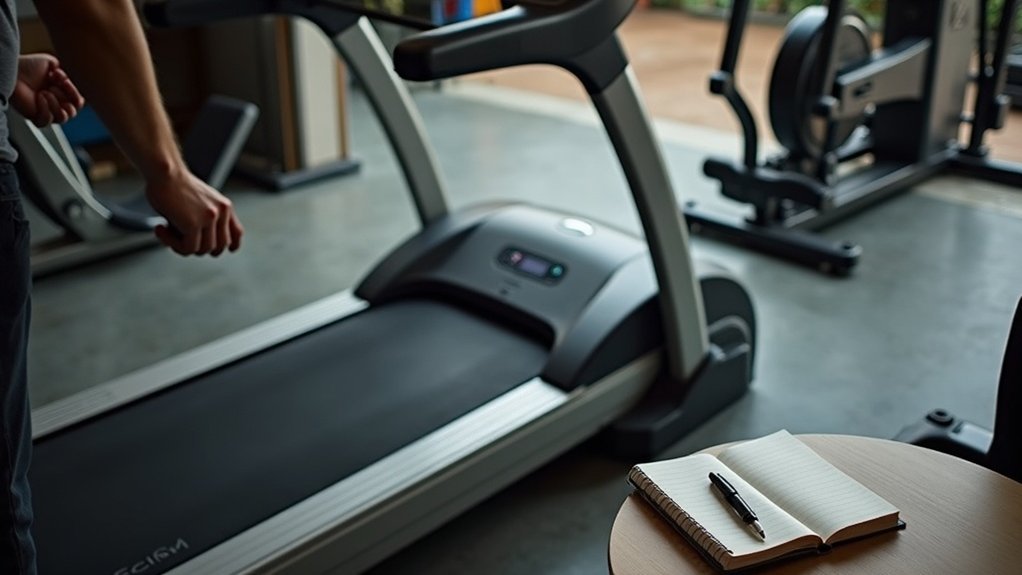
When inspecting a used treadmill before pickup, it’s essential to ensure it aligns with your home gym goals. Start by checking the treadmill’s overall cleanliness, making sure there’s no dust or debris that could affect your workout experience. Inspect the motor drive belt for any signs of cracks and the walking belt for fraying, as these can impact performance and safety.
Test the treadmill’s functionality at various speeds to ensure it meets your workout needs, and verify that the incline feature operates smoothly for varied training options. Listen for any unusual noises that could indicate underlying issues, and look for visible damage that may affect its longevity. Finally, confirm that all safety features are intact, as they are crucial for a secure workout environment.
Remember, investing in quality home gym equipment is key to maintaining a healthy lifestyle, so take your time and make sure the treadmill meets your expectations. Keep exploring for more insights on optimizing your home fitness journey!
Key Takeaways
- Begin by checking the overall cleanliness of the treadmill, focusing on the frame, console, and walking belt for any dirt or dust accumulation that may affect performance.
- Assess the motor drive and walking belts for any signs of wear, such as cracks or fraying, and ensure they maintain proper tension during operation for a smooth workout.
- Test the treadmill’s functionality by powering it on and adjusting the speeds and incline settings while listening for any unusual noises that could indicate underlying issues.
- Ensure the incline feature operates smoothly and quickly without requiring excessive force, as this is essential for a variety of workout routines.
- Inquire about the treadmill’s maintenance history, including its age and any repairs or part replacements, to better understand its condition and reliability for your home gym setup.
Check the Overall Cleanliness
When inspecting a used treadmill, the overall cleanliness is a crucial indicator of its maintenance history. For those committed to staying healthy through home workouts, a clean treadmill not only ensures better performance but also reflects the care it has received.
Check for dust accumulation on the frame and beneath the deck; a well-maintained treadmill is often free of grime. Examine the moving parts for any excess grease or lubricant, as residue could suggest a lack of care. Ensure the console and buttons are free from dirt, as buildup can hinder functionality and impact your workout experience.
Inspect for dust on the frame and moving parts; cleanliness ensures better performance and a more enjoyable workout experience.
The walking belt should be clear of debris like hair or fibers to ensure optimal performance. Finally, take a close look at the upholstery; torn or stained pads may indicate poor hygiene, which can raise health concerns during your exercise sessions.
Prioritizing cleanliness can enhance your home gym environment and support your fitness journey.
Inspect the Motor Drive Belt
When inspecting the motor drive belt of your home gym equipment, begin by looking for any signs of fraying or cracking, as these indicate wear that could lead to future issues.
Next, assess the tension levels; a loose belt can slip during your workout, while a belt that’s too tight may put unnecessary strain on the motor.
These factors are crucial for ensuring your treadmill operates smoothly and efficiently, allowing you to focus on achieving your fitness goals from the comfort of your home.
Check for Fraying Signs
The motor drive belt is a crucial element of any treadmill, and checking it for fraying signs is essential for maintaining a home gym that supports your fitness goals.
When considering a used treadmill, be sure to look out for the following indicators:
- Visible cracks or fraying
- A smooth surface free of irregularities
- Unusual grinding or squeaking noises during operation
- Proper alignment on the rollers
- Signs of excessive wear, such as exposed fibers
By spotting these signs of wear early, you can avoid operational issues and ensure you invest in a reliable machine that will help you achieve your health objectives.
Don’t underestimate the importance of the motor drive belt; it plays a vital role in the performance and longevity of your treadmill, making it a key component of your home workout routine.
Assess Belt Tension Levels
To ensure your used treadmill performs at its best, it’s crucial to assess the belt tension levels.
Begin by examining the motor drive belt for any signs of wear, such as cracking or fraying, as these can lead to expensive repairs down the line.
To check the belt tension, lift the belt in the center; it should rise approximately 2-3 inches before you feel resistance.
Pay attention to any unusual noises while the treadmill is in operation, as these may indicate misalignment.
Additionally, check the alignment of the motor drive belt—make sure it runs straight and centered on the rollers.
Maintaining proper tension and alignment is essential for optimal performance, especially when investing in used gym equipment for your home workout routine.
Assess the Walking Belt and Deck
Assessing the walking belt and deck of a used treadmill is crucial for ensuring both safety and optimal performance in your home gym setup.
Here are key aspects to inspect before making a purchase:
- Inspect the Walking Belt: Look for any signs of wear, such as fraying or cracking, which could affect your workout experience.
- Check Alignment: Ensure that the walking belt is properly centered; it shouldn’t drift to one side during use.
- Examine the Deck: Look for deep scratches or dents on the walking deck that could impact its durability and your safety.
- Test Tension: Assess the walking belt’s tension; it should have a slight give when pressed, indicating it’s in good condition.
- Run Performance Tests: Operate the treadmill at various speeds to ensure smooth functioning and check for any slipping or stuttering that could hinder your workout.
Test the Functionality at Various Speeds
Testing the functionality of a used treadmill at various speeds is crucial for assessing its performance and reliability, especially for those looking to enhance their home gym setup.
Begin by running the treadmill at different speeds, such as 3, 5, and 10 mph. Pay close attention to the walking belt to ensure it stays centered and doesn’t drift, as this could indicate potential alignment issues.
Test the treadmill at various speeds, ensuring the walking belt remains centered to avoid alignment issues.
Listen for any unusual noises from the motor or belt, which may signal mechanical concerns. Additionally, check how responsive the console is while adjusting the speed.
This thorough evaluation is essential when purchasing a treadmill from a used gym, ensuring that you make a wise investment in your fitness journey at home.
Verify the Incline Feature
Verifying the incline feature of a used treadmill is crucial for enhancing your home workout experience. Here’s how to ensure it functions properly:
- Adjust the incline to various levels while the treadmill is in operation to test its functionality.
- Listen for any unusual sounds, such as grinding, which may suggest mechanical issues that could affect your workout.
- Confirm that the incline engages quickly and maintains stability at all settings, particularly at steeper angles, for a safe and effective workout.
- Check the console for any error messages related to incline adjustments, as these could indicate underlying problems.
- Ensure the incline mechanism operates smoothly and doesn’t require excessive force to adjust, allowing for seamless transitions during your workout.
Listen for Unusual Noises
When evaluating a used treadmill for your home gym, it’s crucial to listen for any unusual noises that may occur during operation.
Pay attention to grinding, squeaking, or rattling sounds, as these can often indicate mechanical issues or worn components. Excessive noise might suggest motor wear, which can lead to costly repairs down the line.
Listen for grinding, squeaking, or rattling sounds; these can signal mechanical issues or worn parts that may lead to costly repairs.
It’s advisable to test the treadmill for at least 10-20 minutes, varying the speeds to identify any irregular noises, especially at higher settings—these may signal alignment or belt problems.
Knocking sounds could indicate serious issues with the running deck or frame integrity.
Use any abnormal noises as negotiation points to ensure you secure a fair deal on your used gym equipment, helping you maintain your commitment to a healthy lifestyle through effective home workouts.
Examine for Visible Damage
When evaluating a used treadmill for your home gym, it’s essential to thoroughly inspect the equipment for any visible damage that could impact both its performance and your safety.
Keep an eye on the following crucial areas:
- Check the frame for hairline cracks, rust spots, or weak welds that could compromise stability.
- Look for surface scratches, but be cautious of deep gouges or significant structural damage.
- Examine the walking belt and deck for signs of excessive wear, such as fraying edges.
- Inspect the console and electronics for cracked screens or worn buttons that could hinder usability.
- Ensure all moving components are intact, functioning properly, and free of rust.
Confirm Safety Features
After thoroughly examining your treadmill for any visible damage, the next step is to confirm its safety features.
Start by testing the emergency stop button—ensure it’s functional and easily accessible for quick shutdown during your workouts.
Make sure the safety key is present; it’s essential for preventing operation without it, giving you peace of mind while exercising at home.
Inspect the handrails for stability; they should be secure to provide support, especially for beginners or older users.
Verify that the incline adjustment feature operates smoothly, as erratic changes can be hazardous and disrupt your workout routine.
Finally, inspect the power cord for any frays or damage to avoid electrical hazards.
Prioritizing safety is key to enjoying your home gym experience and staying healthy.