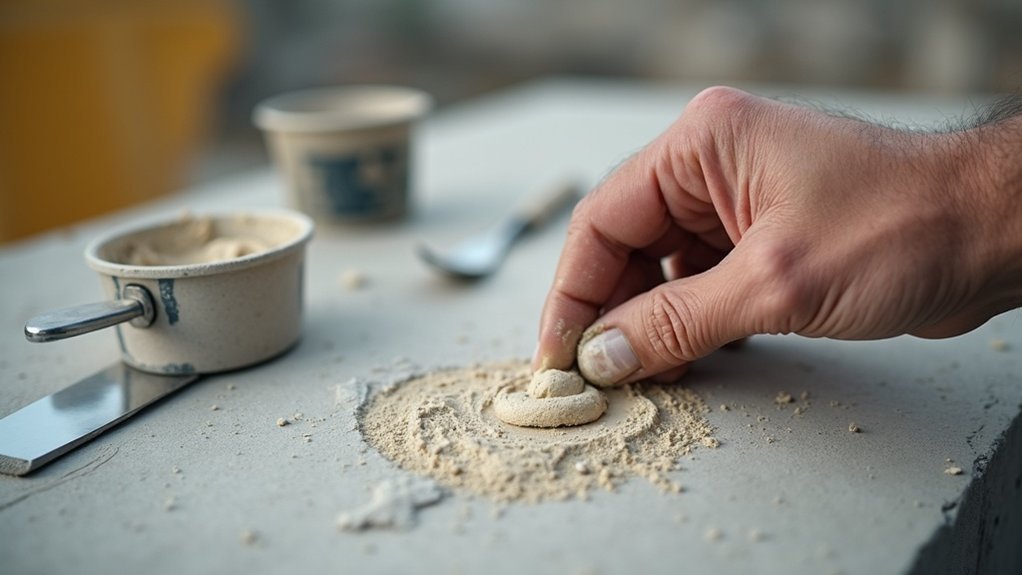
To patch anchor holes when relocating your home gym equipment, start by cleaning the holes with a wire brush or vacuum to ensure a good bond. Next, use a suitable filler, such as concrete epoxy or patching compound, making sure to leave a quarter-inch below the surface for a smooth finish. Once the filler is dry, smooth the area with a scraper and match the color to your existing concrete for a seamless look. Remember to maintain a distance of at least three inches from old screw holes to ensure the structural integrity of your gym setup. Properly patching these holes will help create a safe and effective workout environment at home.
Key Takeaways
- Begin by cleaning the anchor holes thoroughly using a wire brush or shop vacuum to ensure proper adhesion of the filler, so your home gym equipment remains stable and secure.
- Choose a suitable filler, such as concrete epoxy or patching compound, to ensure durable repairs that can withstand the rigors of your workout routine.
- When filling the holes, leave a quarter-inch below the surface. This will make it easier to smooth and finish the area, maintaining a clean look in your gym space.
- Once the filler has dried, use a scraper to smooth the filled area, achieving an even finish that matches the surrounding surface, ensuring your home gym looks its best.
- When relocating your equipment, maintain a distance of at least three inches from old screw holes to ensure structural integrity, allowing you to exercise safely and effectively.
Understanding Anchor Bolt Holes
Anchor bolt holes play a significant role in the stability of home gym equipment, particularly when securing heavy items like squat racks or weight benches to concrete surfaces.
These holes, typically circular, are sized according to the anchor bolts being used. When properly filled, they help maintain the integrity of your workout space, preventing potential tripping hazards and moisture issues.
If you decide to rearrange your home gym, it’s crucial to fill any existing anchor holes to avoid compromising the surrounding concrete and to achieve a polished look.
For the best results, clean the hole thoroughly, select an appropriate filler, and ensure the surface is smooth and dry before repainting or finishing the area. This will help create a safe and inviting environment for your home workout sessions.
Importance of Proper Patching
When you neglect the importance of properly patching anchor holes in your home gym, you risk compromising both the structural integrity and aesthetic appeal of your space. Proper patching minimizes moisture infiltration, which can lead to issues like mold and mildew in your workout area. A well-patched hole ensures a smooth surface for painting or adding wall decals, enhancing the overall look of your gym. Additionally, failing to patch correctly can create tripping hazards, especially in areas where you may be moving weights or exercise equipment. Maintaining structural stability is crucial, particularly when you’re relocating heavy gym equipment.
| Aspect | Importance |
|---|---|
| Structural Integrity | Prevents future damage |
| Aesthetic Appeal | Guarantees a clean finish |
| Moisture Prevention | Reduces potential hazards |
| Safety | Minimizes tripping hazards |
Preparation Steps for Filling Holes
Before you start setting up your home gym, make sure you’ve got the right safety gear, like gloves and a dust mask, to protect yourself during your workout.
Next, gather your equipment, including weights, resistance bands, mats, and any other essentials tailored to your fitness goals.
Having everything ready will streamline your exercise routine and guarantee effective results in achieving your health objectives.
Safety Gear Essentials
To ensure a safe and effective workout at home, it’s essential to equip yourself with the right safety gear before diving into your exercise routine.
Start with a good pair of athletic shoes that provide proper support and cushioning for your feet. A moisture-wicking shirt can help keep you comfortable by managing sweat during intense sessions.
If you’re using weights or resistance bands, consider wearing gloves to protect your hands and improve grip. For floor exercises, a quality yoga mat can provide cushioning and stability.
Lastly, keep a water bottle nearby to stay hydrated and a first aid kit on hand for any minor injuries—these are your safety gear essentials for a successful home gym experience.
Tools Needed Checklist
A thorough tools checklist is essential for effectively maintaining your home gym equipment. Gather the following items to ensure a streamlined repair and maintenance process:
- Hammer – For any necessary adjustments to your equipment.
- Chisel – To refine any damaged parts and enhance the repair process.
- Wire Brush – To clean debris and dust from equipment surfaces thoroughly.
- Shop Vacuum – For efficient cleanup of dust and small particles around your workout space.
Additionally, choose a suitable repair filler, like a strong adhesive or patching compound, and prepare finishing tools such as a trowel or scraper.
Keeping your tools organized and accessible will markedly improve your efficiency during maintenance tasks, allowing you to focus on your health and fitness goals.
Best Practices for Filling Anchor Bolt Holes
Filling anchor bolt holes in your home gym setup requires careful attention to detail to ensure a durable and visually appealing repair.
Begin by cleaning the holes thoroughly with a wire brush or shop vacuum to remove any debris, as this will promote better adhesion for your filler material.
Clean the holes thoroughly using a wire brush or shop vacuum to ensure optimal adhesion for your filler material.
Opt for a suitable filler, such as concrete epoxy for added strength or a premixed concrete patching compound for convenience and ease of use.
When filling the hole, leave about a quarter-inch below the surface to make smoothing easier later on.
Once the filler has dried, use a scraper to achieve an even finish, ensuring it blends seamlessly with the surrounding concrete.
For a cohesive look that complements your home gym, consider matching the color of your filler to the existing concrete. This will help maintain the aesthetic of your workout space while ensuring it remains functional and safe.
Recommended Products for Patching
Choosing the right product for patching anchor holes can greatly impact the durability and appearance of your repair, especially when creating a home gym.
Here are some recommended products for patching:
- Hydraulic Cement: Ideal for larger holes; it sets quickly and adheres well to wet surfaces, ensuring a solid base for your equipment.
- Premixed Concrete Patching Compound: Perfect for smaller holes; available in various colors to match your gym’s aesthetic for a smooth finish.
- Concrete Epoxy: A strong two-part adhesive that bonds well with existing concrete, allowing for color customization to suit your home gym decor.
- Surface Finishing Tools: Scrapers and sanding sponges are essential for achieving an even surface post-repair, ensuring a safe and stable environment for your workouts.
Clean the holes thoroughly before applying any filler for the best results, helping to maintain a clean and functional home gym space.
Ensuring Structural Integrity After Repairs
While you may be excited to set up or relocate equipment in your home gym, it’s crucial to ensure the structural integrity of the wall for your safety and the performance of your workout space. To avoid compromising the wall, steer clear of old screw holes by keeping a distance of at least three inches from them. For added support, consider reinforcing the wall with plywood behind the drywall, especially if you plan to hang heavy equipment. Use heavy-duty anchors like toggle bolts to securely fasten your gear. Always assess the wall’s condition, and if you’re unsure about anything, don’t hesitate to consult a project engineer.
| Action | Importance | Outcome |
|---|---|---|
| Avoid old screw holes | Prevents wall compromise | Enhanced stability |
| Reinforce with plywood | Supports heavy loads | Long-term safety |
| Consult an engineer | Guarantees compliance | Peace of mind |