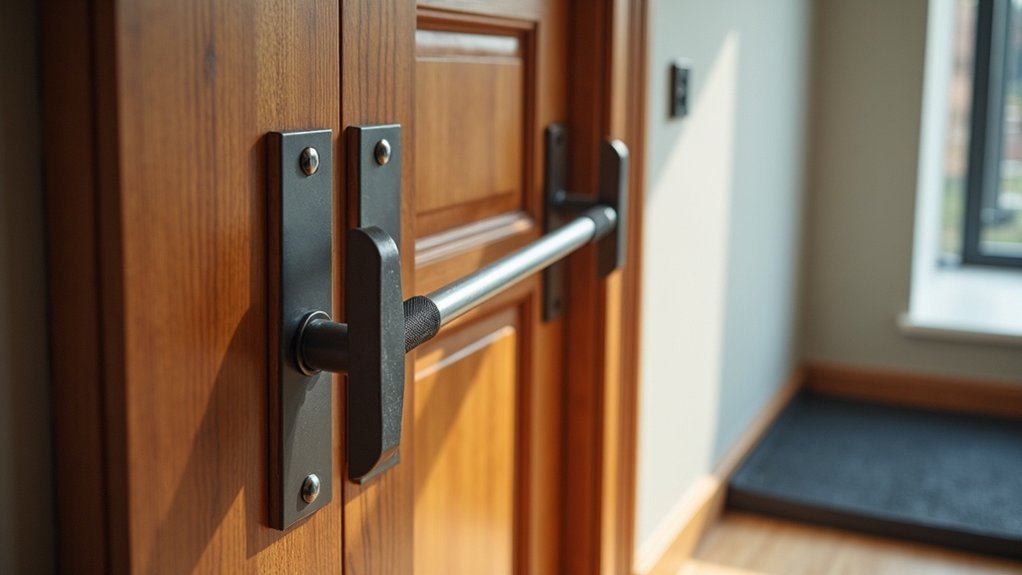
To prevent doorframe damage from pull-up bars while enhancing your home workout experience, it’s essential to install the bar on a sturdy, solid wood or metal frame. Begin by thoroughly inspecting the doorframe for any cracks or weaknesses that could compromise stability. To protect your doorframe, use protective padding that minimizes friction and helps evenly distribute the weight of the bar. Always adhere to the manufacturer’s instructions for secure installation to ensure safety during your workouts.
Regularly check the stability of both the pull-up bar and the doorframe for any signs of wear or damage. Additionally, consider exploring alternative workout options to reduce long-term impact on your doorframe, and discover ways to enhance your overall home gym setup. By taking these precautions, you can enjoy effective workouts while preserving the integrity of your home environment.
Key Takeaways
- Opt for sturdy solid wood or metal door frames to provide reliable support and minimize the risk of damage while performing pull-up exercises.
- Before installation, thoroughly inspect the door frame for any cracks or weaknesses to ensure it can safely support your workouts.
- To protect your door frame, apply cushioning padding on the pull-up bar, which helps reduce friction and prevent any potential damage.
- Prior to each workout, regularly assess the stability of the pull-up bar and the overall condition of the door frame for optimal safety.
- To help preserve the integrity of your door frame over time, consider removing the pull-up bar after each use.
Understanding the Risks of Using Pull-Up Bars
When you choose to incorporate a pull-up bar into your home gym routine, it’s crucial to be aware of the potential risks involved. Improper installation can lead to damage to your doorframe, as excessive pressure may cause splits and structural weaknesses.
Hollow frames are especially susceptible compared to solid wood ones. To maintain the integrity of your workout space, regularly inspect both the pull-up bar and the doorframe for signs of wear and tear.
Utilizing protective padding can significantly reduce friction, minimizing the risk of accidents during your workouts. By staying informed about these considerations, you can enhance your home exercise experience while safeguarding your doorframes from damage.
Choosing the Right Door Frame for Support
To effectively support your pull-up bar and protect your doorframe, selecting the right type of frame is essential for your home gym setup.
Opt for a solid wood or metal door frame, as these materials provide the strength needed for a secure workout compared to hollow frames. Before installation, inspect the frame for any cracks or structural weaknesses that could compromise its integrity under stress.
Choose a doorway with sturdy trim to support your weight and minimize potential damage. Make sure the width of the door frame matches your pull-up bar for a proper fit, ensuring even weight distribution during your exercises.
Additionally, installing the bar at the correct height will help distribute pressure uniformly across the frame, allowing you to maximize your workouts safely and effectively at home.
Essential Installation Tips for Stability
Installing your pull-up bar correctly is crucial for ensuring stability and protecting your doorframe from damage.
Begin by confirming that it’s mounted on a robust door frame made of solid materials; avoid hollow frames, as they may not withstand the weight.
Adhere closely to the manufacturer’s installation instructions for optimal alignment and secure fastening.
To minimize friction and pressure—factors that can lead to dents or cracks—use protective padding between the bar and the frame.
To protect your doorframe from dents or cracks, always use protective padding between the pull-up bar and the frame.
Before each workout, take a moment to check the stability of the bar to ensure all components are securely attached, thus reducing the risk of accidents.
For long-term preservation of your doorframe’s integrity, consider removing the bar after your workout sessions.
This simple step will help you maintain a safe and effective home gym environment for your fitness journey.
Safety Guidelines for Using Pull-Up Bars
Using a pull-up bar can be a fantastic way to enhance your strength training regimen at home, but safety should always be a top priority for both men and women.
Choose a sturdy doorway for installation; hollow frames can’t support your weight capacity effectively. Be sure to secure the bar by following the manufacturer’s instructions carefully.
To prevent damage from friction, use protective padding between the bar and the frame. Regularly inspect the frame for signs of wear and conduct maintenance to ensure it lasts through your workouts.
After each session, consider removing the bar to preserve the integrity of your door frame.
Maintenance Practices to Preserve Your Door Frame
While maintaining your pull-up bar, it’s crucial to prioritize the preservation of your door frame to avoid costly damage.
Regularly inspect the door frame for signs of wear, such as cracks or dents, to ensure it remains sturdy for your workouts. To reduce friction, use protective padding between the pull-up bar and the door frame.
After each workout session, remove the pull-up bar to minimize stress on the frame and maintain its structural integrity. Always follow the manufacturer’s installation instructions for proper fitting and weight distribution, ensuring a secure setup.
Lastly, consider using a solid door frame, as it can better withstand the forces exerted by the pull-up bar, helping you exercise safely and effectively at home.
Exploring Alternative Options to Minimize Damage
Even with diligent upkeep, using door frames for pull-up bars can still result in damage over time. To safeguard your home and equipment, it’s wise to consider alternative options. Wall-mounted pull-up bars provide a stable and permanent solution that doesn’t rely on door frames, while freestanding pull-up stations offer the versatility to be placed anywhere, eliminating the risk of structural damage. If you prefer adaptability, adjustable pull-up bars can fit various settings and lessen the strain on your door frames. For those who enjoy outdoor workouts, outdoor pull-up bars present a robust option away from home. Additionally, multi-use fitness equipment ensures safer alternatives by distributing weight evenly. Here’s a quick comparison of the options available to help you make an informed choice:
| Option | Benefits | Considerations |
|---|---|---|
| Wall-mounted pull-up bars | Permanent, stable | Requires installation |
| Freestanding pull-up stations | Portable, versatile | Takes up floor space |
| Adjustable pull-up bars | Flexible, minimizes damage | May require adjustment |
| Outdoor pull-up bars | Durable, great for outdoor exercise | Weather exposure |
| Multi-use fitness equipment | Versatile, safer weight distribution | May be more expensive |
Explore these alternatives to enhance your home gym setup and maintain your fitness routine safely!