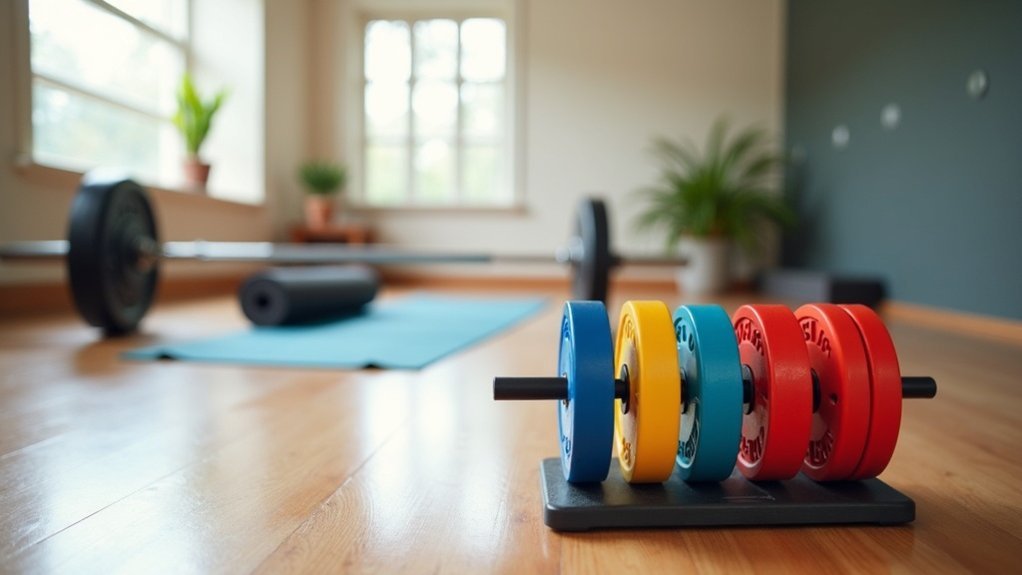
To progress with fractional plates at home, begin by integrating them into your warm-up sets for exercises such as bicep curls and tricep extensions. Utilize micro weights to make small, manageable increments of 0.25 to 1.25 pounds as you reach your target repetitions. Keeping a workout log is crucial for tracking your progress and adjusting weight increments according to your comfort level. Celebrate each small victory along the way, and remember, there’s always more to learn about structuring your routine for optimal results in your home gym journey!
Key Takeaways
- Begin incorporating fractional plates during your warm-up sets to ensure you maintain proper form and gradually increase weights, minimizing strain during upper body exercises. This approach is essential for both men and women looking to build strength at home.
- Keep a detailed workout log or use an app to track your progress meticulously, noting weight increments and repetitions. This will help maintain consistent progressive overload, which is crucial for effective home workouts.
- Focus on making small weight increases of 0.25 to 1.25 pounds once you’ve achieved your target reps and sets, particularly when working on smaller muscle groups. This strategy is beneficial for anyone striving to enhance their fitness levels at home.
- Consider incorporating deload weeks every month to aid recovery and prevent burnout, especially when using fractional plates for ongoing strength gains. This practice is important for sustaining long-term fitness success.
- Celebrate all your achievements, no matter the size, to foster a positive mindset and keep your motivation high in your home workout routine. Recognizing your progress is key to staying committed to your health journey.
Understanding Fractional Plates and Their Benefits
When you’re committed to making steady progress in your home strength training, understanding fractional plates can be a game changer.
These plates allow for incremental weight adjustments, typically ranging from 0.25 to 2.5 pounds. This micro-loading technique is essential for achieving progressive overload, which is vital for muscle growth and strength development.
Fractional plates are especially beneficial for those who may be new to lifting or focusing on upper body workouts, helping to minimize the risk of injury while facilitating manageable weight increases.
They’re invaluable for breaking through plateaus, ensuring you continue to advance in your fitness journey.
With a variety of materials and designs available, fractional plates are a versatile addition to any home gym setup, empowering both men and women to stay healthy and fit through exercising at home.
The Importance of Progressive Overload
Progressive overload is the cornerstone of any effective home strength training program, and understanding its significance can elevate your workouts at home to new heights.
By gradually increasing the demands on your muscles, you’ll uncover the potential for muscle growth and strength development right in your own space. Utilizing fractional plates allows for incremental increases, making weight adjustments simple and manageable, even in a home gym setting.
Micro-loading with these plates helps you avoid plateaus, offering a structured way to consistently challenge your muscles without needing a full gym. Research shows that making smaller increases reduces injury risk while promoting sustainable gains over time.
Embrace progressive overload in your home workouts, and watch your strength journey flourish!
Incorporating Fractional Plates Into Your Routine
Incorporating fractional plates into your home gym routine can significantly enhance your strength training results, especially if you’re aiming to effectively target smaller muscle groups. Here’s how you can make the most of these plates at home:
- Identify essential exercises for incremental increases, such as bicep curls or tricep extensions, that can be performed with minimal space and equipment.
- Utilize micro weights for your dumbbells, which range from 0.25 lbs to 2.5 lbs, allowing for subtle adjustments that can lead to better results over time.
- Begin with fractional plates during your warm-up sets to familiarize yourself with the new weights and ensure proper form.
- Keep a detailed log of your progress to consistently apply progressive overload, which is key to building strength and achieving your fitness goals from the comfort of your home.
Choosing the Right Weight Increments
As you start incorporating fractional plates into your home workout routine, selecting the right weight increments is crucial for safe and effective progress.
Begin with smaller incremental jumps, such as 0.25 or 0.5 pounds, particularly for upper body training and isolation exercises. This method helps minimize strain while allowing for steady progression without the risk of injury.
Once you consistently reach your target reps and sets, consider increasing weights by 1.25 pounds to challenge yourself further.
Opt for weight plates for dumbbells from reliable brands like Micro Gainz Fractional to ensure precision in your training.
Always monitor your comfort and strength levels, adjusting your weight increments to match your capabilities for optimal results in your home gym setup.
Tracking Your Progress Effectively
To effectively track your progress with fractional plates in your home workout routine, it’s essential to maintain a detailed workout log that captures not just the weights used, but also the specific increments of your fractional plates.
Maintaining a detailed workout log is crucial for tracking your progress with fractional plates in home workouts.
Here are some tips to help you stay on track:
- Utilize a spreadsheet or fitness app for easy input and visualization of weights and reps, making it simple to adjust your home gym workouts.
- Regularly assess your one-rep max (1RM) to gauge strength gains and adjust your training accordingly.
- Clearly mark fractional plates with their weights for quick adjustments during your at-home workouts, ensuring you can easily increase resistance.
- Set specific, measurable goals for each session to focus on incremental increases in weight or reps, helping you stay motivated and engaged in your fitness journey.
Stay dedicated, keep track of your progress, and watch your strength grow right from the comfort of your home gym!
Exercises Ideal for Using Fractional Plates
When you want to maximize your home strength training, utilizing fractional plates can be a game-changer for a variety of exercises. They’re ideal for bicep curls, tricep extensions, and lateral raises, allowing for precise adjustments that promote muscle growth without the need for a gym.
Compound movements like bench presses and squats also benefit, enabling incremental progress while minimizing the injury risk associated with larger weight jumps.
Isolation exercises, such as shoulder raises and leg extensions, thrive on smaller increments, helping you maintain proper form. Incorporating fractional plates into deadlifts and rows allows you to gradually build strength, ensuring you can focus on your technique and effectively reach your fitness goals—all from the comfort of your home gym.
Creating a Personalized Training Program
To create a personalized training program for your home gym, begin by assessing your current strength levels and setting realistic, measurable goals.
This essential step will enable you to track your progress effectively and maintain motivation as you work towards your fitness objectives.
Keep in mind that the more tailored your approach is, the better your results will be.
Incorporating fractional plates into your home workout routine can further enhance your strength training, allowing you to make smaller, more precise weight adjustments as you build strength.
Assessing Individual Strength Levels
How can you effectively assess your individual strength levels to create a personalized home training program? Start by determining your maximum lift for each exercise through a one-rep max test or identifying a weight you can lift for 8-12 reps with good form, even with home gym equipment.
Consider these steps:
- Identify your current maximum lifts using the equipment you have at home.
- Choose exercises that align with your specific fitness goals, whether building strength, improving endurance, or toning.
- Utilize adjustable weights or resistance bands for manageable, incremental weight increases as you progress.
- Regularly reassess your strength every 4-6 weeks to ensure consistent improvement.
Incorporating rest and recovery is vital for maximizing the benefits of your at-home workouts and supporting muscle adaptation.
Setting Realistic Goals
Setting realistic goals is essential for your success in creating a personalized home training program. Start by evaluating your current strength levels and setting specific targets that fit your home gym setup.
Aim for steady progressive improvements, increasing your dumbbell fractional weight plates by 1-2% each week. Use smaller jumps, like 0.25-2.5 lbs, to fine-tune your workouts while maintaining proper form.
Track your progress meticulously—record the exact weight lifted, reps, and sets to make informed adjustments. Establish short-term milestones, such as achieving a personal best in 4-6 weeks, and consider incorporating a deload week every month to promote recovery while continuing to adjust with those fractional plates.
This approach will help you stay healthy and motivated while working out at home, whether you’re a man or a woman.
Staying Motivated and Committed to Your Goals
While it’s easy to feel overwhelmed by your strength training journey at home, staying motivated and committed to your fitness goals can be achieved through manageable steps.
Consider these tips tailored for your home workout environment:
- Set clear, achievable short-term goals that focus on small increments each week, whether it’s increasing weights or reps with your home gym equipment.
- Track your progress meticulously to see how those small changes lead to significant improvements in your strength and overall health.
- Celebrate personal records, no matter how minor, to boost your positive mindset and reinforce your commitment to exercising at home.
- Create a supportive training environment by scheduling your workouts, organizing your space, and minimizing distractions to stay focused on your fitness journey.