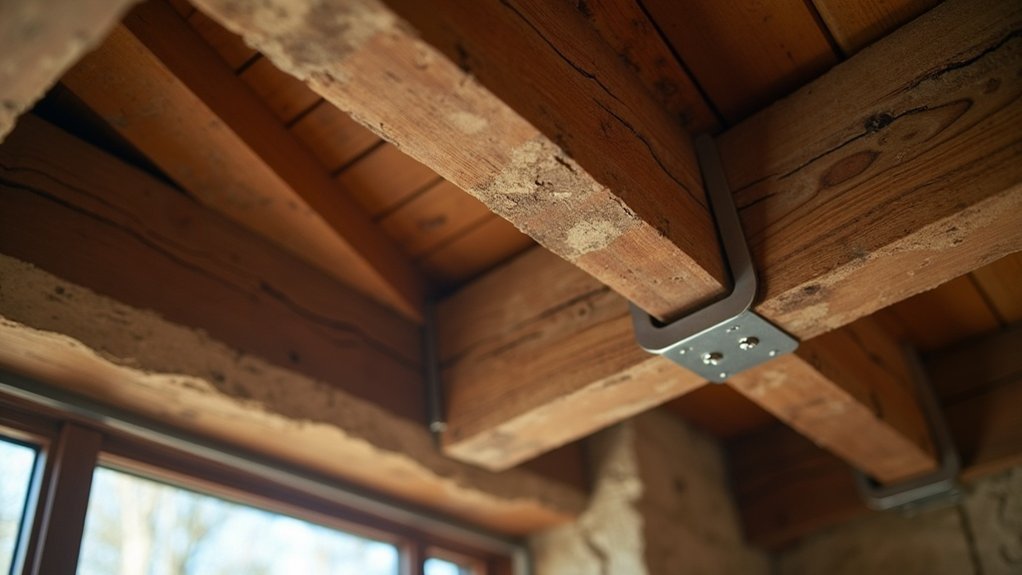
To protect your ceiling joists while installing ring mounts for your home gym, it’s crucial to ensure proper load capacity and installation techniques. Choose heavy-duty mounts that can support double the combined weight of users and equipment, and space them approximately 50 cm apart to ensure even weight distribution. Use lag screws and always drill pilot holes to prevent wood from splitting. Additionally, adding protective padding between the hardware and joists will help absorb shocks during workouts. Regular maintenance and inspections of the mount’s integrity are essential for ensuring safety and stability in your home gym. For more detailed guidance, continue reading.
Key Takeaways
- Use lag screws instead of standard screws for enhanced strength and secure anchorage, crucial for protecting your ceiling joists while setting up your home gym.
- Space ring mounts 50 cm apart to improve weight distribution, helping to prevent localized stress on joists during your workouts.
- Opt for heavy-duty mounts that are rated to support at least double the combined weight of users and equipment, ensuring safety during your at-home exercise routines.
- Always drill pilot holes before installation to avoid wood splitting and guarantee precise screw placement in the joists, which is essential for a stable workout environment.
- Regularly inspect and maintain your mounting hardware by tightening screws and replacing any worn components, to ensure ongoing safety while you stay fit at home.
Importance of Protecting Ceiling Joists
Protecting ceiling joists is crucial for maintaining the structural integrity of your home gym, especially since any damage can compromise their load-bearing capacity.
When installing equipment like gymnastic rings, it’s important to be cautious with fasteners; improper use can lead to splits or cracks in the joists. Choosing the right hardware, such as structural screws, can enhance weight distribution and minimize localized stress on the joists.
Be mindful of fasteners when installing gym equipment; proper hardware can prevent damage to ceiling joists.
Additionally, using a mounting board or spreader plate helps disperse the load across a larger area, reducing the risk of damage. Regularly inspecting for signs of stress, such as cracks or excessive flexing, ensures that your joists remain strong and capable of supporting the dynamic forces associated with your home workouts.
Taking these precautions will help create a safe and effective exercise environment for both men and women.
Choosing the Right Ring Mounts
When selecting ring mounts for your home gym, it’s essential to consider the different types available and their load capacity to ensure they align with your fitness goals.
Compatibility with your installation setup is crucial, as it impacts both safety and performance during your workouts.
Choosing the right mounts won’t only safeguard your ceiling joists but also enhance your overall exercise experience, allowing you to train effectively in the comfort of your own home.
Types of Ring Mounts
Selecting the right ring mounts is essential for ensuring safety and functionality in your home gym ceiling installations. You’ll encounter various types of ring mounts, including ceiling hooks, eye bolts, and specialized mounting brackets.
Each type is tailored for different ceiling structures and load-bearing capacities, making them suitable for a variety of exercises. For instance, ceiling hooks work best with solid concrete ceilings, while eye bolts are ideal for wooden joists, ensuring a secure attachment for your workout routines.
Opt for materials like stainless steel or heavy-duty galvanized steel to resist corrosion, ensuring longevity and durability in your gym setup.
Remember the spacing requirements: position mounts approximately 50 cm apart to maintain stability and accommodate a full range of motion during your exercises, allowing you to maximize your workouts safely at home.
Load Capacity Considerations
Ensuring your ring mounts can handle the demands of your home workouts is essential for both safety and performance.
Choose mounts rated to support at least double the combined weight of you and any equipment, providing a safety buffer against unforeseen stress. Opt for heavy-duty mounting hardware, such as lag screws and eye bolts, with load capacities ranging from 300 to 1,000 pounds.
Space the mounts 50 cm apart to improve weight distribution and reduce strain on your ceiling joists. Make sure your joists are solid wood or steel, and conduct periodic inspections to maintain their integrity, as repetitive stress can compromise load capacity over time.
Prioritizing these considerations will help you create a safe and effective home gym environment for your fitness journey.
Installation Compatibility Factors
To achieve optimal performance and ensure safety in your home gym, it’s essential to select ring mounts that are compatible with your ceiling structure. Here are some key factors to consider:
- Weight Capacity: Make sure the mounts can support not just your weight but also the dynamic forces that come into play during workouts.
- Load Distribution: Choose mounts with a broad base to help distribute weight evenly and reduce stress on your ceiling joists.
- Heavy-Duty Hardware: Opt for hardware that’s rated for at least double your expected load to ensure maximum safety during use.
- Installation Accessories: Check that all installation components are compatible with your ceiling material for a secure and stable fit.
Don’t forget to regularly inspect your equipment for any signs of wear or damage to maintain structural integrity, especially during high-impact exercises.
This attention to detail will help you create a safe and effective workout environment at home.
Weight Distribution Techniques
When setting up gymnastic rings in your home gym, it’s essential to use effective weight distribution techniques to ensure safety and longevity of your ceiling joists.
Start by utilizing a mounting board or beam that spans multiple joists, which helps evenly distribute weight over a larger area. Position the rings at least 50 cm apart to avoid putting too much stress on any single joist.
Utilize a mounting board spanning multiple joists and position rings 50 cm apart to evenly distribute weight and minimize stress.
Make sure to use high-quality mounting hardware, such as lag screws or eye bolts, that penetrate deeply into the joists for maximum load-bearing capacity. Choose heavy-duty hardware rated for at least twice the intended load to ensure safety and stability during your workouts.
Don’t forget to regularly inspect your joists for any signs of stress or damage to keep your home gym safe and functional for your fitness journey.
Adding Padding for Shock Absorption
Incorporating padding between your ring mounts and ceiling joists is crucial for shock absorption, helping to protect the structural integrity of your home gym.
To ensure optimal performance, keep the following tips in mind:
- Material Selection: Opt for high-density foam or rubber mats, which offer durability and resilience.
- Thickness: Ensure the padding is at least 1 inch thick to effectively absorb vibrations during your workouts.
- Installation: Install the padding securely to prevent any movement or shifting while exercising.
- Regular Checks: Periodically inspect the padding for signs of wear or compression to maintain its shock-absorbing capabilities.
A well-padded setup not only safeguards your ceiling joists but also enhances your workout experience by reducing noise and vibrations, making your home gym a more comfortable environment for both men and women.
Regular Maintenance and Inspections
To ensure the durability of your home gym setup, perform regular visual inspections of your ceiling joists for any signs of stress or damage.
Check the condition of straps and hardware, making sure all components are secure and functioning properly.
Additionally, routinely evaluate the weight capacity of your equipment to prevent overloading and maintain the structural integrity of your workout space.
Keeping your gym safe will help you stay healthy and committed to your fitness journey at home.
Routine Visual Checks
Regular visual inspections of your home gym ceiling joists are essential for maintaining safety and ensuring your workout space remains secure. Conduct these routine checks monthly to monitor for potential issues that could impact your exercise environment.
Focus on the following aspects:
- Inspect for cracks, splits, or deformations in the ceiling joists, as these could indicate wear or damage that could affect your gym setup.
- Verify that all hardware connections, including screws and eye bolts, are tight and secure to ensure that any equipment mounted to the ceiling is safe.
- Look for rust or corrosion on metal components, as these can compromise safety and stability in your workout area.
- Document your findings to track changes over time, helping you determine when maintenance or replacement might be necessary to keep your home gym safe and effective.
Straps and Hardware Assessment
While you concentrate on enhancing your workout performance at home, it’s essential not to overlook a thorough straps and hardware assessment.
Regularly inspect your straps for signs of wear, such as fraying or thinning material, to avoid any potential failures during your exercises. Before each workout, ensure that all hardware, including bolts and clamps, are securely tightened for optimal stability and safety.
Perform a pull test on your straps by gradually applying your body weight, paying attention for any unusual movement or creaking sounds. Additionally, clean your straps and hardware periodically to maintain their integrity and functionality.
Lastly, keep a record of your inspections and maintenance to track any necessary replacements or repairs, ensuring your home gym equipment remains safe and reliable for your fitness journey.
Weight Capacity Verification
Evaluating straps and hardware is crucial for ensuring that your home gym setup is safe and can handle the demands of your workouts.
To effectively verify weight capacity, follow these essential steps:
- Regularly inspect your ceiling joists for any signs of stress or damage to maintain their structural integrity.
- Consult construction guidelines or a structural engineer to determine the load-bearing limits specific to your home.
- Use heavy-duty hardware that’s rated for at least double the combined weight of both the user and the equipment.
- Conduct maintenance checks on your mounting hardware every few months, tightening screws and replacing any worn components immediately to ensure safety.
Installation Best Practices
To effectively protect ceiling joists during the installation of home gym equipment, careful planning and execution are essential.
Begin by drilling pilot holes to prevent wood splitting and ensure accurate screw placement. Opt for lag screws instead of standard screws for increased strength, providing secure anchors for your mounting hardware.
Select installation points centered on the joists, spaced approximately 50 cm apart, to evenly distribute weight and minimize stress. Additionally, consider using protective padding or washers between the mounting hardware and joists to prevent local damage.
Regularly inspect the installation for signs of wear to maintain the integrity of your ceiling joists under the added weight of your gym equipment, ensuring a safe and effective workout environment at home.
Alternatives for Ceiling Mounting
When setting up your home gym, it’s crucial to consider alternatives for ceiling mounting that protect your ceiling joists while providing a secure foundation for your equipment. Here are some effective options to explore:
- Install a 2×4 or 2×6 Beam: Running a sturdy beam across multiple joists helps distribute weight evenly, minimizing the risk of damage and providing a reliable mounting point for your equipment.
- Use Beam Clamps or Heavy-Duty Mounting Hardware: Opt for specialized hardware designed for I-beams to reduce stress on your ceiling structure and ensure a solid attachment.
- Consider Portable Rigs or Wall-Mounted Systems: These alternatives can alleviate concerns about joist integrity, allowing you to set up your gym without compromising your ceiling’s strength.
- Employ Adjustable Straps with Carabiners: This method allows for height adjustments and ensures stability without putting excessive strain on your ceiling.
Always remember to regularly inspect your mounting hardware and the surrounding joists for any signs of wear to maintain a safe and stable gym environment in your home.