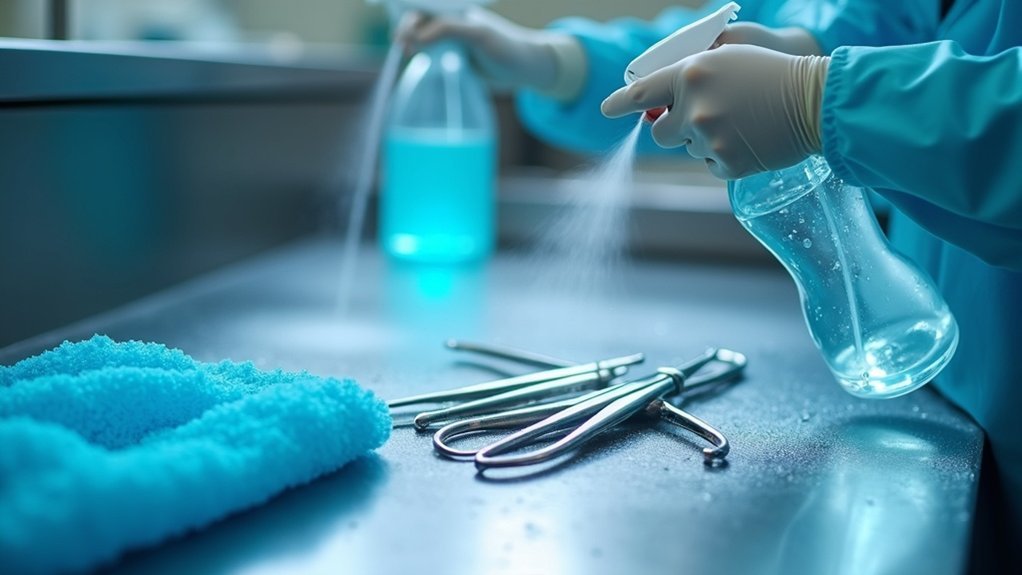
To sanitize your home gym equipment before use, begin with dry cleaning by removing any debris using a clean cloth. Next, perform wet cleaning by using detergent and warm water, ensuring to rinse thoroughly with clean, warm water. Apply a safe sanitizer according to the manufacturer’s instructions, allowing for adequate contact time to effectively eliminate germs. Finally, let the equipment air dry or use clean, lint-free cloths to wipe it down. By consistently following these steps, you’ll create a hygienic workout environment that supports your fitness goals. Discover more about best practices for maintaining your home gym and staying healthy through regular exercise!
Key Takeaways
- Start by dry cleaning your home gym equipment to remove any visible dust and debris using a clean cloth or brush.
- Next, perform wet cleaning with a gentle detergent and warm water, scrubbing with clean cloths or scouring pads to ensure a thorough clean.
- Rinse the equipment thoroughly with clean, warm water to eliminate any cleaning agents, preventing residue build-up that could affect your workouts.
- Apply a suitable sanitizer according to the manufacturer’s instructions, making sure to cover all surfaces evenly and allowing for adequate contact time to ensure effectiveness.
- Finally, allow your equipment to air dry in a designated area to prevent any chance of re-contamination, ensuring it’s ready for your next workout session.
Step 1: Dry Cleaning
To effectively maintain your home gym equipment, start with the critical step of dry cleaning.
Begin by removing visible debris like dust and sweat from equipment surfaces. Use a clean cloth or brush to collect this debris and dispose of it properly to prevent cross-contamination.
For sticky or dried residues, use a polypropylene scraper approved for home use, ensuring you don’t damage the equipment.
Thoroughly cleaning all surfaces minimizes the risk of bacteria accumulating during the wet cleaning process.
Regularly incorporate dry cleaning into your maintenance routine to uphold cleanliness and promote a healthy workout environment.
Step 2: Wet Cleaning
After completing the dry cleaning process, proceed with wet cleaning to ensure your home gym equipment is completely free from contaminants.
Use a detergent or soap mixed with warm water to effectively loosen any dirt and grime on surfaces. Opt for clean cloths or thin scouring pads for scrubbing; avoid sponges that can trap debris and bacteria.
Combine detergent with warm water to loosen dirt, using clean cloths or thin scouring pads for effective scrubbing.
It’s a good idea to store your cleaning cloths in a sanitizer solution to prevent cross-contamination. Make sure the warm water is at an appropriate temperature, as this enhances the detergent’s effectiveness.
Remember to thoroughly rinse all surfaces with clean water after wet cleaning to remove any remaining cleaning solutions and contaminants, ensuring a safe and hygienic workout environment.
Step 3: Rinsing
Rinsing is a crucial step in maintaining your home gym equipment, ensuring that any cleaning solutions or potential contaminants are completely removed before sanitization.
Always use clean, warm water during this process to enhance the effectiveness of your sanitizers and avoid dilution that could undermine your cleaning efforts.
Utilizing a clean cloth while rinsing helps prevent the transfer of any remaining dirt or germs, ensuring a thorough and effective cleaning process for a healthier workout environment.
Importance of Clean Water
While many may overlook the significance of clean water in the process of maintaining home gym equipment, it plays an essential role in effectively removing sweat, dirt, and bacteria from surfaces.
Using clean, warm water enhances the cleaning process by ensuring that debris and cleaning agents are thoroughly washed away. Employing a pail or bucket for rinsing prevents cross-contamination from previously used cloths or surfaces, which is particularly important for maintaining a hygienic workout environment.
Additionally, rinsing cloths under warm running water between uses helps to maintain cleanliness and minimizes health hazards. Thorough rinsing with clean water is critical, as any residual cleaning agents can interfere with the integrity of your equipment and affect its longevity, ultimately impacting your workout experience.
Preventing Hazard Spread
To effectively maintain a safe and clean home gym environment, rinsing is a critical step that shouldn’t be overlooked.
Use clean, warm water to rinse all equipment surfaces, ensuring any detergent residues and dirt are completely eliminated. This step is essential, as any remaining cleaning agents can compromise the effectiveness of sanitizing solutions.
Utilize a clean cloth for rinsing, or wash rinsing cloths under warm running water between uses on different equipment. Rinse immediately after cleaning to prevent residues from drying, which can hinder proper sanitization.
Thorough rinsing enhances the overall efficacy of sanitizers, ensuring a safer workout space for your health and fitness journey.
Proper Rinsing Techniques
After cleaning your home gym equipment and preventing the spread of hazards, rinsing becomes an essential next step.
Rinsing effectively removes any cleaning solution and residual contaminants, ensuring your surfaces are ready for sanitization. Always use clean water for rinsing, and opt for a fresh cloth or a pail of warm water to avoid spreading any contaminants.
Avoid using the same cloth that was used for cleaning; this maintains hygiene and keeps your workout area safe. Rinse cloths under warm running water between surfaces to keep them free of contaminants.
A thorough rinsing process enhances sanitization efficacy by eliminating residues that could interfere with sanitizer activity, allowing you to maintain a healthy and effective home workout environment.
Step 4: Sanitizing
Sanitizing your home gym equipment is a crucial step that requires attention to detail and adherence to safety standards. To effectively sanitize surfaces that come into contact with your body, utilize a sanitizer that is safe for use on exercise equipment. Always follow the manufacturer’s instructions for proper dilution and application.
| Sanitizer Type | Recommended Use |
|---|---|
| Peroxyacetic Acid | Effective against bacteria |
| Iodophors | Ideal for equipment that comes into contact with sweat |
| Quaternary Ammonium | Versatile for various surfaces |
| Chlorine-based Sanitizers | Common for general sanitization |
Regularly check the concentration of your sanitizer to ensure it meets the necessary levels for effective pathogen reduction, keeping your home gym clean and safe for workouts.
Step 5: Drying
In Step 5, drying your sanitized home gym equipment is crucial to prevent re-contamination.
If air drying isn’t feasible, opt for clean cloths or towels, ensuring they’re free from any contaminants.
Creating a designated drying area in your workout space further reduces risks during this important phase, helping you maintain a safe and hygienic environment for your fitness routine.
Manual Drying Techniques
While air drying is often the go-to method for drying your home gym equipment, manual drying techniques become crucial when air drying isn’t feasible. This ensures your sanitized gear remains free from contaminants.
Use clean, lint-free cloths or towels dedicated solely to drying your workout equipment; this helps prevent cross-contamination after sanitization. Dispose of these cloths immediately after use to avoid harboring any pathogens, maintaining high hygiene standards in your workout space.
Create a designated drying area for your sanitized equipment to minimize the risk of re-contamination from surrounding surfaces or people.
Lastly, follow specific guidelines for manual drying to ensure thorough sanitation, reinforcing the effectiveness of your cleaning products and guaranteeing that your equipment is safe and ready for your next workout session.
Air Drying Advantages
Air drying offers significant advantages when it comes to drying your home gym equipment, as it utilizes the natural process of evaporation without the risk of introducing contaminants. This method not only prevents the transfer of harmful bacteria from cloths but also supports a hygienic workout environment. Ensure surfaces are free from any cleaning residues before air drying to maintain the quality of your equipment. Place items in a clean, well-ventilated area for optimal results. Here’s a quick comparison of air drying:
| Advantages | Benefits | Environmental Impact |
|---|---|---|
| No additional resources | Cost-effective for home gym | Environmentally friendly |
| Reduces contamination | Maintains hygiene for workouts | Low energy consumption |
| Utilizes natural process | Efficient drying method | Reduces waste in equipment care |
Contamination Prevention Measures
To effectively prevent contamination during the drying process of your home gym equipment, always use clean, lint-free microfiber cloths or paper towels specifically designated for this purpose.
Avoid using drying cloths that have been used for cleaning or sanitizing, as this can lead to cross-contamination.
When possible, allow sanitized surfaces to air dry; this minimizes the risk of introducing contaminants through contact.
If manual drying is necessary, discard any cloths after use to maintain hygiene.
Additionally, create a dedicated drying area for your gym equipment to limit exposure to potential contaminants from other surfaces or equipment, ensuring a safe environment for your workout space and promoting a healthy exercise routine at home.
Best Practices for Equipment Sanitization
Effective equipment sanitization is crucial for maintaining a healthy home gym and preventing contamination.
Maintaining a healthy home gym relies on effective equipment sanitization to prevent contamination.
Begin by dry cleaning your equipment to remove visible debris, using a polypropylene scraper if needed.
Next, perform a wet clean with warm water and suitable detergents, scrubbing surfaces with clean cloths or thin scouring pads—avoid sponges to minimize pathogen retention.
Rinse thoroughly with clean, warm water, using a separate cloth for each surface to prevent cross-contamination.
Apply a fitness-safe sanitizer solution that meets health standards, following the manufacturer’s instructions for dilution and contact time.
Finally, allow surfaces to air dry completely or use clean, lint-free cloths for drying to ensure your home gym equipment is ready for your next workout.