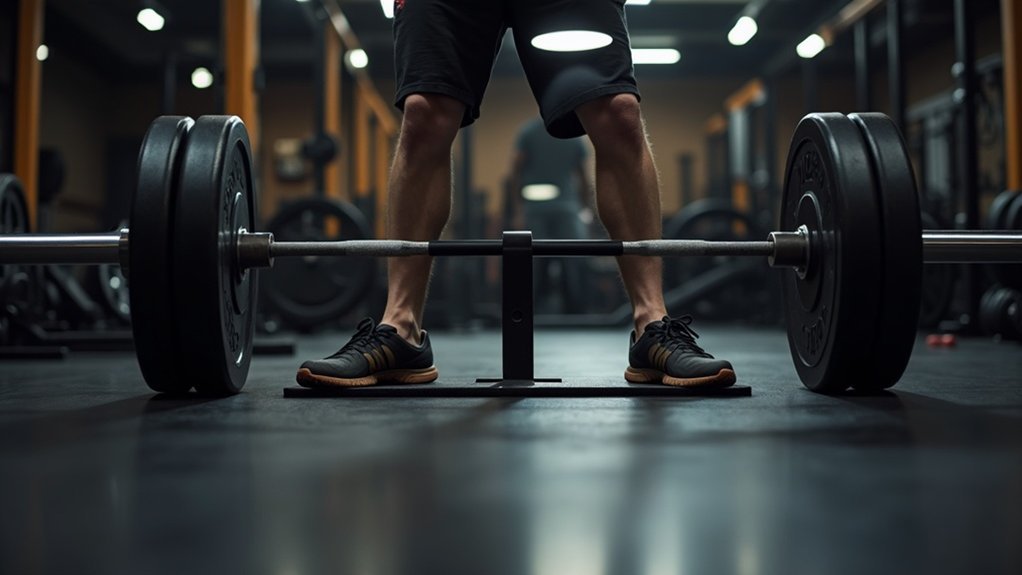
To protect your back while deadlifting at home, set the barbell height just above mid-foot for optimal leverage and spinal alignment. Adjust the height according to your body mechanics—lower for shorter limbs and higher for longer ones. Ensure that the bar position supports proper hip alignment and prevents rounding of the back. Experimenting with different heights can help you find the ideal setup that engages your legs while maintaining a neutral spine. Explore more tips on perfecting your deadlift technique and enhancing your home gym workouts for a healthier lifestyle.
Key Takeaways
- Position the bar just above mid-foot to ensure optimal leverage and support a neutral spine during your home deadlift exercise.
- Set the bar below the knee or mid-shin to maintain spinal alignment and prevent lower back rounding, especially important when lifting in a home gym setting.
- Use deadlift blocks or platforms available for home use to achieve favorable hip and spine positioning, thereby reducing strain on the lower back.
- Regularly adjust bar height based on your individual limb proportions and flexibility to enhance lifting mechanics and promote safe home workouts.
- Avoid setting the bar too low or too high, as both can compromise form and increase the risk of injury while exercising at home.
Understanding the Importance of Deadlift Heights
When you set the deadlift height correctly in your home gym, you not only enhance your lifting mechanics but also minimize the risk of injury, especially to your lower back.
Proper deadlift heights ensure that you engage the right muscles, like your legs and hips, which helps reduce excessive strain on your lower back. Adjusting the height to accommodate your limb proportions and flexibility promotes more effective lifting and better form.
Furthermore, lifting from an elevated position can benefit those with limited mobility or help target specific muscle engagement.
Regularly monitoring your deadlift heights is crucial for maintaining proper alignment, which is essential for preventing rounding and subsequent injuries, ensuring a safe and effective workout at home.
Adjusting Barbell Height for Optimal Spinal Alignment
To achieve ideal spinal alignment during your deadlift at home, correct bar placement is essential.
Position the bar just above your mid-foot to support a neutral spine and appropriate hip height.
Adjusting the height based on your individual body mechanics can greatly enhance your lifting technique and reduce the risk of lower back strain.
This is especially important when using home gym equipment, as maintaining proper form ensures effective workouts while promoting overall health and fitness for both men and women.
Correct Bar Placement
Proper bar placement is crucial for maintaining ideal spinal alignment during deadlifts, especially when working out at home.
Position the barbell over your midfoot, typically aligned with your shoelaces, to optimize leverage and protect your back. Ensure that the barbell height allows your shins to lightly touch the bar, providing a stable starting position that effectively engages your legs.
Keep a neutral spine by aligning the bar with your center of mass, which helps prevent excessive forward lean. Make sure your hips are positioned just right—not too low or too high—to keep your back flat and engaged.
Utilizing an adjustable rack can help tailor this setup to your unique biomechanics, making it perfect for your home gym routine.
Height Impact on Technique
Finding the right barbell height is essential for optimizing your deadlift technique and ensuring safety, especially when working out at home.
Setting the bar just below the knee or mid-shin helps maintain proper spinal alignment and supports a neutral spine. If the bar height is too low, you may compromise your form, leading to rounding of the lower back.
Lifters with longer limbs may benefit from a higher bar to accommodate their body mechanics. Proper bar height enhances leg engagement, allowing for a stronger push through the heels and reducing strain on the lower back.
Utilizing Equipment for Elevated Deadlift Heights
When you incorporate equipment for elevated deadlift heights in your home gym, you can significantly enhance your lifting experience while minimizing the risk of injury.
Utilizing tools such as deadlift blocks or platforms allows you to:
- Maintain a favorable hip and spine position, reducing strain on your lower back.
- Achieve optimal starting positions, which is especially beneficial for those with shorter limbs.
- Gradually increase the difficulty of your lifts while ensuring proper form and back protection.
Integrating elevated deadlifts into your home workout routine promotes strength development in the posterior chain, making it an excellent option for athletes and fitness enthusiasts alike, particularly those recovering from back injuries.
Embrace this method for safer and more effective lifting in the comfort of your home gym.
Pre-lift Routine for Maintaining a Neutral Spine
A solid pre-lift routine is essential for maintaining a neutral spine during deadlifts, especially when using home gym equipment.
Start by taking a deep breath and brace your abdomen to establish core stability. Position your shoulder blades back and down to help stabilize your spine.
Before lifting, ensure your home gym setup is secure and remove any slack from your arms, creating upward tension. As you initiate the lift, focus on pushing the floor away through your heels; this engages your legs and keeps your upper body aligned over the bar until it passes your knees.
Consistently monitor your body alignment, ensuring your back remains neutral and doesn’t round or collapse during the movement.
This routine not only maximizes your performance but also promotes safety while working out at home.
Common Mistakes to Avoid When Setting Heights
Maintaining a neutral spine during your deadlift is just the beginning; setting the correct heights for the bar can greatly impact your performance and safety, especially when working out at home.
Setting the right bar height is essential for a safe and effective deadlift, especially in a home gym setting.
Avoid these common mistakes to ensure an effective and safe lifting experience:
- Setting the bar height too low can compromise your hip positioning and make it difficult to maintain a flat back, which is crucial for safety and effectiveness.
- Neglecting the contact of your shins with the bar can lead to unnecessary adjustments, increasing your risk of injury.
- Positioning the bar too high can result in excessive forward lean and a rounded back, which can be detrimental to your form.
Take the time to experiment with different heights to find the ideal setup that ensures proper engagement of your legs while keeping your spine neutral throughout the lift.
This will help you maximize your home gym workouts and stay healthy!
Tips for Mastering Technique Before Increasing Load
Mastering technique before increasing the load is crucial for safe and effective deadlifting, especially when working out at home.
Begin with lighter weights to concentrate on proper form in your home gym setup. Always maintain a neutral spine, avoiding excessive rounding or arching to prevent back strain.
Before you lift, engage your core by bracing your abdomen; this stabilizes your spine and protects your back. Ensure your shoulders are positioned correctly over the bar to maximize leverage and minimize lower back strain.
Lastly, practice a controlled descent with a five-second tempo, which enhances muscle tension and strength while promoting better lifting mechanics.