To tighten loose bolts on your home gym racks and benches, start by checking the overall stability of your equipment and listen for any unusual sounds that may indicate an issue. Use the appropriate screwdriver or Allen key compatible with the type of bolts you have. Stabilize any nearby components to ensure safety, and apply pressure gradually when tightening. After securing each bolt, double-check the stability of your equipment. Regular inspections, ideally once a month, can help you catch potential problems early and maintain a safe workout environment. Understanding common causes of loose screws and knowing effective repair options can significantly enhance the safety and longevity of your home gym equipment. Keep exploring for more essential tips on optimizing your home workout space!
Key Takeaways
- Before working out, check your home gym racks and benches for loose bolts, any wobbling, or strange noises to ensure a safe exercise environment.
- Use the right tools such as screwdrivers, Allen keys, and torque wrenches to securely tighten all components.
- While tightening, stabilize the equipment with one hand and gradually apply pressure with the tool for optimal safety.
- Make it a habit to conduct monthly inspections on your gym equipment to identify loose bolts early and maintain a secure workout space.
- For added stability, consider using longer screws or reinforcing holes with dowels to enhance the strength of your gym setup.
Identifying Loose Screws
When you’re working out at home with equipment like a weight bench or rack, it’s crucial to monitor for signs of loose screws, as they can significantly affect both safety and performance.
Keep an eye out for a shifting bench or a wobbling rack, as these are clear signs of instability. Pay attention to any unusual noises such as creaking or clanking during weight adjustments; these sounds are strong indicators that screws may be loose.
If you notice that moving parts have increased play, it’s time to check the screws. An unsteady feeling when lifting weights is another warning sign, as are rack pins that seem to fail in securing weights properly.
Tools Needed To Tighten Screws Safely
Identifying loose screws is just the first step in maintaining your home gym equipment; having the right tools on hand makes tightening them straightforward and safe.
Essential tools for your home workout space include:
- A basic set of screwdrivers (both flathead and Phillips) to accommodate various screw types commonly found in gym equipment.
- An Allen key set for tightening hex bolts, which are frequently used in fitness machines.
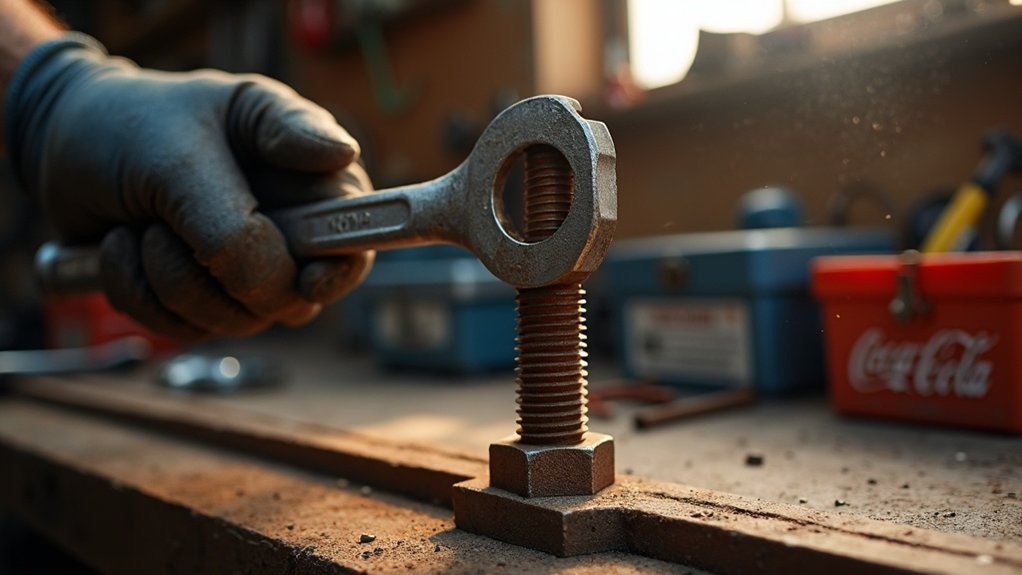
- An adjustable spanner or wrench, providing versatility for different nut and bolt sizes found in your home gym setup.
Additionally, using a torque wrench ensures you apply consistent pressure, helping to prevent overtightening and potential damage.
Remember to wear safety goggles to protect your eyes from any debris while you work on keeping your equipment in top shape for your fitness journey.
Step-by-Step Guide to Tightening Screws
To effectively tighten screws and ensure your home gym equipment remains safe and functional, begin by conducting a thorough inspection of each piece.
Look for any signs of loose screws, such as wobbling or unusual noises that could indicate instability. Use the appropriate tool—like a screwdriver or wrench—making sure it matches the screw type for optimal tightening.
With one hand, stabilize nearby components and apply even pressure slowly to avoid overwinding and damaging the equipment. After tightening each screw, check for stability and repeat the process for all identified loose screws.
Regular monthly inspections are essential to prevent safety hazards, helping you keep your equipment in prime condition for your workouts.
Stay committed to your fitness journey by ensuring a safe and reliable home gym environment!
Regular Maintenance Tips
Regular maintenance is essential for keeping your home gym equipment in top shape and ensuring your safety during workouts.
Maintaining your home gym equipment is crucial for safety and optimal performance during workouts.
To effectively fix a loose screw and enhance the longevity of your gear, follow these tips tailored for both men and women:
- Schedule monthly inspections of critical connection points on your racks and benches to ensure they remain stable and safe.
- Clean joints and moving parts regularly to prevent grime and debris build-up, which can affect performance and safety.
- Use silicone spray for lubrication during maintenance checks to reduce friction and enhance the smooth operation of your equipment.
Keeping Things Sturdy and Safe
Ensuring your home gym equipment is stable is crucial for a safe workout environment. By regularly tightening bolts and conducting monthly inspections, you can identify potential issues before they lead to accidents.
This practice not only enhances your safety but also prolongs the lifespan of your gear, allowing you to concentrate on your fitness goals without worry.
Whether you’re lifting weights, doing cardio, or engaging in bodyweight exercises, a sturdy setup is key to achieving your best results at home.
Equipment Stability Importance
Stability in home gym equipment is crucial for creating a safe and effective workout space. When your equipment is secure, you significantly lower the risk of accidents caused by wobbling or tipping, allowing you to concentrate fully on your technique without the distraction of loose bolts.
- A sturdy bench can greatly enhance your performance during various lifts, making your home workouts more effective.
- Unstable racks pose a serious risk during heavy exercises, potentially leading to injuries that could sideline your fitness journey.
- Regularly checking and tightening your equipment can help identify minor issues early, ensuring that your home gym remains a reliable space for your fitness routine.
Investing in stable equipment not only promotes safety but also improves your overall workout experience at home.
Regular Maintenance Practices
To maintain the integrity and performance of your home gym equipment, it’s essential to adopt a routine of thorough inspections and upkeep. Conduct monthly checks on critical connection points to spot any loose bolts early on. Regularly clean joints and moving parts every two weeks to prevent grime build-up, which can lead to equipment instability. Utilize silicone spray to lubricate moving parts monthly, ensuring smooth operation during your workouts. After any maintenance tasks, perform a vibration test to confirm stability before resuming use. These practices not only enhance your safety but also extend the lifespan of your equipment, allowing you to stay committed to your fitness goals.
| Maintenance Task | Frequency | Purpose |
|---|---|---|
| Inspect bolts | Monthly | Identify loose bolts |
| Clean equipment | Bi-weekly | Prevent grime build-up |
| Lubricate parts | Monthly | Guarantee smooth operation |
Common Causes of Loose Screws
When constructing your home gym equipment, using materials like MDF and particleboard can lead to loose screws over time due to their weaker grain structure.
Several factors contribute to this issue:
- Short screws may not provide adequate holding power, especially in high-stress areas like weight racks or benches.
- Overdriving screws can strip the holes, increasing the likelihood of loose connections that could compromise safety during workouts.
- Frequent use of equipment can wear out screw holes, further diminishing stability.
Additionally, environmental factors such as humidity and temperature changes can weaken the integrity of these materials, worsening the problem.
Regularly inspecting your home gym equipment helps identify these risks early, ensuring robust and safe connections for your fitness routine.
Repair Options for Loose Screws
When addressing loose screws on your home gym equipment, there are several effective repair options to consider.
You can use longer screws to improve grip and stability, fill old holes with materials like toothpicks to reuse the original screws, or apply the doweling technique for a stronger anchor.
Each method not only enhances the integrity of your equipment but also ensures a secure fit, contributing to a safer and more reliable workout experience at home.
Longer Screw Solutions
Loose screws can jeopardize the stability of your home gym equipment, but using longer screws is an excellent way to enhance security. When replacing screws, remember to drill longer pilot holes to accommodate these extended lengths.
Here are some tips for a successful installation:
- Use longer screws of the same gauge to ensure a better grip on your equipment.
- Consider larger diameter screws to cut new threads and improve holding power, especially for heavier items like benches and racks.
- Always check the compatibility of new screws with your gym equipment materials to avoid any damage.
Implementing these longer screw solutions will provide a more secure fit, significantly reducing the risk of future loosening and keeping your home gym equipment stable and safe for your workouts.
Filling Holes Method
If you’ve got stripped or oversized screw holes in your home gym equipment, the filling holes method can effectively restore a secure fit, ensuring your equipment remains safe and reliable during workouts.
Start by selecting a filler like toothpicks, matches, or golf tees that match the screw diameter. Apply wood glue to the filler before inserting it into the hole for a strong bond.
Once inserted, trim any excess material flush with the surface. Next, drill new pilot holes into the filled material for better grip.
Finally, securely tighten the original screws into the newly filled holes to prevent future loosening and enhance the durability of your gym setup, allowing you to focus on your fitness goals without worry.
Doweling Techniques Explained
The filling holes method can effectively address minor issues with stripped screw holes in home gym equipment, but for more substantial damage, doweling techniques offer a robust solution.
This method reinforces loose screw holes by inserting a wooden dowel, providing a stronger grip for your workout gear. Here’s how to do it:
- Drill out the existing hole to match the dowel’s diameter.
- Insert a glue-coated dowel and tap it down securely.
- Once dry, drill a new pilot hole for the screw.
Doweling is particularly effective for particleboard, which is commonly used in gym benches and storage units that often struggle to hold screws.
Using this technique guarantees a more durable, stable repair, ensuring your home gym equipment remains safe and functional for your fitness routine.
Importance of Proper Installation
Proper installation of bolts and nuts is crucial for ensuring the safety and functionality of your home gym equipment. When screws are tightened correctly, they provide stability for benches and racks, allowing you to focus on your workouts without worrying about the integrity of your equipment.
By securely fastening all bolts, you minimize wear and tear on connection points, ultimately extending the lifespan of your gear. Utilizing the right tools and techniques during installation helps maintain performance and safety standards, which is essential for anyone committed to exercising at home.
Regularly checking and tightening bolts and screws contributes to a safer workout environment, significantly reducing the risk of injuries caused by faulty or unstable equipment.
Prioritize proper installation to enjoy a reliable and efficient home gym experience!