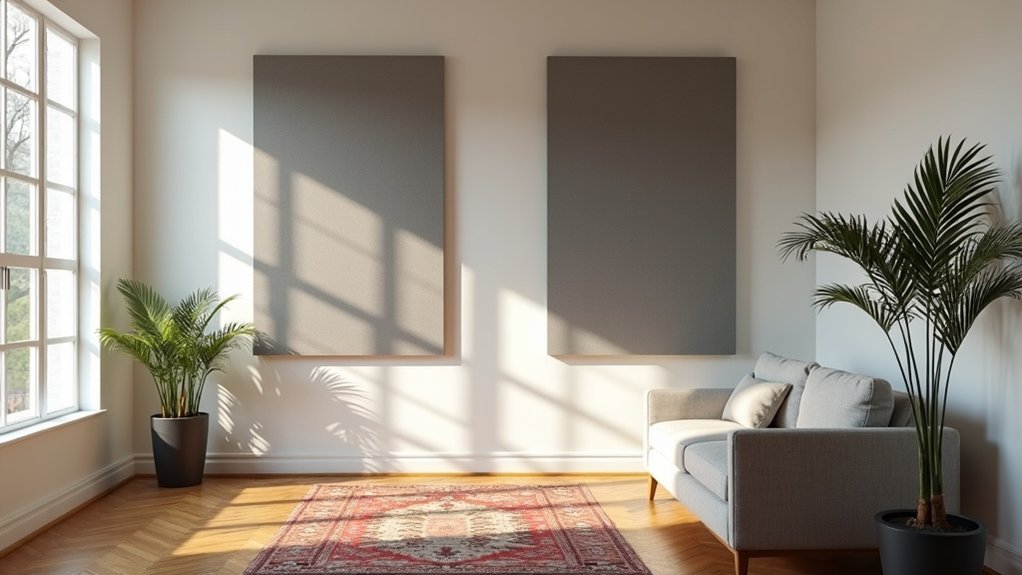
To effectively reduce echo in your home gym, position acoustic panels at key reflection points, such as opposite your main workout zones and at ear height. Aim to cover 20-40% of wall surfaces, focusing on parallel walls for optimal sound absorption. Consider installing ceiling-mounted panels above primary workout areas to help control reflections, and don’t forget bass traps in corners to manage low frequencies. For the best results, maintain a symmetrical layout and think about incorporating additional sound-absorbing materials. There’s plenty more to discover about creating a workout space with minimal echo, enhancing your home fitness experience.
Key Takeaways
- Place wall panels at key reflection points, typically at ear height, to effectively absorb sound waves, enhancing your workout experience.
- Install panels opposite main exercise areas to minimize sound wave reflections during your routines, allowing for better focus and motivation.
- Use ceiling panels above primary workout zones to control sound reflections from above, creating a more enjoyable atmosphere while you exercise.
- Cover 20-40% of the room’s surface area with panels, concentrating on parallel walls for optimal echo reduction, ensuring your home gym is both functional and comfortable.
- Incorporate bass traps in corners to absorb low-frequency echoes that can disrupt acoustic clarity, helping you stay engaged and energized during your workouts.
Understanding Echo and Its Causes
When setting up your home gym, you might notice how sound travels in spaces with hard surfaces, creating echoes that can be distracting during your workouts.
Echo occurs when sound waves reflect off reflective surfaces like wooden floors and stone walls, amplifying noise levels. This can be particularly noticeable in larger areas where overlapping sounds from equipment and music can exacerbate the effect.
Echoes can disrupt your workout as sound reflects off hard surfaces, especially in larger spaces with overlapping equipment and music.
The size and shape of your gym can significantly influence how sound behaves; larger spaces often amplify echo.
To create a more focused workout environment, consider incorporating acoustic treatment, which enhances sound absorption and minimizes the disruptive impact of hard surfaces on your auditory experience.
This way, you can concentrate better on your fitness goals without the distractions of reverberating noise.
Key Areas for Acoustic Panel Placement
To effectively minimize echo in your home gym and enhance your workout experience, it’s crucial to consider the placement of acoustic panels.
Start by positioning wall panels at key reflection points, such as the side walls at ear height and opposite your main workout areas, to absorb sound waves and significantly reduce flutter echo.
Additionally, installing ceiling panels or clouds above your primary workout zones will help control vertical reflections and improve overall noise absorption.
Aim for a partial coverage of 20-40% of the room’s surface area for optimal echo reduction.
Including bass traps in the corners can further enhance sound absorption for low-frequency echoes, creating a more balanced and enjoyable acoustic environment for your fitness sessions.
Optimizing Panel Placement for Maximum Effectiveness
Optimizing Panel Placement for Maximum Effectiveness in Your Home Gym
While many overlook the importance of precise placement, optimizing your acoustic panels significantly enhances the sound quality in your home gym, creating an ideal environment for workouts.
Start by identifying key reflection points using the mirror trick; install panels where sound from your speakers reflects. Aim to cover 20-40% of wall surfaces, focusing on treating parallel walls to reduce echo and minimize reverberation time, which can disrupt your concentration during workouts.
Ensure symmetrical placement around the room, avoiding clustering in corners for effective sound absorption. Mount panels 12-14 inches above the floor, and consider incorporating both wall-mounted and ceiling-mounted panels above workout areas to control horizontal and vertical reflections.
This will maximize your acoustic treatment’s overall impact, allowing you to fully enjoy your exercise routine without distractions from external noise.
Additional Strategies to Complement Acoustic Panels
While acoustic panels are crucial for managing sound in your home gym, you can boost their effectiveness with a few additional strategies. Adding area rugs or carpets on hard floors not only enhances sound absorption but also creates a more comfortable workout environment. Heavy curtains can help reduce noise reflection while giving your space a polished look. Incorporating bookshelves filled with fitness magazines or equipment can act as natural sound diffusers. Furthermore, installing bass traps in corners can effectively tackle low-frequency sounds that may disrupt your workout. Finally, consider using acoustic art panels that combine style with functionality, ensuring your home gym is both aesthetically pleasing and acoustically optimized.
| Strategy | Benefit |
|---|---|
| Area Rugs/Carpets | Enhance sound absorption |
| Heavy Curtains | Reduce echo and reflection |
| Bookshelves | Act as sound diffusers |
| Bass Traps | Absorb low-frequency sounds |
Case Studies: Successful Implementations
Acoustic panels can significantly enhance sound quality in home gym environments, making workouts more enjoyable and effective.
In a case study of a home gym, the installation of acoustic panels resulted in a 50% reduction in noise levels, allowing users to focus on their workouts without distractions.
The installation of acoustic panels in a home gym achieved a 50% reduction in noise levels, enhancing workout focus.
A dedicated exercise space saw a 75% decrease in echo, greatly improving the experience for those following along with workout videos.
In a shared home gym, wall-mounted panels improved communication clarity among users, leading to a 40% increase in group workout productivity.
Additionally, a yoga studio at home achieved a 60% reduction in reverberation, making classes more serene and calming.
Lastly, an at-home fitness area with acoustic panels led to a 30% increase in concentration and motivation during training sessions.
Tips for DIY Installation of Acoustic Panels
To create the perfect environment for your home gym, it’s essential to focus on sound management for an uninterrupted workout experience.
Here are some tips for DIY installation of acoustic panels that can help enhance your space:
- Position panels 12-14 inches above the floor to maximize sound absorption and minimize distractions.
- Utilize the mirror trick to identify reflection points for optimal acoustic panel placement, ensuring a more focused workout atmosphere.
- Consider using the impaling clip or z-clip method, which allows for easy removal and repositioning of panels if needed.
- Maintain a symmetrical layout of your panels to improve sound absorption efficiency while keeping your gym looking neat and organized.
Regularly assess and adjust your panel installation to ensure it effectively reduces echoes and reverberation, creating a more conducive environment for your home workouts.