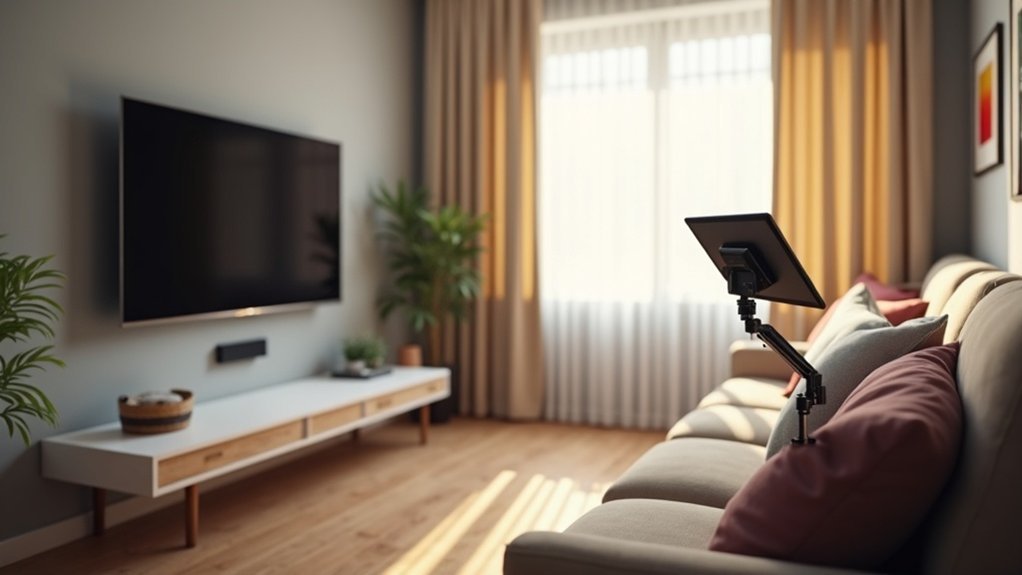
To ensure a safe and enjoyable viewing experience while working out at home, mount your TV or tablet at eye level, typically around 60 inches from the floor. This height aligns perfectly with your gaze, reducing strain on your neck and eyes during your workouts. Aim to maintain a comfortable distance of 6 to 10 feet for an immersive viewing experience, while also considering the layout of your home gym to avoid high-traffic areas. By paying attention to placement and design, you can create an aesthetically pleasing setup that enhances both your fitness journey and your living space. Explore more tips for the ideal home gym setup!
Key Takeaways
- Mount your TV or tablet at eye level, approximately 60 inches from the floor, to ensure a comfortable viewing experience while enjoying your home workouts.
- Keep a viewing distance of 6 to 10 feet to enhance clarity and minimize any strain on your eyes, allowing you to focus on your fitness routine.
- Choose a mounting location that is away from high-traffic areas to prevent accidents and ensure a safe environment during your workouts.
- Utilize a stud finder and heavy-duty screws for secure mounting to prevent any falls that could lead to injuries while exercising.
- Regularly check the stability of your mounting setup and make necessary adjustments to ensure ongoing safety and comfort during your fitness activities.
The Importance of Optimal TV Height
Have you ever considered how the height of your TV can impact your home workout experience? Just like proper equipment placement is essential for effective exercise, aligning your TV at the ideal height can enhance your motivation and focus.
The perfect TV height should align with your eye level, allowing you to watch workout videos or instructional content comfortably while minimizing strain on your neck and eyes. For a 65-inch TV viewed from about 9 feet away, positioning the center at around 60 inches from the floor is recommended.
This setup not only boosts your comfort during workouts but also helps you stay engaged and inspired throughout your fitness journey. Be sure to measure your eye level while seated or standing, as you might need to make adjustments based on your home gym’s layout.
Measuring Your Viewing Distance and Eye Level
To create an optimal home workout environment, it’s essential to measure both your workout space and equipment height accurately.
Start by determining the ideal distance for your workout area—ensure you have enough space to move freely and safely, typically requiring at least 6 to 10 feet of room depending on your equipment.
Ensure your workout area has at least 6 to 10 feet of space for safe and effective movement.
Next, assess the height of your workout stations, like benches or stands, to ensure they align with your body’s natural movements. This guarantees a comfortable and effective workout position.
Avoid common mistakes such as using equipment that’s too high or too low, as these can lead to injuries and diminish your exercise experience.
Regular adjustments to your setup can enhance your overall comfort and performance, too!
Room-Specific Considerations for TV Placement
Finding the right spot for your home gym equipment involves more than just choosing a space; it’s about optimizing your workout experience based on the specific dynamics of the room.
In a dedicated home gym, aim for a layout that allows for ample movement and equipment access, ensuring enough space for exercises like squats and lunges.
In a bedroom setup, consider a corner for compact equipment like resistance bands or a yoga mat that maintains a cozy atmosphere.
In a living room, utilize multi-functional furniture to create a workout zone without sacrificing style.
For a home office, incorporate small weights or a stability ball to encourage movement during breaks.
Unique features, such as mirrors for form correction, can enhance your workout environment.
Avoiding Common Mounting Mistakes
When it comes to setting up your home gym, many overlook the importance of proper equipment placement, leading to discomfort and ineffective workouts.
To avoid strain and maximize your performance, ensure that your equipment is positioned at a comfortable height—like benches and weights that are easily accessible. Avoid placing items too high or too low; having to stretch or bend excessively can lead to injuries over time. Aim to have your weights and tools within comfortable reach to maintain a natural posture during exercises.
Additionally, position your equipment away from high-traffic areas to prevent accidents. Consider using adjustable equipment for versatility, allowing you to modify settings based on your workout routine and enhancing your overall exercise experience.
Choosing the Right Mount for Your Setup
Choosing the right equipment for your home gym transforms your fitness experience, so let’s explore the options that best suit your space.
Consider your room layout and the size and weight of your workout gear to ensure a seamless fit, whether you prefer compact machines or versatile free weights.
Mount Types Overview
Selecting the right equipment for your home gym can transform your workout space, enhancing both aesthetics and functionality.
When exploring exercise options, consider a wall-mounted pull-up bar for a sleek, low-profile look that saves floor space. If you need to adjust your workout intensity, adjustable dumbbells allow you to easily modify weights for different exercises.
For maximum versatility in larger areas, a multi-station home gym lets you perform a variety of workouts without needing multiple machines. Corner racks are perfect for utilizing tight spaces, while ceiling-mounted resistance bands offer a unique solution for high ceilings, ensuring you can maximize your workout without sacrificing room.
Choose wisely to elevate your fitness journey!
Room Layout Considerations
To create an inviting and functional workout space, it’s crucial to contemplate your room’s layout before setting up your gym equipment.
Consider the primary workout zones: adjustable benches and free weights are ideal for spacious areas, while compact machines suit smaller spaces for efficient use.
Assess your flooring type—carpet, hardwood, or tile—as this affects your equipment placement and safety.
Confirm your equipment’s weight capacity and dimensions are suitable for your space, and ensure there’s enough room for movement and stretching.
Avoid obstructions in your room layout, so everyone can exercise comfortably without discomfort.
Thoughtful planning transforms your space into a personal fitness retreat.
Weight and Size Compatibility
When setting up your home gym, understanding weight and size compatibility of your equipment is crucial for ensuring both safety and functionality. Choosing the right equipment not only enhances your workout experience but also ensures your safety while exercising.
- Check the manufacturer’s specifications for weight limits; typical home gym equipment can support a range of weights, so it’s important to know what your setup can handle.
- Verify size compatibility to ensure that the equipment fits your space and allows for comfortable movement during workouts.
- Opt for equipment that exceeds your fitness goals and weight requirements for added safety and effectiveness.
By considering these factors, you can create a secure home gym environment that allows you to focus on your health and fitness goals.
Enjoy your workouts with peace of mind!
Safety Tips for DIY Installation
Before you dive into your DIY installation for your home gym equipment, keep this mantra in mind: measure twice, cut once.
Using the right tools not only ensures precision but also elevates the aesthetic of your workout space, while checking for stability is crucial for safety during your exercises.
Let’s explore how these straightforward steps can transform your gym setup into a seamless and secure project, helping you achieve your fitness goals from the comfort of your home.
Measure Twice, Cut Once
Although setting up home gym equipment can seem straightforward, taking the time to measure twice—and cut once—can help you avoid costly mistakes and potential hazards.
Ensure that your equipment is positioned at the right height and distance for optimal workout comfort and effectiveness.
Here are three essential safety tips:
- Measure the distance from the floor to your preferred workout position to determine the ideal height for your equipment.
- Use a stud finder to locate wall studs when mounting racks or shelves to ensure they can support the weight of your equipment securely.
- Double-check the weight capacity of any equipment or mounting brackets against your gear’s specifications to avoid overloading.
Prioritize safety to enjoy a worry-free workout experience!
Use Proper Tools
Using the right tools not only enhances the quality of your home gym setup but also ensures your safety during the installation process. Start with a stud finder to confirm secure mounting for items like wall-mounted shelves or mirrors. Heavy-duty screws are crucial for securing larger equipment, ensuring stability during workouts. A level is essential to avoid tilting, which can affect both aesthetics and functionality. Investing in quality tools streamlines your setup and minimizes errors. If you’re unsure about handling power tools, consider hiring a professional for a flawless installation.
| Tool | Purpose |
|---|---|
| Stud Finder | Locate wall studs for mounting |
| Heavy-Duty Screws | Secure heavy gym equipment |
| Level | Ensure straight mounting |
| Quality Tools | Enhance installation efficiency |
Check for Stability
With the right tools in hand, your focus should shift to ensuring stability in your home gym setup. A securely mounted TV enhances your workout experience, so it’s essential to check for stability.
Here are three vital steps:
- Inspect the wall for any damage or weaknesses that could compromise support for your equipment.
- Use a level to verify your mounted TV is flat against the wall, preventing undue stress on the brackets and ensuring safe viewing during workouts.
- Regularly check all screws and bolts for tightness, as vibrations from your exercises can loosen them over time.
Taking these precautions will ensure your installation remains safe and stable, allowing you to focus on achieving your fitness goals at home.
Professional Installation vs. DIY: What to Consider
When deciding between professional installation and a DIY approach for setting up your home gym equipment, consider your own comfort level and experience with assembly tasks. Professional installation ensures that safety protocols are adhered to, minimizing risks associated with improper setup, such as equipment malfunction or injury. Conversely, a DIY approach can save you money but requires the right tools and precise measurements to ensure safe and effective equipment placement.
| Aspect | Professional Installation | DIY |
|---|---|---|
| Expertise | Yes | Limited |
| Cost | Higher | Lower |
| Safety Protocols | Followed | Self-monitored |
| Risk of Mistakes | Minimal | Potentially high |
Choose wisely to create a safe and effective workout space!
Maintaining Your TV Setup for Long-Term Enjoyment
After setting up your home gym equipment, maintaining that setup is crucial for long-term success in your fitness journey.
Regular checks ensure safety and enhance your workout experience. Here are three essential tips to keep your home gym in top shape:
- Inspect your equipment regularly; tighten bolts and screws to prevent instability during workouts.
- Adjust the height of your equipment, such as benches and racks, to ensure proper form and comfort while exercising.
- Keep cables and accessories organized and dust-free, guaranteeing a clean and safe workout environment.