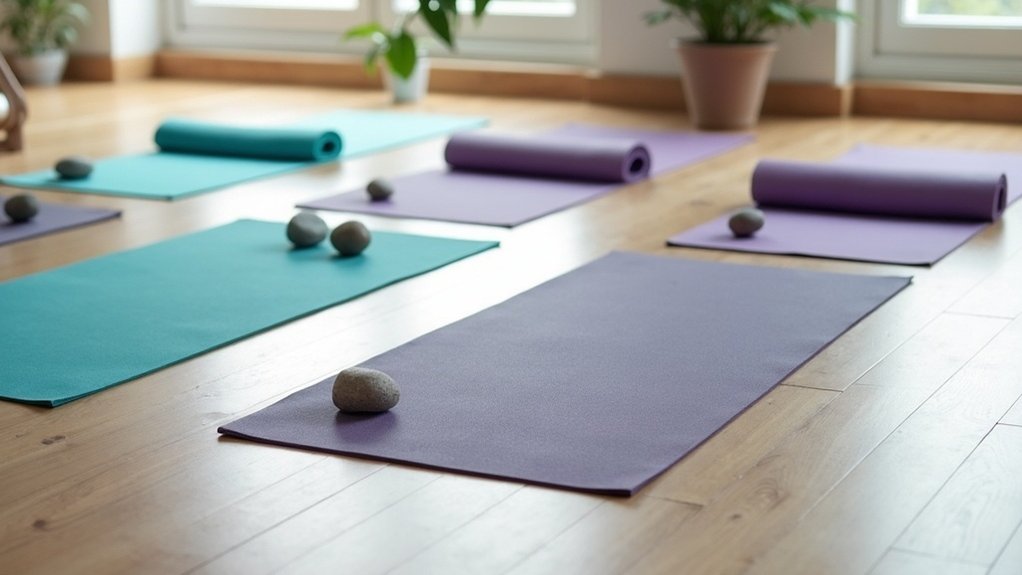
To prevent your yoga mat from curling up, it’s essential to store it properly in a cool, dry location away from direct sunlight and humidity. Instead of tightly rolling it, opt for a mat bag or strap that allows for loose rolling. This technique helps minimize stress on the material and keeps your mat in great shape for your home workouts. Regularly inspect your mat and rotate its position to promote even wear, ensuring it remains a reliable part of your home gym setup. Interested in more tips for maintaining your fitness equipment’s longevity?
Key Takeaways
- Store your yoga mats in a cool, dry area of your home gym to prevent humidity and heat from causing unsightly curling.
- Always keep your mats flat instead of tightly rolled; this helps to avoid persistent creases and warping that can disrupt your workout sessions.
- Consider investing in a yoga mat storage rack or hanger to help maintain the shape of your mat without applying unnecessary compression.
- Make sure to avoid placing your mats near windows or in rooms that are poorly insulated, as fluctuating humidity can lead to damage over time.
- Regularly check and maintain stable storage conditions to preserve the integrity of your mats, ensuring they remain ready for your at-home workouts.
Understanding the Causes of Mat Curling
When you notice your yoga mat curling, it’s often due to a combination of environmental factors. Humidity plays a significant role, as high moisture levels can warp your mat over time, especially in home gym settings where ventilation may be limited.
High humidity can warp your yoga mat, particularly in poorly ventilated home gym environments.
Heat exposure, particularly from direct sunlight, can alter the mat’s shape and flexibility, leading to curling – a concern if you’re exercising near windows or in heated rooms.
The material composition of your mat also matters; some materials are more prone to warping than others, which is essential to consider when choosing equipment for your home gym.
Additionally, improper storage and frequent lifting can create stress on your mat, causing corners to curl.
Regular maintenance, including using a mat cleaner, along with proper storage practices, can minimize curling and extend your mat’s lifespan, ensuring it remains a reliable part of your home workout routine.
Ideal Storage Solutions for Yoga Mats
To keep your yoga mat in top condition for your home workouts, prioritize its storage by choosing the right environment and methods.
Store your mat in a cool, dry place, away from direct sunlight to prevent warping and curling. When not in use, keep it flat instead of tightly rolled to avoid persistent creases.
Utilizing a yoga mat storage rack or hanger will help maintain its shape without compression, making it easily accessible for your next session. Consider adding a protective cover for added dust protection, especially if your home gym is in a multi-use space.
Regularly check your mat’s condition and rotate its position to evenly distribute wear and minimize curling issues.
Proper storage ensures your mat stays ready for practice, helping you stay committed to your fitness goals at home.
Best Practices for Rolling Your Mat
When rolling your yoga mat, begin from the end opposite the logo to maintain a clean practice surface.
Employ a mindful rolling technique, keeping it loose to avoid creases that could lead to curling later on.
Following these simple steps won’t only extend the life of your mat but also ensure it remains in excellent condition for your next home workout session.
Whether you’re focusing on yoga, strength training, or cardio, a well-maintained mat can enhance your overall exercise experience.
Mindful Rolling Technique
Rolling your home gym mat mindfully can greatly enhance its longevity and performance. Use a mindful rolling technique by starting from the short end; this prevents compressing the foam and reduces curling, ensuring your mat remains in top shape for your workouts.
Make sure the practice surface faces inward to keep it clean and free from dust and debris. Roll your mat loosely to avoid tight compression in the middle, which can lead to unwanted creases that may affect your exercises.
Consider using a mat strap or bag for transport, as this minimizes damage and curling risk during storage. Regularly practicing this mindful rolling technique after each session will help maintain your mat’s shape and improve your overall exercise experience at home, keeping you motivated on your fitness journey.
Avoiding Dirt Transfer
One essential practice for keeping your yoga mat clean while working out at home is to roll it from the outside in. This technique prevents dirt from transferring from the floor-facing side to your practice surface, ensuring a hygienic workout environment.
To enhance your rolling method, consider these tips:
- Avoid rolling your mat too tightly; this can compress the foam and lead to curling, which may affect your performance.
- Use a mindful technique that allows for even pressure distribution to maintain the mat’s integrity.
- Store your mat loosely, perhaps in a mat bag or with a strap, to protect it from dirt and preserve its shape for your next home workout session.
Preventing Persistent Creases
To keep your yoga mat in excellent condition and prevent persistent creases, it’s essential to follow best practices for storage, especially if you’re incorporating it into your home gym routine.
Always roll your mat from the opposite end of your typical practice to avoid compressing the same area repeatedly. Roll it tightly, but not excessively, as too much compression can lead to lasting creases. Use a mindful rolling technique to ensure the practice surface remains clean, minimizing contact with the floor-facing side.
Store your mat in a cool, dry location, away from direct sunlight, to maintain its integrity. Regularly assess your rolling and storage methods to ensure even wear and prevent localized stress that could lead to persistent creases.
This will help you maintain your equipment and stay committed to your home workout goals.
Tips for Maintaining Mat Shape
While you may enjoy using your yoga mat for home workouts, improper storage can lead to unwanted curling and warping. To maintain its shape and ensure a secure grip during your exercise routine, follow these tips:
- Store your mat flat in a cool, dry place to avoid humidity and heat, which can affect its material.
- Roll it loosely for storage, preferably in a mat bag, rather than tightly to help retain its shape.
- Keep it away from direct sunlight, as prolonged exposure can warp the mat.
Regularly inspect your mat’s condition, and if you notice any curling, place weights on the corners for a few hours to help flatten it out.
Environmental Factors to Consider
When it comes to storing your yoga mat, it’s important to consider environmental factors to maintain its quality.
High humidity and extreme temperatures can cause curling or damage, while direct sunlight may warp the material over time.
To ensure your yoga mat remains in top condition for your home workouts, be mindful of these elements when selecting the perfect storage spot.
Humidity Levels Impacting Mats
Humidity levels can significantly affect the durability and functionality of your home gym yoga mats. High humidity can cause mats made from PVC or TPE to absorb moisture, which may lead to curling and warping—issues that can disrupt your workout flow.
To ensure your mats remain in top condition, follow these tips:
- Store mats in dry, well-ventilated areas of your home, avoiding damp spaces like basements that can trap moisture.
- Keep mats away from windows or poorly insulated rooms where humidity levels can change rapidly, potentially compromising their integrity.
- Regularly monitor your storage environment to ensure it stays consistently dry and stable, providing the best care for your workout equipment.
Temperature Effects on Curling
Extreme temperatures can significantly affect your home gym equipment, particularly yoga mats, leading to unwanted curling that disrupts your workout sessions. High heat, such as leaving mats in a hot car, can warp them, especially at the edges and corners.
Additionally, high humidity levels can cause the material to expand and contract, resulting in curling over time. To combat these temperature effects, always store your mats in a cool, dry place away from direct sunlight.
Excess moisture and heat can greatly alter the shape of your mat, particularly if it’s made of PVC, which is more vulnerable than natural rubber. Ensuring your equipment is well-maintained will help optimize your at-home exercise routine and keep you on track with your fitness goals.
Sunlight Exposure Considerations
While maintaining ideal storage conditions is crucial for your home gym equipment, sunlight exposure is another important factor to consider, especially for items like yoga mats.
Direct sunlight can warp and curl your mat, altering its material composition over time. To minimize this risk and keep your workout gear in top condition, here are some sunlight exposure considerations:
- Store your yoga mat in a cool, dry place, away from windows to protect it from harmful UV rays.
- Avoid placing your mat in areas with prolonged sunlight exposure to prevent distortion and ensure longevity.
- Regularly check your storage environment to guarantee that your mat and other equipment aren’t exposed to extreme temperature fluctuations.
Long-Term Care for Your Yoga Mat
To keep your yoga mat in excellent condition over time, it is crucial to store it properly and maintain its cleanliness. Here are some practical tips for long-term care that will benefit your home gym setup:
| Storage Tips | Cleaning Tips |
|---|---|
| Store in a cool, dry place | Clean regularly with mild soap |
| Avoid direct sunlight | Wipe down after each use |
| Roll tightly with the surface in | Use a damp cloth to remove debris |
Implementing these steps will help prevent moisture absorption, warping, and curling of your mat. Additionally, keep in mind that the material composition of your mat influences its durability, so choose wisely during your purchase to ensure it meets your home workout needs.
Community Insights and Tips for Prevention
When it comes to keeping your home gym equipment, specifically your yoga mat, in optimal condition, community insights can offer invaluable tips for prevention.
Maintaining your yoga mat’s condition is essential for an effective practice; community tips can guide you in proper care.
Here are three essential tips to follow:
- Store your yoga mat flat in a cool, dry space to prevent curling caused by heat and humidity, ensuring it’s ready for your next workout.
- Avoid direct sunlight exposure, as prolonged sunlight can warp the material and alter its shape over time, affecting your practice.
- Regularly clean your mats to eliminate dirt and sweat, using suitable cleaners to preserve their quality and longevity.