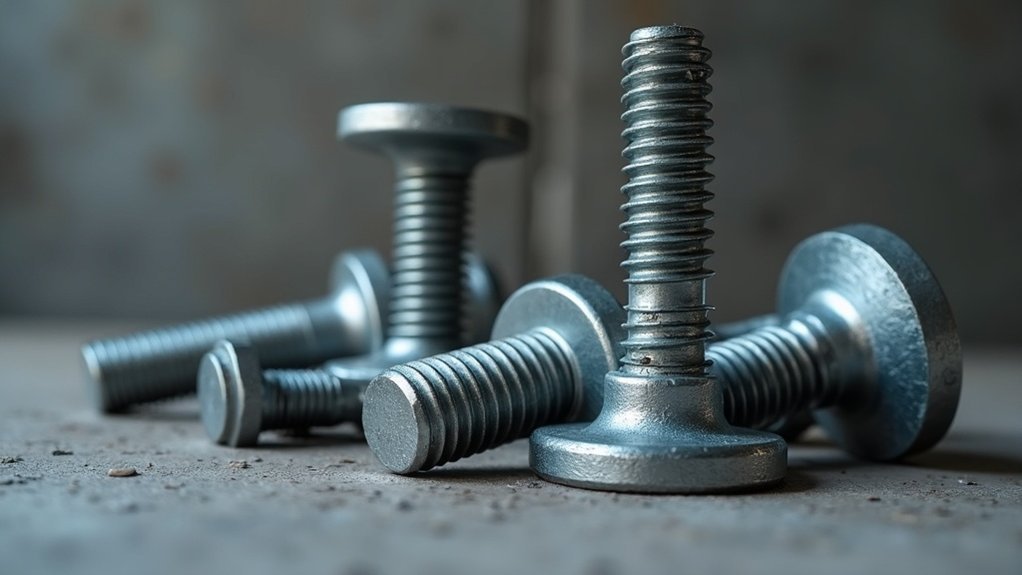
When selecting anchor bolts for securing gym equipment to concrete floors, it’s essential to consider the specific needs of your home workout space. For heavy equipment like squat racks or weight benches, wedge anchors are an excellent choice due to their strong holding power. If you’re installing overhead equipment such as pull-up bars, drop-in anchors provide convenient attachment points that are easy to use. For a more permanent solution, epoxy anchors create a solid bond, ensuring your equipment stays firmly in place. Always verify that the anchors are suitable for the weight of your equipment and follow the recommended embedment depth for safety. To help you further, we’ll delve into installation tips and various applications tailored for your home gym setup.
Key Takeaways
- Wedge anchors and drop-in anchors are perfect for heavy-duty applications, providing robust support for substantial gym equipment on concrete floors, ensuring your home workout setup is stable and secure.
- Sleeve anchors offer versatility for medium to heavy loads, making them ideal for securing a variety of fitness accessories in your home gym.
- Concrete screws facilitate quick installation and can support up to 500 pounds, making them suitable for a range of applications within your exercise space.
- Plastic anchors are a great choice for lightweight accessories under 100 pounds, allowing you to attach items securely without putting unnecessary strain on the concrete.
- Always adhere to manufacturer specifications for embedment depth and load capacity to guarantee a safe and effective anchoring solution in your home gym.
Understanding Anchor Bolts for Concrete Floors
When setting up your home gym, securing heavy equipment like squat racks or weight benches to concrete floors is crucial for both stability and safety. Understanding anchor bolts is essential in this process.
Consider different types of concrete anchors, such as wedge anchors and drop-in anchors. Wedge anchors offer strong holding power thanks to their expansion mechanism, making them ideal for heavier equipment. On the other hand, drop-in anchors are suitable for uncracked concrete and allow for easy attachment of threaded rods, perfect for lighter fixtures.
Be mindful of embedment depth; deeper settings can improve pullout values, ensuring your equipment remains securely in place during your workouts.
It’s also important to choose the right concrete fasteners that can support the weight of your gym equipment and withstand the conditions of your workout environment, as this directly affects performance and safety.
A precise installation process is fundamental for maximizing the effectiveness of your anchors, allowing you to focus on your training without worrying about equipment stability.
Types of Anchor Bolts Suitable for Concrete
When setting up your home gym, it’s essential to choose the right anchor bolts for securing your equipment to the concrete floor.
For heavy-duty machines like power racks and weight benches, wedge anchors are a reliable choice, ensuring stability during intense workouts.
For lighter equipment such as cardio machines or wall-mounted accessories, sleeve anchors and concrete screws provide ample support without the need for excessive strength.
Heavy-Duty Anchor Options
When choosing the right heavy-duty anchor for securing gym equipment on concrete floors, it’s essential to consider your specific exercise needs and the weight of the equipment.
Wedge anchors are particularly effective for anchoring heavy machines, such as squat racks or weight benches, due to their exceptional holding power.
Sleeve anchors offer flexibility for medium to heavy-duty loads, making them suitable for securing various fitness accessories.
Drop-in anchors work well for creating secure fastening points for threaded rods in pre-drilled holes, ideal for stability in your gym setup.
For permanent anchoring, threaded rod anchors combined with epoxy provide a solid solution.
To ensure optimal performance, check that the embedment depth aligns with the anchor diameter; deeper embedment generally offers better pullout values, following the manufacturer’s recommendations.
This will help ensure your home gym equipment remains safe and secure, allowing you to focus on your fitness goals.
Light-Duty Anchor Choices
For your home gym setup, selecting the right anchor bolt is essential for ensuring stability and safety without excessive reinforcement.
Your light-duty anchor choices for securing gym equipment include:
- Plastic anchors for mounting lightweight accessories or fixtures weighing under 100 pounds
- Machine screw anchors for fixtures that need to be removable, requiring precise hole sizes
- Lag shields combined with lag screws to provide a strong hold in concrete walls for heavier gym equipment
- Strike anchors for easy, tool-free installation into pre-drilled holes, ideal for quick adjustments
- Concrete screws, which allow for fast self-drilling installation and can support loads up to 500 pounds
These anchor options are designed to facilitate effective installation of your home gym equipment, ensuring that your workout space remains both convenient and reliable for your fitness journey.
Wedge Anchor Bolts: Strength and Applications
Wedge anchor bolts are essential for creating a sturdy home gym setup, providing robust support for various gym equipment like squat racks, weight benches, and pull-up bars.
These anchors feature a threaded bolt with a wedge mechanism that expands against the sides of the drilled hole, ensuring a secure grip and stability for your workout stations. Designed for uncracked concrete, they can hold significant weight, making them ideal for heavy-duty gym applications.
To install, you’ll need a hammer drill and should follow specific embedment depth guidelines for optimal performance.
Available in galvanized steel, these anchors also resist corrosion, making them suitable for both indoor and outdoor gym environments.
Drop-In Anchor Bolts: Ideal for Overhead Installations
When setting up your home gym, reliable anchor solutions for overhead installations are crucial.
Drop-in anchor bolts provide a strong option specifically designed for solid, uncracked concrete, ensuring your equipment is securely fastened. Their installation process is straightforward and efficient, making them user-friendly for DIY enthusiasts.
Key features include:
- Female threaded design for a secure hold of gym accessories
- Requires precise drilling for accurate placement of equipment
- Uses a setting tool for easy expansion, ensuring stability
- Supports substantial loads based on concrete strength, perfect for heavy weights
- Available in zinc-plated and stainless steel for corrosion resistance, maintaining durability over time
These characteristics guarantee that drop-in anchor bolts are ideal for securing overhead storage solutions for weights, resistance bands, and other gym equipment in your home workout space.
Epoxy Anchor Bolts: Creating a Strong Bond
Securing heavy gym equipment in your home can be a challenge, but epoxy anchor bolts provide a reliable solution that creates a solid bond within the drilled hole. This two-part adhesive hardens to ensure excellent load-bearing capacity, even in less-than-perfect conditions.
To install, you’ll need to drill and clean the hole, inject the epoxy adhesive, and insert the anchor bolt, holding it in place until the epoxy cures, which typically takes around 24 hours.
Epoxy anchors resist moisture and chemicals, making them suitable for various home environments, from basements to garages. For optimal performance, always follow the manufacturer’s guidelines regarding hole size, cure time, and load limits to ensure maximum bond strength for your home gym setup.
Factors to Consider When Choosing Anchor Bolts
When setting up your home gym, choosing the right anchor bolts for securing your equipment to concrete floors is crucial for safety and stability.
Choosing the right anchor bolts for your home gym is essential for ensuring safety and stability on concrete floors.
Here are some key factors to consider:
- Weight load: Ensure the anchor bolts can support the combined weight of your gym equipment, including any additional weight from exercises.
- Concrete type: Identify whether your concrete floor is solid or has hollow sections, as this will affect which anchor bolts are suitable.
- Embedment depth: Select bolts that meet the recommended embedment depth to ensure a strong and secure hold for your equipment.
- Corrosion-resistant materials: Consider the environment of your home gym, including factors like humidity from sweat, to choose bolts that will withstand corrosion over time.
- Manufacturer specifications: Always adhere to the guidelines provided by the manufacturer regarding load capacity and the appropriate drill bit size for installation.
Installation Tips for Secure Anchor Bolts
To ensure a secure installation of anchor bolts for your home gym equipment, start by thoroughly cleaning the concrete floor where the equipment will be anchored. Remove any debris or dust that could weaken the bond between the anchor and the concrete.
Choose the right anchor based on the weight of your gym equipment; for heavier items like weight racks or squat stands, consider using wedge or threaded rod anchors.
Utilize a hammer drill with a masonry bit to create holes that match the diameter of your selected anchor bolts, drilling to the depth recommended by the manufacturer. After drilling, clear out any dust from the holes to maximize contact with the anchors.
Finally, follow the manufacturer’s instructions to tighten the anchors securely, ensuring your gym setup remains stable and safe for your workouts.