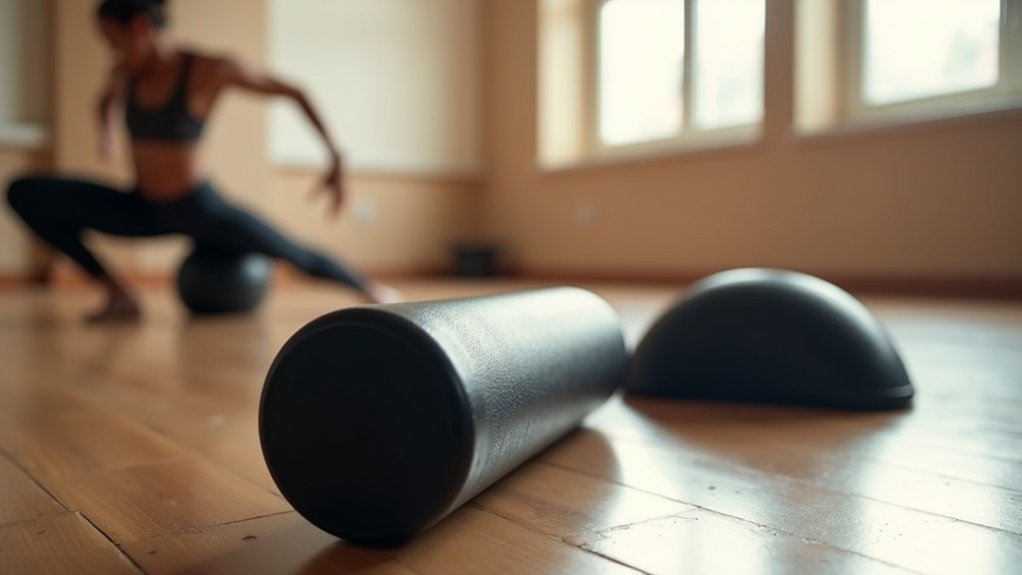
Cylindrical and half-round foam rollers are excellent choices for enhancing upper back mobility at home. These rollers help improve flexibility, alleviate muscle tension, and promote good posture, making them essential for anyone looking to stay healthy through home workouts. Cylindrical rollers provide a stable surface for effective self-myofascial release, while half-round rollers offer versatility for a variety of exercises. By incorporating these foam roller shapes into your routine, you can significantly boost your upper back health. For more tips on techniques and benefits, continue exploring ways to elevate your home gym experience.
Key Takeaways
- Cylindrical rollers offer a stable surface for effective self-myofascial release, making them ideal for enhancing upper back mobility during your home workouts.
- Half-round rollers support spinal extension and stability during mobility exercises, providing versatility for upper back training at home.
- Textured foam rollers with ridges promote blood flow and effectively release muscle knots, contributing to improved upper back flexibility for both men and women.
- Foam massage balls are excellent for targeting specific trigger points in the upper back, helping to achieve deeper muscle relief and boost mobility.
- Incorporating both cylindrical and half-round foam roller shapes into your home gym routine is recommended for optimal upper back health and mobility improvement.
Understanding Upper Back Mobility
Understanding upper back mobility is essential for maintaining proper posture and ensuring efficient movement during home workouts and daily activities. The thoracic spine, consisting of twelve vertebrae, must flex, extend, and rotate effectively to support various exercises.
Poor upper back mobility can lead to compensatory patterns, resulting in shoulder and neck discomfort, which can hinder your fitness routine. Utilizing foam rollers in your home gym can enhance upper back mobility through self-myofascial release, reducing muscle tension and improving blood flow to targeted areas.
Techniques like rolling perpendicular to the spine and focusing on the shoulder blades effectively improve your range of motion, allowing for better performance in exercises. Incorporating various foam roller shapes into your routine can further assist in alleviating the effects of poor posture and enhancing overall movement efficiency, ultimately supporting your health and fitness goals at home.
Importance of Foam Rolling for Upper Back Relief
Foam rolling your upper back is an essential practice for anyone looking to maintain a healthy home workout routine.
It significantly reduces muscle tension, promoting relaxation and recovery after those intense at-home workouts.
By improving your posture alignment, foam rolling helps alleviate discomfort caused by long hours of sitting or poor workout habits.
Incorporating foam rolling into your fitness regimen can lead to enhanced mobility and contribute to better overall upper back health, ensuring you stay fit and active from the comfort of your home gym.
Reduces Muscle Tension
When you consistently incorporate foam rolling into your home workout routine, you can effectively reduce muscle tension in your upper back.
Utilizing a foam roller promotes myofascial release, alleviating tightness and discomfort in the thoracic spine. Targeted techniques enhance blood flow, delivering oxygen and nutrients essential for muscle recovery and minimizing soreness after your home exercises.
A textured surface, such as a massage ball or half-round roller, allows for deeper pressure on specific trigger points, resulting in more effective relief.
Regular foam rolling not only increases flexibility and range of motion but also proves to be more beneficial for reducing muscle tension than static stretching alone, making it a valuable addition to your home gym equipment.
Enhances Posture Alignment
To achieve ideal posture alignment from the comfort of your home, incorporating foam rolling into your exercise routine is essential for releasing tension in the thoracic spine.
Utilizing a foam roller designed for the upper back—preferably one with textured foam and ridges—provides targeted relief for muscle tension. This focused pressure not only enhances mobility but also promotes better alignment of your shoulders and head.
Consistent foam rolling sessions of 1-5 minutes can significantly improve flexibility and reduce stiffness, ultimately benefiting your spinal health.
Recommended Foam Roller Shapes for Targeting Upper Back
To effectively target your upper back while working out at home, consider incorporating cylindrical and half-round foam rollers into your routine.
Cylindrical rollers provide a stable surface for rolling out tight muscles, making them ideal for relieving tension after a workout.
On the other hand, half-round rollers offer versatility for both wall and floor exercises that promote mobility, allowing you to enhance your flexibility.
Both shapes are excellent tools for achieving targeted relief and improving your overall upper back health from the comfort of your home gym.
Cylinder Rollers
Cylinder foam rollers are essential tools for anyone looking to improve upper back mobility and overall wellness while exercising at home. Typically measuring 36 inches in length and 6 inches in diameter, these rollers offer a stable surface for effective self-myofascial release.
By using a firm density roller, you can target deeper muscle knots, enhancing flexibility and reducing stiffness. To use, position the roller horizontally under your mid-back, allowing your neck and head to be supported as you roll along the spine. This technique not only helps release tight fascia around the thoracic spine but also promotes better posture.
Incorporating cylinder foam rollers into your home gym routine is a smart move for both men and women seeking to stay healthy and active.
Half-Round Rollers
Half-Round Rollers
While cylinder rollers are essential for boosting upper back mobility, half-round rollers provide unique benefits for targeted upper back work, making them a great addition to your home gym.
Their flat base and rounded surface ensure stability during mobility exercises, perfectly aligning with your thoracic spine. This design not only promotes spinal extension but also aids in improving posture and alleviating tightness caused by long hours of sitting.
Moreover, half-round rollers enable focused stretching of the chest and shoulders, enhancing overall shoulder flexibility, which is crucial for various home workouts.
- Alleviate tension in your upper back
- Effortlessly improve your posture
- Enhance your lung capacity through deep breathing
- Experience greater shoulder mobility with targeted stretching
Incorporating half-round rollers into your home fitness routine can lead to a healthier, more active lifestyle.
Benefits of Textured Foam Rollers
Textured foam rollers provide notable benefits for improving upper back mobility, making them an essential addition to any home gym setup.
Their unique ridges and knobs simulate the hands of a masseuse, effectively releasing muscle knots and tension that can accumulate from daily activities or extended periods of sitting. You can easily adjust the intensity to focus on specific tight areas, ensuring these rollers cater to your individual needs.
Research shows that incorporating textured foam rollers into your routine can enhance blood flow to the upper back muscles, facilitating quicker recovery and better mobility.
They’re particularly effective at breaking down fascial adhesions, which can significantly boost overall flexibility and range of motion.
Whether you’re combating discomfort from a sedentary lifestyle or aiming to improve your posture, textured foam rollers can be a game-changer in reducing tension and enhancing your physical function, making them a valuable tool for anyone committed to staying healthy and active at home.
Utilizing Foam Massage Balls for Precision
How can foam massage balls enhance your upper back mobility? These versatile tools are perfect for targeting specific trigger points, offering precise relief from muscle tightness that can accumulate from home workouts or extended periods of sitting.
Their compact size and textured surfaces enable you to access hard-to-reach areas, such as between the shoulder blades, which is crucial for those who exercise at home.
By incorporating foam massage balls into your fitness routine, you can improve flexibility and mobility—key factors in maintaining overall health and performance.
- Experience deeper muscle relief after your workouts
- Alleviate discomfort from strenuous home exercises
- Enhance your posture for better exercise form
- Unlock greater movement potential for your fitness goals
Using foam massage balls effectively supports your upper back health, helping you stay active and pain-free while pursuing your home fitness journey.
Foam Roller Techniques for Effective Upper Back Stretching
Foam rolling techniques can significantly improve upper back mobility when executed properly, making them an excellent addition to your home workout routine.
Start by positioning a foam roller horizontally beneath your mid-back, and gently roll from your upper to lower back to relieve muscle tension in the thoracic spine. For more focused relief, opt for a textured foam roller, which delivers a deep-tissue massage effect, similar to having a personal masseuse at home.
Enhance your shoulder mobility by incorporating wall slides with a half-round foam roller—this is a great way to engage multiple muscle groups while staying fit at home.
For effective upper back stretching, place the roller perpendicular to your spine and hold on tight spots for about 30 seconds.
To maximize the benefits of these rolling techniques, combine them with deep breathing exercises, promoting self-myofascial release and overall wellness.
This routine can help you stay healthy and fit, especially when utilizing home gym equipment.
Safety Tips for Foam Rolling the Upper Back
Incorporating foam rolling into your upper back routine can significantly enhance your mobility, especially for those exercising at home.
However, it’s essential to prioritize safety to avoid injury. Follow these safety tips to ensure a secure and effective experience:
- Position the roller horizontally to effectively target the thoracic spine.
- Maintain a slow rolling speed of 2–3 cm per second to control your movement.
- Avoid rolling directly over the spine and ribs to prevent discomfort.
- Start with a softer density roller to assess your comfort level and gradually increase density as you become more accustomed.
As you roll, control the pressure and stop immediately if you experience any sharp pain.
If discomfort persists, consult a fitness professional to ensure you’re practicing foam rolling safely and effectively.
Stay healthy and enjoy your home workout routine!