To manage elbow tendinopathy effectively while exercising at home, opt for a neutral grip during pull-ups. This grip minimizes strain on the elbow joint, promoting a natural wrist position and engaging supporting muscles like the brachialis. Overhand grips can place high stress on elbow extensors, while underhand grips may increase strain on forearm muscles. By prioritizing the neutral grip and maintaining proper technique, you can enhance your upper body strength without discomfort. Explore additional strategies to support your elbow’s recovery and improve your home workout routine.
Key Takeaways
- Neutral grip pull-ups are an excellent choice for home workouts, as they minimize strain on the elbow joint while promoting a natural wrist position, allowing for a comfortable experience during your exercise routine.
- Underhand grip pull-ups are a fantastic way to engage your biceps without placing excessive strain on your forearms, making them suitable for various fitness levels as you build strength at home.
- Overhand grip pull-ups can effectively distribute the load across your shoulder girdle, potentially reducing stress on elbow tendons when executed with proper form, ideal for those looking to enhance their upper body strength at home.
- Focusing on proper technique during your pull-ups can protect your elbow tendons, ensuring that your shoulders and scapulae are engaged correctly, which is essential for safe home workouts.
- Incorporating resistance bands into your home gym setup allows for adjustable assistance during pull-ups, facilitating gradual increases in load while minimizing strain on your grip strength as you rehabilitate or build strength.
Understanding Elbow Tendinopathy
When you experience pain in your elbow, it might be due to elbow tendinopathy, a condition characterized by the degeneration of tendon tissue rather than acute inflammation. This can be especially relevant for those who engage in home workouts or strength training, as repetitive movements from exercises such as heavy lifting or even extended typing can contribute to this condition.
Symptoms include localized tenderness and difficulties with gripping, which can hinder your ability to perform exercises effectively.
To manage and alleviate pain, it’s crucial to focus on load management and incorporate targeted physical therapy. Strengthening exercises designed specifically for your recovery can be integrated into your home workout routine, helping you regain strength and flexibility in your elbow.
Recovery times can vary, with acute cases taking 6-10 weeks and chronic cases extending up to 6 months or more. By addressing these issues early and modifying your home gym practices, you can significantly enhance your long-term elbow health and ensure a more effective and enjoyable exercise experience.
The Impact of Pull-Up Grips on Elbow Health
Understanding how different pull-up grips affect elbow health is essential for those exercising at home, especially when managing elbow tendinopathy. Each grip type plays a role in distributing stress on the elbow joint, making it crucial to choose the right one for your home workout routine.
| Grip Type | Strain on Elbow Extensors | Impact on Pain |
|---|---|---|
| Overhand Grip | High | May worsen lateral elbow pain |
| Underhand Grip | Moderate | Potentially reduces strain |
| Neutral Grip | Low | Minimizes discomfort and enhances comfort during workouts |
Using a neutral grip can significantly reduce tension on the wrist extensors during the eccentric phase of the pull-up, alleviating pain and allowing for a more effective home workout. Gradually incorporating different grip types can not only enhance your training but also help prevent flare-ups of elbow tendinopathy, ensuring you stay fit and healthy while exercising at home.
Neutral Grip Pull-Ups: Benefits and Technique
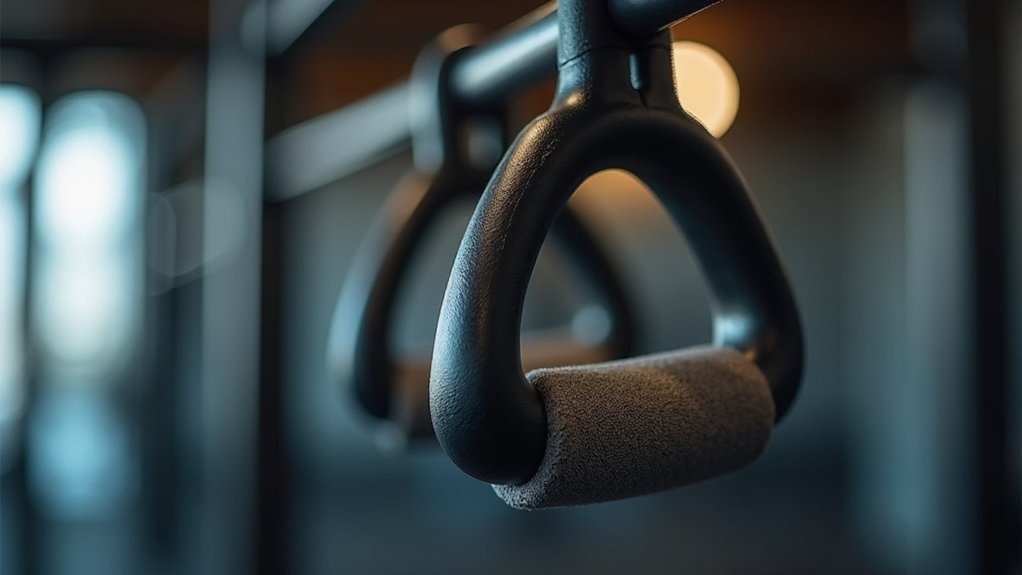
Neutral grip pull-ups are an excellent exercise for those looking to enhance their home workout routine, particularly for individuals managing elbow tendinopathy. This grip reduces strain on the elbow joint and promotes a natural wrist position, making it a great choice for home gym enthusiasts.
By effectively engaging the brachialis and brachioradialis, neutral grip pull-ups help distribute the load away from the elbow extensors, allowing for a more comfortable workout.
To perform neutral grip pull-ups correctly at home, focus on maintaining shoulder stability and proper alignment throughout the movement. This approach not only boosts your upper body strength but also minimizes discomfort, making it a beneficial addition to any home fitness regimen.
Grip Position Benefits
While many traditional pull-up techniques can place significant stress on the elbow joint, adopting a neutral grip can offer distinct advantages for those exercising at home, especially individuals managing elbow tendinopathy.
This grip promotes a more natural alignment of the forearm and shoulder joint, enhancing your workout experience while minimizing discomfort.
Key benefits of incorporating neutral grip pull-ups into your home fitness routine include:
- Reduced stress on the elbow joint, making it suitable for various fitness levels.
- Increased activation of the brachialis and biceps brachii, leading to better upper body strength development.
- Greater range of motion at the shoulder joint, allowing for more effective workouts.
- A safer alternative during the rehabilitation phase, facilitating recovery without compromising fitness goals.
Incorporating neutral grip pull-ups can elevate your upper body strength training at home without exacerbating symptoms associated with elbow tendinopathy, making it a smart choice for anyone looking to stay healthy and fit.
Technique for Neutral Grip
Mastering the technique for neutral grip pull-ups is essential for optimizing your home workout routine and minimizing strain on your elbow joints.
To perform this exercise, grasp the pull-up bar with your palms facing each other. This grip enhances shoulder stability and reduces external rotation, which is vital for managing elbow tendinopathy.
Focus on engaging your biceps and brachialis effectively, distributing forces evenly across your joints. Incorporating neutral grip pull-ups into your home fitness regimen fosters gradual progression while alleviating tendon pain.
Overhand vs. Underhand Pull-Up Grips
When considering overhand and underhand pull-up grips, it’s essential to understand how each grip’s mechanics affect your upper body engagement and tendon stress, especially for those exercising at home.
The overhand grip may help distribute the load more evenly across your upper back and shoulders, which can be beneficial for reducing strain on the elbow tendons. This makes it a great choice for anyone looking to build overall upper body strength without compromising joint health.
On the other hand, the underhand grip tends to emphasize the biceps, which might increase stress on the elbow joint and could exacerbate symptoms of tendinopathy.
Therefore, for those utilizing home gym equipment, it’s vital to choose the grip that aligns with your fitness goals while also considering the health of your joints.
Grip Mechanics Comparison
Understanding the differences between overhand and underhand pull-up grips is essential for anyone looking to build a home gym and stay healthy through exercising at home. Here’s how each grip influences your workout:
- The overhand grip emphasizes upper back muscle engagement, which can be beneficial for reducing strain on your elbows during workouts.
- Underhand grips activate the biceps more, but they might increase discomfort for those dealing with elbow issues.
- Grip width plays a crucial role; using a wider overhand grip can help lessen the load on your elbows, making it a better choice for home fitness enthusiasts.
- Overhand grips also promote scapular retraction, which is important for maintaining good shoulder mechanics while working out.
Consider incorporating neutral grips into your routine to create an ergonomic position that minimizes elbow strain while still allowing for effective muscle engagement.
Choose wisely to support your elbow health and optimize your performance in your home gym.
Tendon Stress Variation
The choice between overhand and underhand pull-up grips can significantly impact tendon stress on the elbow, which is important for anyone exercising at home, especially those dealing with tendinopathy.
The overhand grip engages your upper back and shoulder muscles, helping to reduce stress on elbow tendons. On the other hand, the underhand grip places more emphasis on your biceps, which can increase strain on forearm muscles and potentially worsen symptoms.
Research suggests that using an overhand grip helps distribute the load evenly across the shoulder girdle, thereby reducing the risks associated with elbow tendinopathy.
A neutral grip, which combines elements of both styles, can further lessen tendon stress while effectively targeting various upper body muscles.
Incorporating different grips into your home workout routine can help manage tendon stress and promote recovery, making it a smart strategy for maintaining your health and fitness at home.
Using Resistance Bands for Pull-Up Modifications
Using resistance bands for pull-up modifications is an effective way to enhance your home workout routine while managing elbow tendinopathy and promoting overall strength development.
These bands offer essential support during pull-ups, making them ideal for individuals experiencing elbow pain, such as lateral epicondylitis.
Here are some key benefits of incorporating resistance bands into your training:
- Provides adjustable assistance, making it suitable for all fitness levels—perfect for both beginners and seasoned athletes.
- Facilitates a gradual increase in load, which is crucial for rehabilitation and strength building at home.
- Reduces the strain on your grip strength, allowing you to focus on form and technique during recovery.
- Promotes proper pull-up form, minimizing the risk of further injury to the shoulder girdle and elbow tendons.
Incorporating resistance bands into your pull-up routine can significantly enhance your home workouts, helping you achieve your fitness goals safely and effectively.
Importance of Proper Pull-Up Technique
While you may be eager to boost your pull-up repetitions at home, prioritizing proper technique is crucial for protecting your elbow tendons and fostering effective strength development.
Engaging your shoulders and scapulae correctly will help minimize strain, reducing excessive loading on your forearm muscles. Opting for a neutral grip can significantly alleviate stress on the elbow tendons, making it a safer choice for anyone dealing with tendinopathy.
Focus on controlled movements, steering clear of jerky motions to prevent aggravating elbow pain and to support tendon healing. Incorporating isometric exercises at various angles can strengthen the tendons without overstressing them, and ensuring a gradual increase in intensity will help you avoid further strain during your home pull-up training.
Additional Exercises to Support Elbow Recovery
To effectively support your elbow recovery at home, incorporating additional exercises can play an essential role in strengthening the surrounding muscles and enhancing overall joint stability.
Incorporating targeted exercises at home is vital for strengthening muscles and enhancing elbow joint stability during recovery.
Focus on these key areas using minimal home gym equipment:
- Eccentric wrist extension strengthening: Use a light dumbbell or resistance band for 2-3 sets of 8-15 reps, 3 times a week.
- Grip strength exercises: Squeeze a lacrosse ball or a stress ball for 2-3 sets of 15-45 seconds, 3 times a week.
- Shoulder external rotation exercises: Perform side-lying rotations with a light dumbbell or resistance band for 2-3 sets of 10-15 reps, 3 times a week.
- Pronation and supination strengthening: Use a lightweight dumbbell to strengthen your forearm for 2-3 sets of 8-15 reps, 3 times a week.
Incorporating these targeted exercises into your home workout routine can help reduce elbow pain and support your recovery journey.
Stay healthy and committed to your home fitness goals!
Monitoring Pain and Adjusting Your Routine
Monitoring your pain levels during pull-up training is crucial for effective recovery from elbow tendinopathy, especially when working out at home. Keeping a pain journal can help you track any discomfort or intensity changes, making it easier to identify flare-ups linked to specific grips.
Adjust your home workout routine by incorporating isometric holds to strengthen the muscles and tendons around the elbow without worsening pain, particularly when trying out new grips. Gradually increase your pull-up volume by no more than 10% each week to avoid injury.
Utilizing variations like neutral or chin-up grips can enhance your grip strength without causing pain. Lastly, ensure you include sufficient rest days in your home workout schedule to promote optimal tendon healing, which is essential for managing your condition effectively.